Smarter Carts How To Boost Sales With Frequently Bought Together
Dec 14, 2025
|
Published
"Frequently bought together" is more than just a clever sales tactic. It’s a way of grouping complementary products together to make your customer's life easier, which naturally leads to a higher order value. The magic happens when you anticipate a shopper's needs and present them with a complete solution, turning a single-item purchase into a much more satisfying haul.
Moving Beyond Upsells to Smart Customer Service
Let's reframe how we think about "frequently bought together." This isn't about jamming more products into a customer's cart. When you get it right, it's a powerful form of customer service that makes shoppers feel like you truly get them.
This approach shifts your focus from just pushing products to helping customers build smarter, more valuable carts. The real goal is to organically boost your Average Order Value (AOV) by offering genuine convenience, not by slicing up your profit margins with one discount after another. Think of it as a helpful store associate pointing a customer toward the perfect accessories for their new purchase—a move that builds trust and increases customer lifetime value.
Driving Value Without Discounts
Before you jump to offering a discount on a bundle, consider using rewards to create excitement and protect your bottom line. You can nudge customers toward adopting the bundle by offering incentives that build long-term value and make them feel rewarded.
Here are a few ideas that work wonders:
Free Gift Tiers: Unlock a genuinely desirable free gift when the suggested bundle is added to the cart.
Free Shipping Thresholds: Frame the bundle as the perfect way for customers to hit that free shipping benchmark.
Exclusive Access: Make the bundle purchase a key that unlocks a members-only product drop or exclusive content.
This strategy not only leads to a healthier profit margin but also helps build a loyal customer base that sees the real value you’re providing, encouraging repeat purchases and boosting lifetime value.
By anticipating needs, you’re not just upselling; you're completing a customer's solution before they even realize something is missing. This proactive service is what turns a one-time buyer into a loyal, high-value customer.
To really nail this, you need to understand what your customers actually want. Using targeted survey templates for identifying upsell opportunities is a great way to gather direct feedback.
The impact is hard to ignore. Data shows that shoppers who engage with product recommendations have an AOV that is a staggering 369% higher than those who don't. And with tools like Monster Cart designed to put these reward-based offers right inside the cart, making this strategy seamless is easier than ever.
Finding Your Perfect Product Pairings
Crafting a killer "frequently bought together" offer is less about guesswork and more about listening to what your sales data is already telling you. The real magic happens when you uncover the product combinations your customers naturally gravitate towards.
Start by digging into your own sales history. It’s the single best source of truth. Look for the patterns. What items are people constantly buying in the same order? These are your no-brainers, the most obvious and effective bundles to build first.
Proven Product Bundling Frameworks
Once you’ve got some data, you can start structuring your offers using a few battle-tested frameworks. These aren't just about selling more stuff; they're about solving a customer's entire problem in one click, which makes their purchase feel way more valuable.
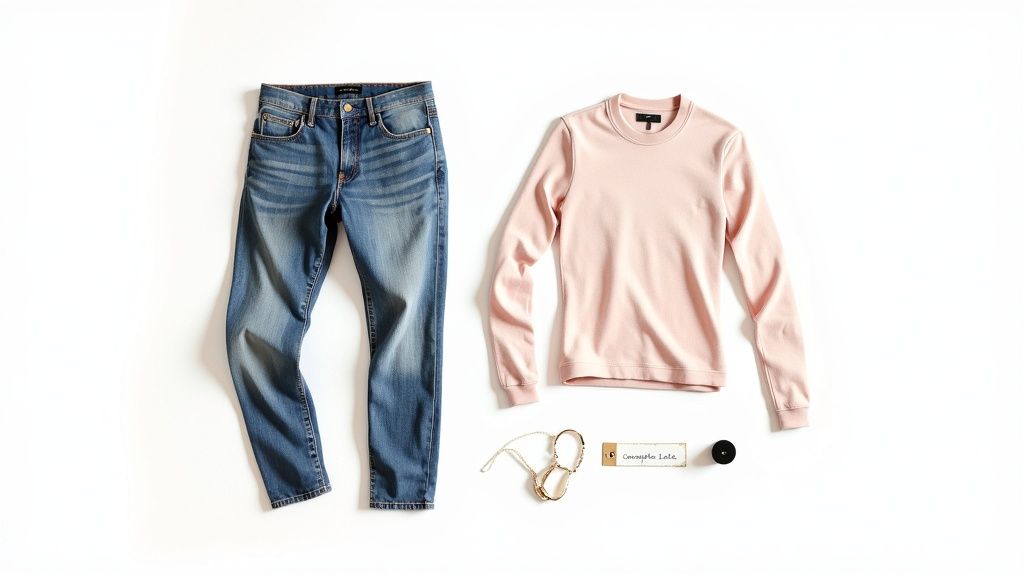
The "Complete the Look" Bundle: This is a go-to for fashion and home goods. If a customer carts a pair of jeans, show them the perfect top and belt to go with it. Selling a sofa? The coordinating throw pillows and a blanket are a natural fit.
The "Starter Pack" Bundle: This works wonders for products that need a few extras to get going. Think of a new coffee machine bundled with filters, a bag of your signature beans, and a mug. You're not just selling a product; you're selling the entire first-day experience.
The "Essential Accessory" Bundle: This one is simple: pair a main product with something that protects or improves it. When someone buys a new laptop, offering a protective sleeve and a wireless mouse just makes sense.
Your best bundles make the customer's life easier. They anticipate what's needed next and offer a complete solution, turning a simple transaction into a thoughtful experience that builds trust and boosts lifetime value.
A Pro-Tip for Slow-Moving Inventory
Got some products that just aren't moving? Don't let them sit there collecting dust. A savvy move is to pair a slow-seller with one of your certified bestsellers. The popularity of your star product can create a "halo effect," making that less-known item suddenly look like an essential and exciting add-on.
For example, if you have a unique but slow-selling face oil, try bundling it with your top-rated daily moisturizer. You could position it as the "perfect nighttime companion" to their favorite cream.
Ultimately, the most successful frequently bought together strategies are all about enhancing the customer's main purchase, not distracting from it. This is where a tool like Monster Cart really shines. It lets you pop these super-relevant, value-packed bundles right inside the cart—precisely when someone is ready to buy. Instead of just slashing prices, you can offer smarter incentives like a free gift or free shipping, which often feels more rewarding to the customer and works out better for your profit margins and long-term customer relationships.
Getting In-Cart Offers Live with Monster Cart
Alright, you've done the homework and figured out which products are a perfect match. Now it's time to put those pairings to work right where it counts: inside the shopping cart. This is the moment a customer is most ready to buy, making it the perfect spot to show them a helpful, valuable offer. Forget disruptive pop-ups; weaving these recommendations right into the cart flow feels natural and smooth.
This is exactly what an app like Monster Cart was built for. It turns your basic cart into an interactive conversion tool. By showing "frequently bought together" suggestions at this final stage, you catch shoppers when they’re most open to adding just one more thing to complete their order.
The screenshot above gives you a peek into the Monster Cart dashboard. You can see how easy it is to configure your in-cart upsells, including those FBT bundles. The whole point is to make it intuitive, so you can get offers customized and launched quickly without touching a single line of code.
Building Your First In-Cart Bundle
Getting your first bundle up and running in Monster Cart is a quick process. The app is flexible, letting you either create bundles based on your own strategic insights or lean on its data-driven suggestions to get the best results.
You really have two main ways to go about it:
Manual Product Bundles: This puts you in the driver's seat. You get to hand-pick the exact products you want to feature together based on what you already know from your sales data or inventory goals. This is perfect for pushing a new product or promoting a specific combo you're confident customers will love.
AI-Powered Recommendations: If you'd rather take a more hands-off approach, you can let the app's AI do the heavy lifting. It crunches your store’s sales history to find those hidden buying patterns and then automatically suggests the most relevant products to pair up. This ensures your offers are always based on actual customer behavior.
No matter which path you take, the real secret is to think beyond a simple discount. While a small percentage off can work, the goal here is to really bump up your Average Order Value (AOV) by offering something more compelling.
Instead of just slapping a 10% discount on a bundle, reframe the offer as the key to unlocking a bigger reward. Try offering a desirable free gift or free shipping once a customer adds the suggested items. This approach protects your profit margins while making the offer feel way more valuable to the shopper.
It's All About Lifetime Value
This in-cart bundling strategy isn't just about making one bigger sale. It's about building a better, longer-lasting relationship with your customers. When you provide real value and make the shopping experience easier and more intuitive, you're making an investment in customer lifetime value (LTV). A happy customer who feels like you "get" them is far more likely to come back.
To really nail your in-cart offers and make bundling a breeze, it's worth exploring the different Shopify bundle apps out there to find the one that fits your brand’s needs perfectly.
Using a tool like Monster Cart lets you experiment with different reward structures—pitting a free gift against free shipping, for example—to see what truly motivates your audience. This kind of data-backed testing helps you constantly fine-tune your strategy, making sure your "frequently bought together" offers don't just drive sales today, but also build a loyal base of repeat customers for tomorrow.
Designing Irresistible Bundle Experiences
How you present your "frequently bought together" offers is just as critical as the products you choose to pair. A great setup feels like a helpful suggestion, not a pushy sales pitch. The real key is to blend a smooth user experience (UX) with some smart psychological triggers that encourage people to add more to their cart without making your brand feel cheap.
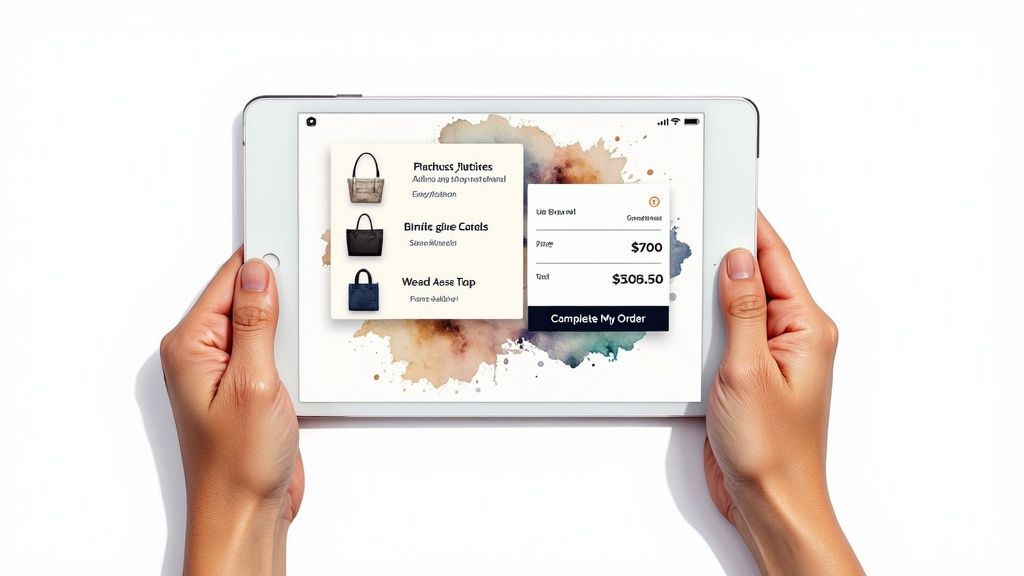
Think of it this way: your customer has already committed to buying one thing. Your goal now is to make adding that complementary item feel like an obvious, almost satisfying, next step. This all starts with clear visuals and zero confusion about pricing. Show the products together, make sure their individual prices are easy to see, and then present the bundled price or the new total. This kind of transparency builds trust and instantly shows the value you're offering.
Beyond Discounts: Thinking About Lifetime Value
While a small discount can be a nice nudge, leaning on it too heavily just eats away at your margins. Instead, I always recommend focusing on boosting your Average Order Value (AOV) by offering rewards that feel more valuable and build some long-term loyalty. This is where you pivot from a simple transactional mindset to actually building a relationship.
Here are a few value-added incentives that work wonders:
Unlock Free Shipping: Frame the bundle as the smartest way to hit that free shipping threshold. In my experience, this is often a bigger motivator than a small percentage off.
A Surprise Free Gift: Toss in a small but desirable gift when the customer adds the complete bundle. This creates a moment of genuine delight and makes the purchase feel special.
Exclusive Content Access: If it fits your brand, pair a physical product bundle with access to a digital guide, video tutorial, or private community. It adds a ton of perceived value without costing you anything in inventory.
This approach protects your profits while delighting your customers, making them feel like they got a great deal. That positive experience is a powerful driver for customer lifetime value (LTV), turning a one-time buyer into someone who comes back again and again.
The most irresistible offers don't just save a customer money; they make them feel smart. By framing the bundle as an upgrade that unlocks a better experience—like a free gift or shipping—you create a win-win scenario that builds brand affinity.
Compelling Calls to Action
Finally, the words you use matter. A lot. Ditch the generic "Add to Cart" and go for something more compelling and action-oriented that reinforces the benefit of buying the bundle. A call-to-action like "Complete My Order" or "Add Both for a Complete Solution" reframes the decision from a simple purchase into a smart choice that finishes their shopping task.
The big retail players have mastered this. Wayfair and Best Buy suggest entire home tech setups, while ASOS curates full outfits, making it incredibly easy to complete a look. Even high-end brands like Canyon Bicycles pair their $1,000+ bikes with affordable but essential accessories, solving the customer's next problem before they even have it. If you want to see more examples, you can explore trends from top e-commerce brands to get some ideas.
When you bring together thoughtful product pairings, a frictionless user experience, and value-driven rewards, you create an offer that feels less like an upsell and more like an essential service. This is where tools like Monster Cart really shine, giving you the power to build these intelligent, reward-based offers directly into the cart—right at the moment your customer is most ready to buy.
How To Measure and Optimize Your Bundles
So, you’ve launched your "frequently bought together" offers. Great! But the work doesn't stop there. Honestly, just putting a bundle live is only half the battle. If you're not tracking its performance, you're just guessing.
The real magic happens when you start digging into the data to see what’s actually working. This is how you turn a good idea into a consistent revenue driver for your store.
What Numbers Actually Matter?
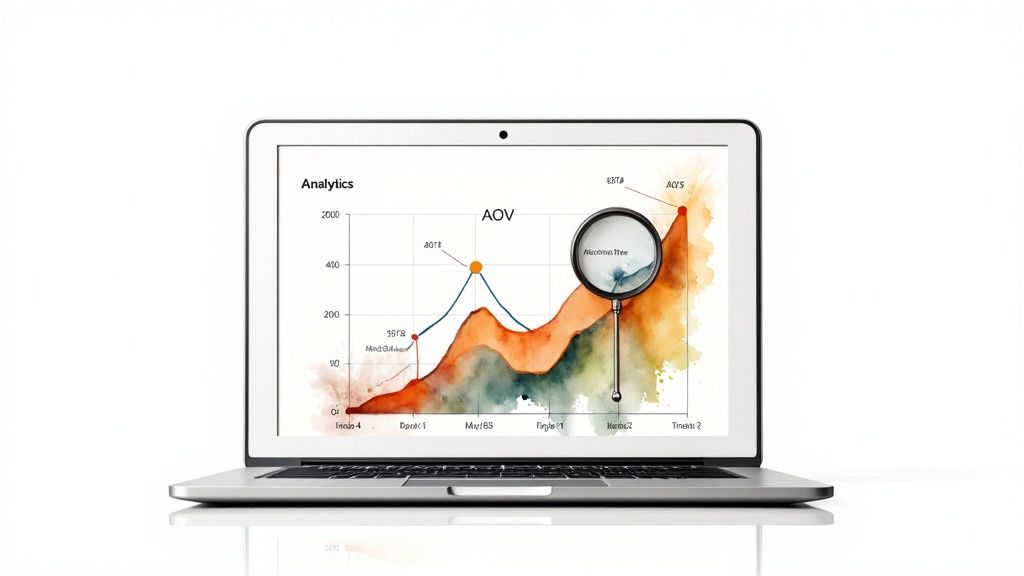
It's easy to get fixated on Average Order Value (AOV), and while it's important, looking at it in isolation can be misleading. To get the full story of how your bundles are influencing shopper behavior, you need to look at a few metrics together.
Here's what I recommend keeping a close eye on:
Attachment Rate: This is your North Star metric. It’s simply the percentage of total orders that include one of your FBT offers. If this number is high, it’s a strong signal that you've nailed the product pairings. People find them genuinely useful.
Conversion Rate Lift: This one answers a critical question: "Are my bundles helping or hurting conversions?" You need to compare the conversion rate of shoppers who interact with a bundle to those who don't. A positive lift means your offers are a welcome addition, not a distraction.
Average Order Value (AOV): Of course, we still care about AOV. The key is to compare the AOV of orders with a bundle against those without. That difference is the immediate cash your FBT strategy is putting in your pocket.
Remember, the ultimate goal isn't just a bigger AOV—it's about boosting profitability and building customer lifetime value. A heavily discounted bundle might spike AOV, but if it kills your margins, it's not a sustainable win. Focus on rewards like free gifts and free shipping that feel valuable to the customer without sacrificing your long-term business health.
The Power of A/B Testing Your Offers
Once you're tracking the right things, you can start optimizing. The most effective way to do this is with A/B testing—pitting one offer against another to see what resonates most with your customers.
Let's walk through a simple, practical test you could run right now. Imagine you're selling a popular coffee blend. You want to see what kind of incentive encourages more people to add a coffee mug to their order.
Version A (The "Value Add"): Bundle the coffee and mug to unlock free shipping.
Version B (The "Discount"): Offer a straight 10% discount when customers buy the coffee and mug together.
You'd show Version A to half of your visitors and Version B to the other half. After you've collected enough data, you can definitively see which approach works better. Does the appeal of "free" shipping outperform a clear price cut? The results might surprise you.
This is exactly where a tool like Monster Cart shines. It’s built to let you easily create and test these kinds of in-cart, reward-based offers without needing a developer or a data science degree. By running simple tests like this, you can stop guessing and start making data-backed decisions that continuously improve your frequently bought together strategy.
Key Metrics for Measuring FBT Success
To make this even clearer, let's break down the metrics into a simple table. Track these to understand the true impact of your 'Frequently Bought Together' strategy on revenue and customer behavior.
Metric | What It Measures | How to Improve It |
|---|---|---|
Attachment Rate | The percentage of orders that include an FBT bundle. | Refine product pairings, improve offer visibility, test different incentives (discounts vs. free gifts). |
Conversion Rate Lift | The increase in conversion for shoppers who see or add a bundle. | Ensure the offer is clear and easy to add. Avoid creating friction or decision fatigue in the cart. |
Average Order Value (AOV) | The average amount spent per order. | Offer higher-value bundles, test tiered rewards that encourage adding more items. |
By keeping a close watch on these numbers and constantly testing new ideas, you'll be well on your way to building a powerful and profitable bundling strategy.
Got Questions About Product Bundling? Let's Clear Things Up
Diving into a new strategy always kicks up a few questions. When it comes to setting up "frequently bought together" offers, I hear the same handful of concerns from merchants all the time. Let's walk through them, because the answers really get to the heart of how to use this feature to create genuine customer value and grow your store.
"What If I Only Have a Small Product Catalog?"
No problem at all. In fact, sometimes it's an advantage. This strategy is all about the quality of the product pairing, not the sheer number of products you have.
Think about it this way: if you sell one amazing core product, your entire focus is on what makes that product better. Imagine you sell beautiful, handmade leather journals. The perfect "bought together" item isn't just another journal; it's a premium fountain pen that glides across that specific paper. Or, if you sell a signature coffee blend, a digital brewing guide or a custom-engraved scoop is a fantastic pairing.
You don't need dozens of options. You just need one or two killer pairings that solve a complete problem for your customer. That's where you'll see a real impact.
"Will Offering Bundles Hurt My Individual Product Sales?"
This is probably the most common question I get, and it's a fair one. But my experience, and the data, shows the opposite is almost always true. "Frequently bought together" recommendations show up when a customer has already decided to buy something.
The bundled item is usually an impulse add-on—something they weren't actively looking for but makes perfect sense in the moment. By showing them a relevant, complementary product right there in the cart, you're catching a sale that probably wouldn't have happened otherwise. It leads to a net increase in total items sold and a higher average order value. You're adding to the cart, not swapping one item for another.
Here's how I like to think about it: the real goal is to increase a customer's lifetime value. A smart bundle that improves their main purchase makes them feel like you get them. That feeling is way more powerful than just selling one more thing. It builds real loyalty and keeps them coming back.
"Should I Always Discount My Bundles?"
A small discount can definitely be a good nudge, but I always push merchants to think beyond just slashing prices. Value-added incentives often have a much higher perceived value and do a much better job of protecting your margins.
Instead of a straight percentage off, try giving a little something extra for adding the bundle:
Free shipping: This is a massive psychological win for shoppers. Seriously, never underestimate the power of "free shipping."
A small bonus gift: A little surprise-and-delight moment can be far more memorable than saving a couple of bucks.
Exclusive content: Bundle a physical product with a digital guide, an exclusive tutorial, or a quick-start video.
This reframes the offer as a smart upgrade, not just a cheap deal. You're shifting the conversation from price to value, which is exactly where you want to be for long-term growth and higher lifetime value.
"How Do These Apps Know What Products to Suggest?"
This is where the magic happens. Modern tools like Monster Cart aren't just guessing. They use AI to dig into your store's sales history, automatically finding which products customers are naturally buying together.
This data-driven approach uncovers hidden buying patterns you'd likely never spot on your own. It takes the guesswork out of the equation and ensures your recommendations are genuinely helpful. When the suggestion clicks and just makes sense to the shopper, it feels less like an upsell and more like great service. And that’s precisely why it works so well.
Ready to turn your Shopify cart into a tool that actually boosts your AOV without constantly resorting to discounts? With Monster Cart, you can build smart, reward-based "frequently bought together" offers that your customers will genuinely appreciate.
Join 7000+ brands using our apps