The Real Difference Between Cross Sell and Up Sell Strategies
Dec 19, 2025
|
Published
At its core, the difference between cross-sell and up-sell is pretty simple. Upselling is about convincing a customer to buy a more valuable version of a product, while cross-selling is about suggesting related items that go well with their original choice.
One is about upgrading a single item, the other is about adding more items to the cart. Both are incredibly effective ways to boost your Average Order Value (AOV) and build long-term customer relationships when you get them right.
Defining Cross-Sells and Up-Sells in Ecommerce
For anyone running a Shopify store, getting the hang of upselling and cross-selling is crucial for boosting your Average Order Value (AOV) and customer lifetime value (LTV). These aren't just pushy sales tactics; they're smart ways to make the shopping experience better. You're essentially guiding customers to the best possible solution for their needs, which is a powerful way to build trust and increase lifetime value.
The real magic happens when you stop slashing margins with hefty discounts and start offering value-driven rewards instead.
Rather than a generic 10% off coupon that eats into your profits, try offering a free gift or free shipping when a customer's cart hits a certain total. This small shift in strategy can do wonders for your AOV and builds a much stronger, more sustainable connection with your customers. If you want to dive deeper into the broader context of these tactics, you can explore more about e-commerce strategies.
Let's break down exactly what each strategy does.
Upselling: This is all about encouraging a customer to buy a more expensive, premium, or feature-packed version of the product they're already looking at. Think suggesting the 16oz bottle of shampoo instead of the standard 8oz, or showing them the "pro" version of a software tool. The goal here is to increase the value of the single purchase they're about to make, which directly impacts LTV.
Cross-selling: Here, the focus is on recommending other products that complement what's already in the cart. The classic example is suggesting batteries when someone buys a kid's toy, or a protective case when they buy a new phone. You're helping them build a more complete solution, which increases AOV and customer satisfaction.
Key Takeaway: The best up-sells and cross-sells never feel like a hard sell. They feel like a helpful recommendation. When you pull it off, you're showing customers you understand what they need, which builds the kind of trust that leads to higher lifetime value.
Cross-Sell vs. Up-Sell at a Glance
For busy merchants who just need the highlights, this table breaks down the core differences between cross-selling and upselling.
Attribute | Cross-Selling | Upselling |
|---|---|---|
Primary Goal | Increase the total number of items in the cart by adding related products. | Increase the value of a single item by suggesting a higher-end version. |
Pricing Tactic | Often works well as a bundle or a "Frequently Bought Together" offer, incentivized with rewards. | Relies on tiered pricing that shows the extra value of the premium option. |
Placement | Most effective in the cart, at checkout, or in post-purchase emails. | Most effective on the product page, before the "add to cart" click. |
Messaging | "Customers also bought..." or "Complete your look with..." | "Upgrade to Pro" or "Get the Large for just $5 more." |
Key Metric | Items Per Order (IPO) | Average Order Value (AOV) |
Ultimately, both strategies aim to increase revenue, but they take different paths to get there. Cross-selling broadens the purchase, while upselling deepens it, and both are key for building lifetime value.
Strategic Goals, Pricing, and Customer Journey Placement
Knowing the basic difference between a cross-sell and an upsell is one thing, but really understanding how they work means digging into their strategic goals, pricing models, and where they fit in the customer's journey. These elements are not interchangeable. An upsell is all about vertical movement—getting a customer to spend more on a better version of the product they already want. A cross-sell, on the other hand, is about horizontal movement—adding complementary, but separate, items to their cart.
This distinction is everything. An upsell aims to get more value out of the decision the customer is already making. A cross-sell expands the entire purchase. To pull them off, you need different psychological triggers and perfect timing, so your offer feels like a helpful suggestion that boosts AOV, not an aggressive sales pitch.
Aligning Goals with Customer Intent
The main goal of an upsell is to bump up the immediate transaction value by showing off a superior option. This strategy is most effective right on the product page, before the customer has locked in their choice. You can use tiered pricing and clear "value for money" messaging to demonstrate why the premium version is a smarter buy in the long run. Think about offering a larger size, a more durable material, or a subscription plan with extra features—it all ties directly back to what the customer was looking for, just better.
Cross-selling, by contrast, is about increasing the total number of items in the cart. This tactic really shines once the customer is in the cart or heading to checkout, where it comes across as a helpful tip. By showing "Frequently Bought Together" items or offering simple one-click add-ons, you’re not trying to change their mind about the original item; you're just making it better. It's a great way to introduce customers to more of your catalog and often feels less like a hard sell and more like a smart recommendation, boosting both AOV and their overall experience.
This decision tree breaks down the simple logic: are you trying to add a new item or upgrade an existing one?

The key takeaway is that the customer's action—adding something new versus upgrading what's already there—is what defines the tactic. This simple fact should guide where and when you make your offers.
Impact on Revenue and Lifetime Value
The financial impact of these two strategies is also quite different. Research shows that cross-selling can account for 21% of a company’s revenue and boost profits by 20%, primarily by increasing sales volume without the high cost of acquiring new customers. Upselling, however, is a powerhouse for increasing customer lifetime value by 20-40%, as it nurtures a deeper relationship with customers who invest in your premium products.
A smart cross-sell feels like a personalized recommendation, while a well-placed upsell confirms the customer is making the best possible choice. Both are essential for growth, but they solve different problems at different stages of the buying process.
Ultimately, both cross-selling and up-selling are crucial for improving Customer Lifetime Value and fueling sustainable growth. Instead of just throwing discounts at customers—which can kill your margins—you can offer value-driven rewards like a free gift or free shipping to encourage a higher spend. This is where a tool like Monster Cart really shines. It helps you map these intelligent offers to the right moments, turning a simple shopping cart into a powerful engine for maximizing both AOV and LTV without sacrificing your bottom line.
How Winning Brands Execute Upsell Strategies
The most successful brands know that a great upsell isn't about being pushy. It's about helping a customer find an even better solution to their problem. The best strategies are designed to genuinely improve the customer's experience, which in turn boosts your Average Order Value (AOV) and builds some serious long-term loyalty. The real trick is making that offer at the exact moment they're ready to buy, often by incentivizing the choice with a smart reward instead of a discount.
Take a direct-to-consumer brand selling leather goods. They might have a standard wallet made from quality leather. On that product page, right near the "Add to Cart" button, they could showcase a premium version. Maybe it's crafted from full-grain leather with reinforced stitching for just $20 more. The messaging is key here—it’s not about the higher price, but the better investment: "Built for a Lifetime" or "Develops a Richer Patina Over Time." This reframes the upsell from a simple expense into a smarter long-term buy.
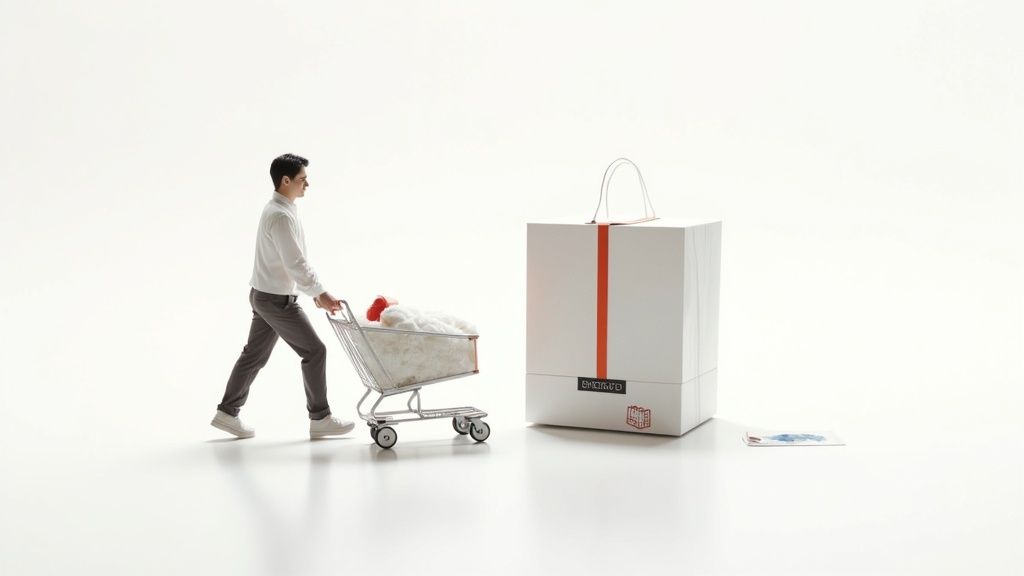
This approach not only bumps up the immediate sale but also leaves the customer feeling confident they made the best possible choice. That feeling is the bedrock of strong customer lifetime value.
The Psychology of a Seamless Upsell
Truly effective upsells aren't just about the product; they tap into powerful psychological triggers that make the upgraded version feel like the natural choice. It's all in the presentation.
Social Proof: Simply labeling a premium option as the "Most Popular" can work wonders. It leans on our natural tendency to trust the judgment of others. It quietly says, "Hey, other smart shoppers picked this one," which instantly lowers the buyer's hesitation.
Benefit-Driven Language: Smart brands don't list features; they sell outcomes. When upselling a subscription from monthly to annual, framing it as “Save 25% Annually & Never Worry About a Payment Again” is far more compelling. It hits on both the tangible savings and the emotional relief of a simple, one-and-done plan.
An effective upsell reassures the customer they are making a superior choice. When they feel guided toward a better product experience, their trust in your brand deepens, paving the way for repeat business and higher lifetime value.
Instead of just slashing prices with a discount that eats into your margins, try using rewards to sweeten the deal. For instance, upgrading to a premium skincare set could unlock a free gift. Or maybe choosing a larger piece of furniture qualifies the entire order for free white-glove delivery. This kind of strategy lifts the AOV without cheapening the perceived value of your products and strengthens customer lifetime value.
At the end of the day, these tactics show you get your customers and are genuinely invested in helping them find the best fit. A thoughtfully executed upsell can turn a routine transaction into a positive brand interaction. This is exactly where tools like Monster Cart shine, allowing you to build rewards right into the cart, nudging customers to reach for those higher-value items to unlock perks they actually want.
Real-World Examples of High-Converting Cross-Sells
While upselling is about getting a customer to buy a better version of one item, a great cross-sell is all about building a more complete purchase with relevant, complementary products. When you get it right, it doesn't feel like a sales pitch. It feels like a genuinely helpful recommendation that makes the customer’s original purchase even better. That small shift in perspective is what drives up your Average Order Value (AOV) without having to slash prices with hefty discounts.
Think about a customer buying a high-quality facial cleanser from your skincare store. As they head to their cart, a suggestion pops up: “Complete your routine with our best-selling hydrating serum.” This isn't some random product. It’s a logical next step that frames the serum as the key to getting the results they’re looking for. You're subtly introducing them to more of your catalog while making their first purchase more valuable to them.
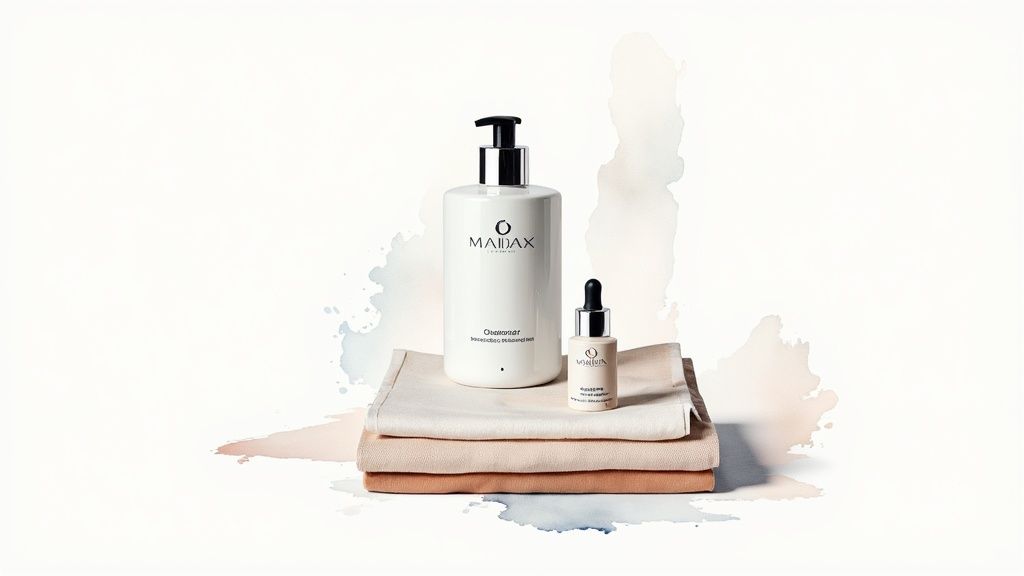
This tactic not only bumps up the immediate sale but also gets the customer more invested in your brand, which is a huge step toward increasing their lifetime value (LTV).
Making Cross-Sells Feel Essential
The electronics world offers another classic example. Someone adds a new digital camera to their cart. The perfect cross-sell here isn’t another camera model; it’s the accessories that let them actually use the camera right out of the box.
A smart in-cart offer would showcase things like:
A high-speed memory card for all their new photos and videos.
An extra battery pack, so they don’t run out of juice mid-shoot.
A protective carrying case to keep their new gear safe.
These aren't just fluffy add-ons; they're practical items the customer will eventually need anyway. By bundling them as a convenient one-click addition, you're saving them a future trip and instantly making the sale bigger. You're solving a problem for them before they even know they have it, which is key to building lifetime value.
A high-converting cross-sell anticipates the customer’s needs and presents a complete solution. It shifts the focus from "Do you want to buy more?" to "Here's everything you need to get the best experience."
The Classic "Shop the Look" Strategy
Fashion brands have mastered the cross-sell with the "Shop the Look" approach. A shopper finds a pair of jeans they love. Instead of leaving it at that, the product page shows the entire outfit from the model's photo—the top, the belt, the shoes, everything.
This strategy works wonders because it sells inspiration and makes styling simple. It turns a hunt for one item into an opportunity for a complete outfit, naturally encouraging a larger purchase. By showing how different pieces work together, you’re not just moving inventory; you’re selling a vision.
These examples all point to the same core principle: the best cross-sells are built on relevance and context. They add real value to the original purchase and guide customers toward a better, more complete experience. By focusing on rewards—like a free gift for bundling items—instead of just discounts, you can lift your AOV in a much healthier way. This is exactly where a tool like Monster Cart comes in, letting you build these helpful one-click recommendations right into the cart to drive bigger orders and build lasting loyalty.
Putting Smart AOV Boosters to Work in Your Cart
Knowing the difference between cross-selling and upselling is one thing, but putting that knowledge into practice is where you'll see real growth. Thankfully, modern tools let any merchant build sophisticated, value-packed offers right into their shopping cart. This turns a simple checkout step into a powerful engine for increasing your Average Order Value (AOV).
The real trick is to stop leaning on margin-killing discounts. Instead, you can use compelling rewards like free gifts, free shipping, or even tiered discounts that actually encourage customers to spend more. This tactic not only boosts revenue on the spot but also helps build stronger customer relationships and increases lifetime value. By weaving smart offers seamlessly into the cart, you can nudge customers toward bigger purchases without ever coming across as pushy.
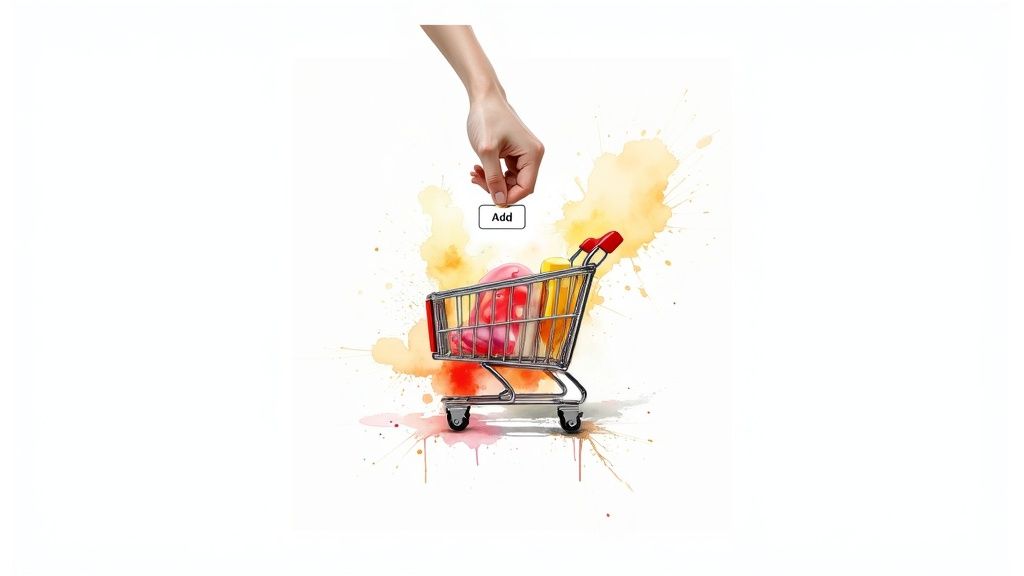
Driving Order-Level Upsells with Gamified Rewards
While we often think of upselling as upgrading a single product, you can also "upsell" the entire order by motivating customers to reach spending goals. This is where a gamified approach can really make a difference, turning the cart experience into something more interactive and fun.
Instead of a generic pop-up that gets ignored, a tool like Monster Cart can add a dynamic progress bar right in the cart drawer. As a shopper adds items, the bar fills up, showing them exactly how close they are to unlocking a reward.
You could set it up with tiers like these:
Spend $50, Get Free Shipping: This is a classic for a reason—it removes a major pain point for online shoppers.
Spend $75, Unlock a Free Gift: Who doesn't love a freebie? This adds a tangible, desirable bonus to their order.
Spend $100, Get 15% Off Your Entire Order: A seriously powerful incentive that rewards your best customers.
This strategy is a brilliant way to upsell the entire cart. It makes the path to a reward crystal clear and engaging, encouraging shoppers to add just one more thing to their order to hit the next tier. You boost AOV in a way that feels good for the customer and protects your profit margins, all while contributing to a positive experience that builds lifetime value.
Making Cross-Selling Effortless with In-Cart Recommendations
The absolute best time to offer a cross-sell is when a customer has already decided to buy something. Their purchase intent is at its peak, and a relevant recommendation feels like a helpful tip, not a sales pitch. Your goal is to make adding these extra items completely frictionless.
A great cross-sell should feel like a natural extension of the original purchase. When you anticipate a customer's needs and offer a one-click solution, you're not just increasing order value—you're genuinely improving their shopping experience.
With an app like Monster Cart, you can put these offers directly in the cart drawer, so customers never have to leave the checkout flow to find what you're suggesting.
Think about these common scenarios:
A customer adds a new espresso machine to their cart, and a one-click offer for a bag of premium, locally-roasted beans appears right below it.
Someone buys a new dress, and a "Frequently Bought Together" section suggests the exact earrings the model was wearing in the product photo.
By showing these highly relevant add-ons right in the cart, you make it incredibly easy for shoppers to say "yes." This thoughtful approach to cross-selling doesn't just increase the immediate sale; it also introduces customers to more of your product catalog, setting the stage for higher lifetime value and more repeat purchases down the road.
Optimizing Your Offers with Testing and Data
Great cross-sell and upsell strategies aren't something you just "set and forget." The best ones are always evolving, tweaked and improved based on what real customer data tells you. Launching an offer is easy; the real magic happens when you start testing, measuring, and refining your approach to discover what actually connects with your audience.
The whole point is to stop guessing and start making smart decisions that drive up your Average Order Value (AOV) and customer lifetime value (LTV). It’s a constant process of testing different incentives—like free shipping vs. a free gift—to find that perfect balance between making customers happy and keeping your business profitable.
A/B Testing Your Incentives
One of the biggest mistakes merchants make is defaulting to a percentage discount to encourage a bigger sale. Sure, discounts can work in a pinch, but they chip away at your margins and can even cheapen your brand's image over time. A much smarter approach is to A/B test your rewards to figure out what truly gets customers excited to spend more.
Imagine running two different in-cart offers at the same time:
Offer A: Spend $100 and get 15% off your order.
Offer B: Spend $100 and unlock a free, high-value gift.
After running the test, you might be surprised to find that the free gift not only gets more people to take the offer but also leads to better net profit. Plus, it creates a much more memorable experience that contributes to lifetime value. This is how you learn the difference between a costly discount and a truly valuable reward.
Continuously testing your offers—pitting a free product against a shipping upgrade, for example—is the secret to maximizing revenue. The data will always show you what your customers really value, pointing you toward a strategy that lifts AOV without destroying your bottom line.
Essential KPIs to Monitor
To figure out if your strategies are actually working, you have to track the right numbers. Watching these Key Performance Indicators (KPIs) will give you a crystal-clear picture of what’s going on.
Offer Acceptance Rate: Out of all the customers who see an offer, what percentage actually says "yes"?
Average Order Value (AOV): By how much is each offer actually bumping up the average cart size?
Conversion Rate Impact: Are these offers helping or hurting your store's overall conversion rate? A great offer shouldn't add friction.
Customer Lifetime Value (LTV): Do customers who take your offers come back to buy again in the future?
Tools like Monster Cart have the analytics baked right in, making it easy to track these KPIs and even personalize offers for different groups. You could show one cross-sell to a first-time buyer and a completely different one to a loyal repeat customer, making sure every single interaction is fine-tuned for the best possible result.
Here are some of the most common questions we hear from merchants just starting to figure out the difference between upselling and cross-selling. Getting these fundamentals right is the key to making them work for your store.
Can I Use Both Cross-Sells and Upsells at the Same Time?
You absolutely can, but the real trick is in the timing. A smart way to do it is to offer the upsell on the product page—think suggesting a premium version before they even hit "add to cart."
Once that item is in the cart, that's your moment to introduce a cross-sell. Suggesting a complementary item in the cart, or even on the post-purchase page, feels helpful rather than overwhelming. Trying to push both at the exact same time is a recipe for a confused customer and an abandoned cart.
Which Strategy Is Better for a New Ecommerce Store?
For a brand new store, cross-selling is usually the easier and more effective place to start. It’s a natural way to show customers the breadth of what you offer without being too aggressive.
Start by looking for obvious product pairings in your catalog. This simple step can help you build momentum, introduce shoppers to items they might have missed, and start nudging that average order value up.
The secret to making these offers feel helpful, not pushy, is to ground them in real value. A good cross-sell should feel like it completes the original purchase. A good upsell needs to have a clear, undeniable benefit. If you always frame your suggestions as a way to make their experience better, you'll build trust and a much higher customer lifetime value.
Ready to turn your cart into a revenue-generating asset without giving away your margins? Monster Cart makes it simple to add gamified rewards, one-click cross-sells, and value-packed upsells that your customers will actually appreciate.
Join 7000+ brands using our apps