The Difference Between Cross Selling and Upselling on Shopify
Feb 3, 2026
|
Published
The real difference between cross selling and upselling boils down to the direction of your offer. Upselling is about persuading a customer to buy a more expensive, premium version of the product they're already looking at. Cross-selling, on the other hand, is about suggesting a related, complementary item to add to their order.
Think of it this way: upselling is upgrading a purchase, while cross-selling is adding to it.
Mastering AOV Growth on Shopify
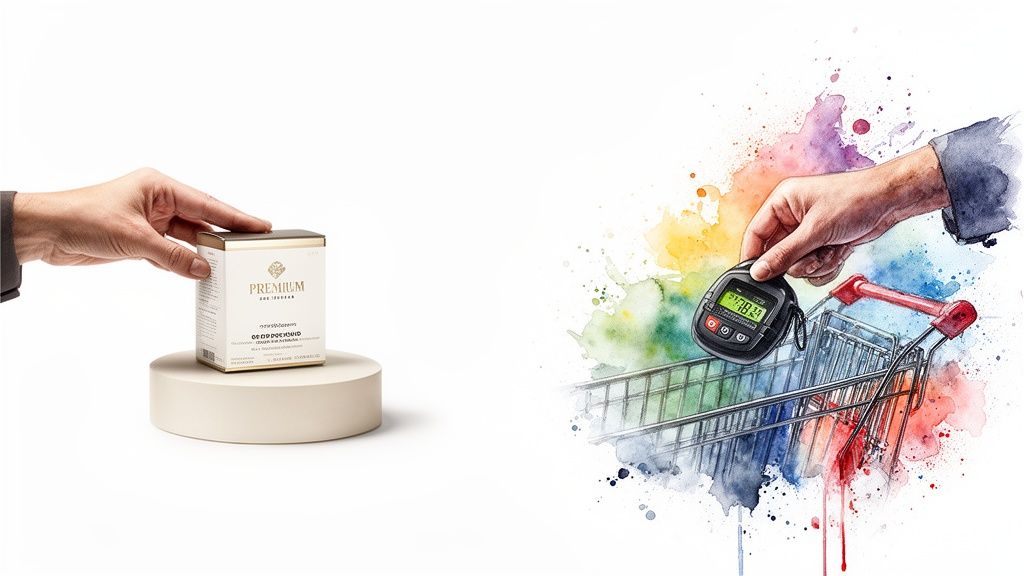
For any Shopify merchant, getting a handle on upselling versus cross-selling is the first real step toward sustainable growth. While both strategies are designed to increase your Average Order Value (AOV), they tap into completely different customer motivations.
Upselling appeals to a shopper's desire for better quality or more features, while cross-selling satisfies their need for a complete, convenient solution. The goal isn't just a one-time sales bump; it’s about sustainably increasing customer lifetime value (LTV) without constantly resorting to hefty discounts.
When you get these tactics right, they make customers feel like you understand their needs, which strengthens their relationship with your brand. The real challenge is boosting AOV without disrupting the path to purchase or killing your margins with sitewide sales.
A Modern Approach to AOV
The smartest modern strategies are moving these offers out of annoying pop-ups and placing them directly into a dynamic, interactive cart experience. Instead of just pushing more products, savvy merchants now gamify the shopping journey itself.
By offering value-added rewards—like unlocking a free gift or free shipping for spending a certain amount—you encourage customers to willingly add more to their cart. This method protects your profit margins and creates a far more positive buying experience, fostering long-term loyalty and higher lifetime value.
The key is to shift your mindset from "How can I sell more stuff?" to "How can I add more value?" This customer-first approach is what naturally leads to a higher AOV and builds the foundation for real, long-term loyalty.
The impact of these strategies is proven. Early e-commerce platforms saw that before implementing these tactics, the average AOV often sat around $50, but it could jump to $65 afterward—a solid 30% sales uplift. You can find more insights about these retail benchmarks on Umbrex.com. A modern tool like Monster Cart makes it easy to build these reward-driven offers right into your Shopify store's cart.
Quick Comparison: Upselling vs Cross-Selling at a Glance
To quickly break it down, here’s a simple table that highlights the core differences between these two powerful strategies.
Attribute | Upselling | Cross-Selling |
|---|---|---|
Core Function | Recommending a premium or upgraded version of an item. | Suggesting related or complementary products. |
Primary Goal | Increase the value of a single transaction by selling a better product. | Increase the number of items in an order by adding accessories. |
Customer Action | The customer buys a more expensive item than originally planned. | The customer adds one or more additional items to their cart. |
Shopify Example | Offering a 200ml bottle of serum instead of the 100ml version. | Suggesting a moisturizer to go with a facial cleanser. |
While both tactics aim for a bigger sale, understanding when and where to use each one is what separates a good strategy from a great one.
The Art of the Upgrade: Understanding Upselling
So, what exactly is an upsell? It’s the art of nudging a customer toward a better, more premium version of the product they’re already set on buying. The key difference here, when we talk about cross-selling vs. upselling, is that an upsell is all about enhancing a single item, not adding entirely new ones to the cart.
Think of it as elevating the customer's choice, showing them how a small step up in price can deliver a huge leap in value.
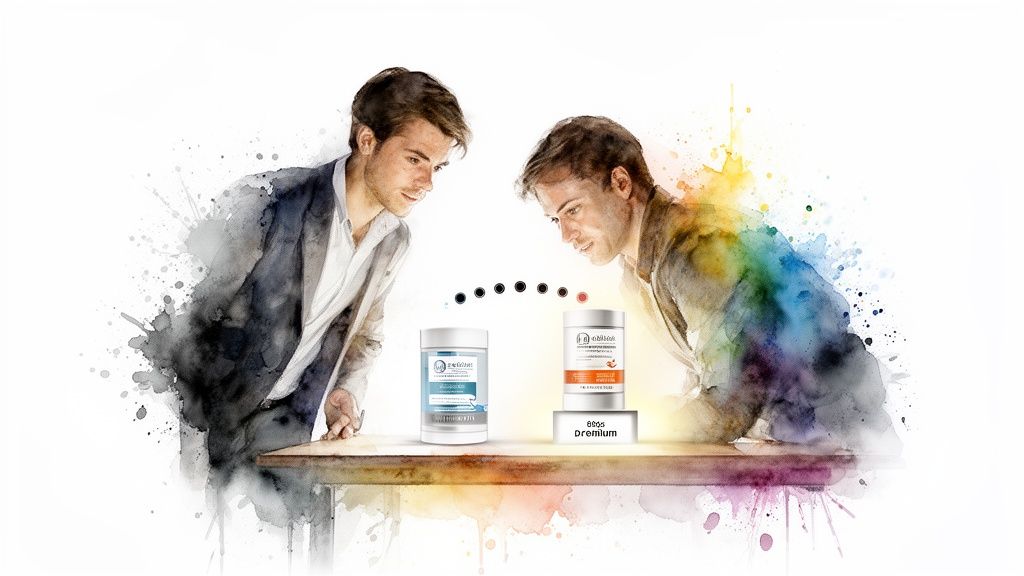
This tactic works so well because it taps directly into a shopper's purchase intent right when their interest is at its absolute peak. They’ve already done the hard part and decided to buy. At that moment, they are far more open to an offer that improves the outcome of that decision. The trick is to frame the upgrade as a direct win for them, not just a way for you to make a few extra bucks.
Framing Upsells for Customer Value
A truly effective upsell feels less like a sales pitch and more like helpful, expert advice. It’s a consultative move that builds trust while protecting your profit margins from the endless cycle of discounts. When you can clearly show how the upgraded product offers better long-term satisfaction, the conversation shifts from price to genuine value.
Here are a few classic scenarios you’ve probably seen:
Larger Size: Offering a 16 oz bottle of shampoo for just a couple of dollars more than the 8 oz version.
Better Material: Suggesting a waterproof, tear-resistant backpack over the standard canvas one.
Premium Version: Highlighting a skincare formula with more advanced, anti-aging ingredients.
The most successful upsells make the customer feel smart for choosing the better option. By aligning the upgrade with their needs, you reinforce their decision-making and enhance their perception of your brand, which is fundamental for building lifetime value.
Gamifying the Upgrade with In-Cart Rewards
The modern, interactive shopping cart is the perfect stage for these kinds of offers. Instead of hitting customers with disruptive pop-ups, you can use a tool like Monster Cart to gamify the entire journey. As shoppers add items, a sleek progress bar can show them how close they are to unlocking a reward, like a free gift or free shipping.
This little touch motivates them to explore upgrades to reach the next tier. By learning more about the best Shopify upsell apps, merchants can find powerful tools to implement these strategies without any friction. It turns the whole process into a positive interaction, boosting your Average Order Value (AOV) and strengthening customer loyalty and lifetime value for the long haul.
The Power of the Perfect Pair: Understanding Cross-Selling
Where upselling is all about getting a customer to buy a bigger or better version of one thing, cross-selling is the art of building a complete solution. It’s about anticipating what a customer will need next and offering them the perfect complementary items to go with their main purchase.
The whole game here shifts from "bigger" to "better together." The true difference between cross-selling and upselling is that cross-selling thoughtfully builds an entire experience around what the customer already wants.
Success is all about relevance. When someone buys a new pair of leather shoes, offering a specialized cleaning kit isn’t a random shot in the dark—it’s a genuinely helpful recommendation that protects their new investment. This approach makes the customer feel understood, not just sold to.
Anticipating Needs and Building a Better Cart
When it’s done right, cross-selling feels less like a sales pitch and more like a helpful concierge service. It predicts what the shopper might need and presents it at just the right moment, turning a good purchase into a great one. This is how you deepen the customer relationship and build real, long-term value.
Think about how this plays out in the real world:
Buying an electronic toy? Here are the exact batteries you'll need.
Purchasing a formal dress? Here’s a matching clutch that completes the look.
Getting a new phone? Don’t forget the screen protector and charging block.
The goal is to make the entire shopping journey easier. Instead of forcing them to hunt for accessories, you bring the solution directly to them, creating a seamless and satisfying experience.
Modern cart tools are built for exactly this. A slide-out cart, like Monster Cart, can display "Frequently Bought Together" bundles or simple one-click add-ons like shipping protection and gift wrap. For a deeper dive, check out our guide on Frequently Bought Together strategies.
These offers appear without ever pulling the customer away from the checkout path, making it incredibly easy for them to add more value to their order. By presenting relevant, convenient items, you not only boost your Average Order Value (AOV) without having to offer steep discounts, but you also prove you’re thinking about the customer’s entire experience. That builds trust, encourages them to return, and significantly improves their lifetime value.
Choosing Your Strategy: When and Where to Use Each Tactic
Knowing the textbook difference between cross selling and upselling is one thing, but knowing exactly when and where to deploy each tactic is what actually drives revenue. A great offer at the wrong moment feels pushy and desperate. A perfectly timed suggestion, on the other hand, feels like genuinely helpful service.
It all comes down to aligning your strategy with the customer’s mindset at every step of their journey.
Upselling is almost always best before the purchase decision is locked in—think product pages. When a shopper is actively comparing options, they're open to hearing about better features, long-term benefits, and why a premium version is the smarter buy. This is your window to frame a higher-priced item as the superior choice.
Cross-selling, however, hits its stride after the main purchase decision is made. Its sweet spot is inside the cart and during the checkout flow. At this point, the customer has committed. Their brain has switched from "Which one should I get?" to "What else do I need to complete this?"
Timing and Placement for Maximum Impact
Think of the customer journey as a roadmap with clear signposts. A shopper browsing a product page is in evaluation mode, making them receptive to an upgrade. A shopper who has already added an item to their cart is in completion mode, making them much more open to convenient add-ons.
Product Page Strategy: This is pure upsell territory. Use this space to showcase product variants, clear comparison charts, or premium features that scream "better value" for a slightly higher price.
In-Cart Strategy: Prime real estate for cross-selling. A dynamic cart drawer is the perfect place to suggest complementary items like batteries, cases, or "Frequently Bought Together" bundles.
Post-Purchase Strategy: Both tactics have a role here. You can use follow-up emails to offer an upgrade on their recent purchase or cross-sell related products you know they'll need next.
This decision tree gives you a great visual for when to pitch an upgrade versus a helpful add-on.
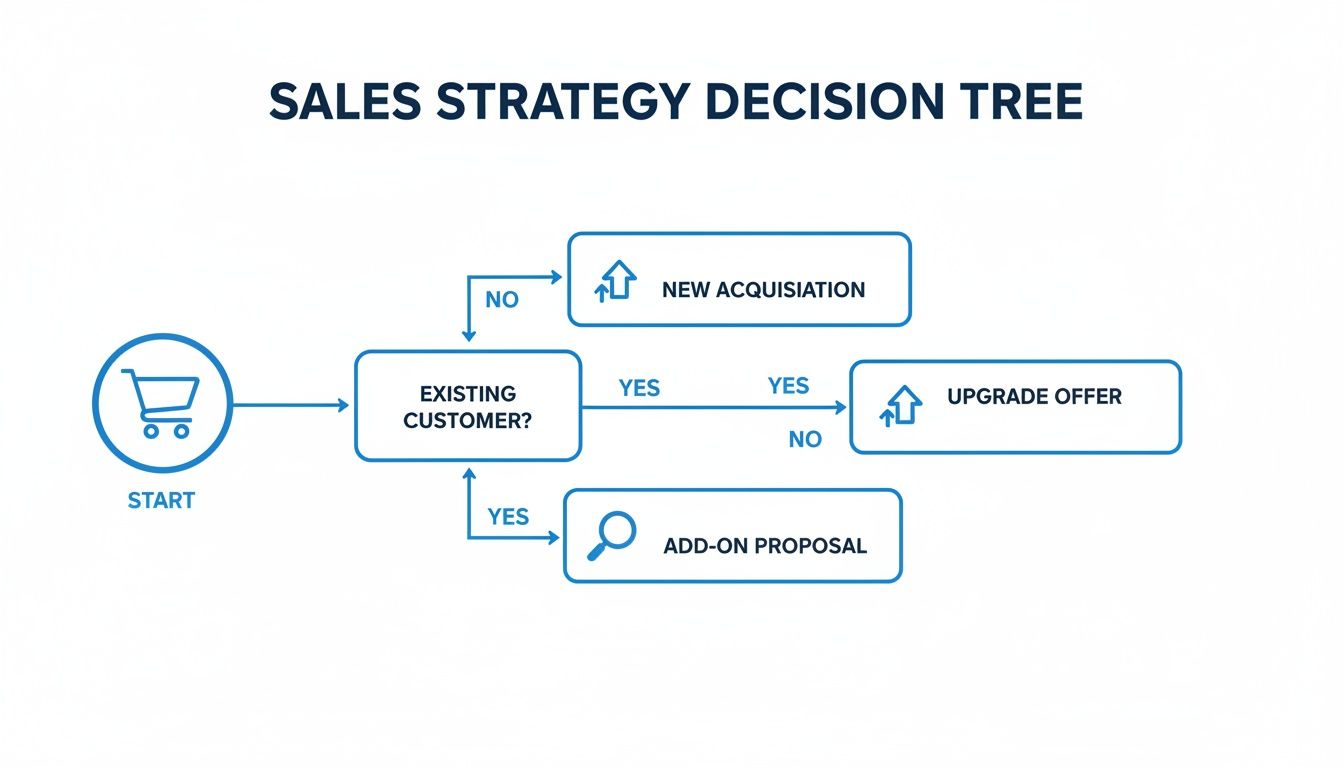
As the chart shows, that critical moment comes right after a customer adds an item to their cart. This forces you to make a strategic choice: do you try to enhance that single item (upsell), or do you add more items to the order (cross-sell)?
The Psychology Behind Each Approach
The mental triggers for these tactics are completely different. Upselling taps into our ambition—the desire to have the "best" version available. Cross-selling appeals to our need for convenience and a complete, ready-to-go solution. A modern Shopify store needs a blended approach that speaks to both of these mindsets, ideally managed from a single, powerful tool.
The most effective strategies don’t force a choice between upselling and cross-selling. Instead, they integrate both into a seamless in-cart experience, allowing customers to naturally discover more value without ever feeling pressured.
Let's be real, in the competitive e-commerce world of 2024-2025, you need every advantage you can get. Upselling boosts revenue by increasing the value of an item, while cross-selling expands the scope of the entire order with add-ons. The data is clear: 72% of sales professionals see these tactics as a primary revenue driver. Even better, upselling alone can deliver a 20% increase in customer lifetime value—a huge win for brands looking to bump up AOV without resorting to hefty discounts.
Beyond the immediate sale, smart cross-selling and upselling have a massive impact on long-term growth. You can learn more about how to increase customer lifetime value with these kinds of proven strategies. Ultimately, a tool like Monster Cart gives merchants the power to use both tactics intelligently right inside the slide-out cart, turning every single order into a bigger opportunity.
How to Boost AOV Without Slashing Your Prices
Sure, knowing the difference between cross-selling and upselling is a great start, but the real goal here is to grow your Average Order Value (AOV) without destroying your profit margins. If you’re constantly running sales, you’re just training customers to wait for the next discount, which slowly erodes your brand's value.
The smarter, more sustainable path is to use value-added incentives that actually reward customers for spending more, building loyalty and increasing lifetime value.
This is where a modern, gamified cart experience completely changes the game. Instead of showing a boring list of products, a dynamic slide-cart becomes an interactive tool that motivates shoppers to build a bigger cart. It’s a fundamental shift from a discount-first mindset to a value-first one, focusing on a better customer experience that builds lifetime value.
Creating a Tiered Reward System
One of the most powerful strategies you can use is a tiered reward system. By setting clear spending goals, you give customers a compelling reason to add just one more item to their cart. This simple tactic turns the path to checkout into an engaging journey with clear milestones.
Popular reward tiers usually look something like this:
Spend $50, Get Free Shipping: This is a classic for a reason. High shipping costs are a top driver of cart abandonment, making this a simple and incredibly powerful incentive.
Spend $75, Unlock a Free Gift: Offering a desirable Gift with Purchase (GWP) adds a fun element of surprise and delight, making customers feel genuinely valued.
Spend $100, Get 15% Off Your Next Order: This approach not only encourages a higher spend right now but also drives a future purchase, directly boosting customer lifetime value.
A visually engaging progress bar in a slide-cart, like the one in Monster Cart, shows customers exactly how close they are to unlocking the next reward. This creates a psychological pull to reach that goal, making them far more receptive to a well-placed cross-sell or upsell offer presented right inside the cart.
The key is to make the reward feel more valuable than the extra cash needed to get it. When you offer a gift with high perceived value, you’re not just increasing AOV; you’re crafting a memorable experience that builds real loyalty.
Maximizing Impact with Creative Offers
When you pair these tiered rewards with one-click upsells or cross-sells, their impact gets amplified. Imagine a customer is just $10 away from unlocking that awesome free gift. A perfectly placed, relevant cross-sell—like a "Frequently Bought Together" item—becomes an easy "yes." This proves you can delight customers and boost revenue at the same time. You can explore more creative strategies for free gift with purchase campaigns in our guide.
At the end of the day, the core difference between cross-selling and upselling is how they make you money. Cross-selling expands an order with more items, while upselling elevates its value with better items. Both are absolutely essential for AOV growth, and a tool like Monster Cart makes it easy to weave both into your rewards strategy without relying on constant discounts. To really measure the success of these tactics, you need to be able to accurately calculate marketing ROI.
Putting It All Together with a Modern Cart Experience
Knowing the difference between cross-selling and upselling is one thing. Actually putting these strategies to work without annoying your customers is another challenge entirely. The old way of doing things—blasting shoppers with aggressive pop-ups right before checkout—is a guaranteed way to create friction and kill a sale. It just doesn't work anymore.
The solution is to ditch the interruptions and weave your offers directly into a seamless, modern cart experience. A customizable slide-out cart drawer, like the one from Monster Cart, can replace Shopify's default page and become your store's secret conversion weapon. It transforms the cart from a static list of items into an interactive space where you can guide customers toward a bigger, better order.
This approach gives you total control to build out a sophisticated system of offers without ever having to touch a line of code. It’s all about boosting your AOV with smart, value-added rewards, not just another race-to-the-bottom discount, thereby enhancing customer lifetime value.
Unifying Offers in a Single Space
With an in-cart tool like Monster Cart, you can stack multiple offers that work together to motivate shoppers. As they add items, they see a dynamic progress bar inching them closer to their next reward, making it almost a game to spend just a little bit more.
This is where you can start combining tactics for maximum impact:
Tiered Rewards: Set up simple milestones like, "Spend $50 to unlock free shipping," or "Spend $100 and get a free gift."
Product Recommendations: Display genuinely helpful "Frequently Bought Together" items right below their current selections.
One-Click Add-Ons: Offer easy extras like shipping protection or gift wrapping with a single click—no fuss.
By placing these offers inside the cart, you make them part of the natural shopping flow. The experience is fast, intuitive, and non-disruptive, helping customers discover more value without ever feeling pressured into a sale.
Ultimately, a modern cart transforms the checkout process from a simple transaction into a rewarding journey. It allows you to finally stop annoying customers with pop-ups and start guiding them toward a bigger, better order. This unified approach is the key to maximizing AOV and building the long-term customer relationships that drive sustainable growth.
Your Top Questions, Answered
Even when you know the difference between cross-selling and upselling, putting them into practice can bring up a few questions. I've heard them all from Shopify merchants over the years, so let's clear up the most common ones.
Which Is Better for My Shopify Store: Upselling or Cross-Selling?
Honestly, neither one is universally "better." The right move depends entirely on what you sell and what you're trying to accomplish. If you sell products with clear upgrades—like a larger size, a premium material, or an advanced model—upselling is a natural fit. But if your catalog is packed with items that work well together, cross-selling complementary accessories will likely get you better results.
The most successful brands don't just pick one. They use both.
A smart, blended approach lets you deploy each tactic exactly where it makes the most sense in the customer journey. A modern in-cart system, like the one offered by Monster Cart, even lets you run both simultaneously without ever getting in the way of a smooth checkout.
Can Upselling and Cross-Selling Annoy My Customers?
Absolutely, but only if you do it poorly. Annoyance comes from aggressive, irrelevant, and disruptive pop-ups that interrupt the shopping flow. The secret to avoiding this is to make sure your offers are genuinely helpful and presented in a completely frictionless way.
When an offer feels like a thoughtful suggestion that anticipates a customer's needs, it actually improves their shopping experience. This is why in-cart offers work so well—they feel like a natural part of the buying process, leaving the customer in complete control.
This approach is all about building trust and boosting customer lifetime value, not just squeezing out a few extra dollars on a single sale.
How Do I Measure the Success of These Campaigns?
Your north star metric here is Average Order Value (AOV). That’s the most direct measure of whether these offers are encouraging people to spend more. But it's also critical to keep a close eye on your overall conversion rate to make sure your offers aren't accidentally creating friction.
Beyond AOV, here are a few other key performance indicators (KPIs) to track:
Attach Rate: This tells you the percentage of orders that include a cross-sold item. It’s a great measure of how relevant your product pairings are.
Upsell Success Rate: This is the percentage of times a customer accepts your upsell offer. It’s a direct reflection of how compelling your upgrade is.
Customer Lifetime Value (LTV): This is the ultimate long-game metric. A great strategy should lead to happier customers who come back and spend more over time.
Tools with built-in analytics, like Monster Cart, make this a lot easier by showing you the direct revenue your campaigns are generating. This gives you the hard data you need to test offers, tweak your strategy, and confidently boost your AOV without just giving away discounts.
Ready to turn your cart into a revenue engine? With Monster Cart, you can build powerful in-cart rewards, upsells, and cross-sells that boost AOV and delight your customers. Learn more and start your free trial today!
Join 7000+ brands using our apps