The Best Shopify Apps for Dropshipping Success
Jan 8, 2026
|
Published
The best Shopify apps for dropshipping are the secret sauce behind a successful store, handling everything from sourcing products and fulfilling orders to automating your marketing. Powerhouse apps like DSers, Spocket, and Zendrop plug your store into a massive network of suppliers, while other specialized tools take care of marketing and profitability, turning your shop into a well-oiled machine.
Building Your High-Performance Dropshipping App Stack
Think of your dropshipping store like a high-performance race car. To win, you need more than just a slick design. You need a powerful engine for sourcing products, a precision GPS for marketing, and a supercharger to get the most out of every single sale. The best Shopify apps for dropshipping are those top-tier components that work in harmony to build an automated, efficient, and seriously profitable business.
Your success isn't just about finding hot products; it's about building a fantastic customer experience and locking in healthy profits from the very beginning. Way too many new merchants get caught in the discount trap, slashing prices to make a sale, which kills their margins and devalues their brand.
There’s a much smarter way to play the game. Instead of just cutting prices, focus on increasing your Average Order Value (AOV) by offering value-driven rewards. Think about a free gift with purchase, unlocking free shipping at a certain spend, or creating tiered rewards that encourage shoppers to add just one more item to their cart. This approach doesn't just bump up your revenue today—it builds real customer loyalty and shifts your focus from a one-off transaction to long-term customer lifetime value.
Your Core App Categories
This diagram breaks down the three foundational pillars that support your main store. Get these right, and you're building on solid ground.
This visual shows how sourcing, marketing, and profitability apps are the essential supports for a thriving dropshipping business.
The Shopify App Store is absolutely exploding. It grew from just over 5,600 apps in 2021 to a projected 12,320 by January 2025. For dropshippers, this means a flood of powerful, specialized tools. One of the most important categories is upsell and cross-sell solutions, with a whopping 412 apps built to help you boost AOV without constantly running sales. You can find more insights into this app ecosystem at Meetanshi.
To help you navigate this, here's a quick look at the core app categories that form the backbone of a successful dropshipping setup.
Core App Categories for a Winning Dropshipping Store
App Category | Primary Function | Impact on Your Business |
|---|---|---|
Product Sourcing | Finds products and connects you with suppliers. | Forms the foundation of your entire product catalog. |
Automation & Fulfillment | Pushes orders to suppliers and manages tracking. | Saves you countless hours and minimizes shipping errors. |
Pricing & Shipping | Calculates profit margins and shipping rates. | Ensures you're profitable on every single order. |
Inventory Sync | Keeps your store's stock levels accurate. | Prevents overselling and unhappy customers. |
Returns Management | Streamlines the customer returns process. | Improves customer satisfaction and builds trust. |
Analytics & Reporting | Tracks key metrics like AOV and conversion rate. | Gives you the data needed to make smart decisions. |
Upsell & Rewards | Increases AOV with in-cart offers and rewards. | Directly boosts profitability and customer lifetime value. |
Each category plays a critical role, working together to create a seamless operation from product discovery all the way through to post-purchase.
The best dropshipping stores don't just move products; they craft an experience. When you carefully select apps that improve the entire customer journey—from finding a product to unlocking a reward—you build a business that's not just profitable, but resilient.
This guide is your roadmap to the essential app categories every dropshipper needs. We’ll cover the core tools for product sourcing, order fulfillment, marketing, and—most importantly—profitability. A key goal is to help you build a system where boosting your AOV is a natural part of the shopping experience, which is exactly what tools like Monster Cart were designed to do.
Finding Winning Products and Automating Fulfillment
Let's be real: your dropshipping store's success boils down to two things. First, the quality of the products you're selling. Second, how reliably those products actually get to your customers. This is where your product sourcing and fulfillment app becomes the engine of your entire operation. It's not just a tool; it's the partner that defines your reputation and keeps things running smoothly.
The heavy hitters in this space—apps like DSers, Spocket, and Zendrop—are designed to connect your Shopify store to a huge web of suppliers. They handle the whole journey, from the moment a customer clicks "buy" to the package landing on their porch. For anyone serious about scaling, this kind of automation isn't just nice to have; it's essential.
Choosing Your Sourcing Partner
Picking the right sourcing app is a strategic move, not just a technical one. The choice you make directly impacts everything from shipping times and product costs to whether your customers leave a glowing review or a furious one-star rant. It's a decision that literally shapes your brand's entire feel.
Think through these critical factors:
Supplier Location: Do you need lightning-fast, 2-7 day shipping for customers in the US or EU? If so, apps like Spocket and Zendrop are your go-to, as they focus on domestic suppliers. The products might cost a bit more, but happy, impatient customers are worth it. On the other hand, if your audience is more price-sensitive and doesn't mind a longer wait, a tool like DSers that taps into global marketplaces like AliExpress is a perfect fit.
Product Vetting: How does the app weed out the bad apples? The best platforms have tough vetting processes for their suppliers, complete with ratings and performance history. This is your shield against unreliable partners and junk products that only lead to chargebacks and headaches.
Inventory Synchronization: Real-time inventory sync is a non-negotiable. It stops you from selling items that have gone out of stock—a surefire way to kill customer trust and create a support nightmare.
The right sourcing app does more than just find products; it builds trust. When customers receive high-quality items on time, they are far more likely to return. This shifts your focus from chasing one-off sales to cultivating valuable, long-term customer relationships.
Automating the Entire Order Lifecycle
The real magic of these apps is the hands-off automation. When an order comes through on your store, the app instantly sends it to the right supplier, pays for the item, and then pulls the tracking information back into Shopify as soon as it ships. This seamless flow saves you from hours of soul-crushing manual work and dramatically cuts down on human error.
This level of automation frees you up to focus on the things that actually grow your business: marketing, building your brand, and fine-tuning the customer experience. But finding a great product is only the first step. How you present it—and what you offer alongside it—can make or break a sale. If you need some ideas on how to showcase your items, you can learn about Shopify product recommendations in our detailed guide.
Beyond the Basics: Focusing on Profitability
While sourcing apps get the products from A to B, your profit strategy starts the second a customer adds something to their cart. It’s way too easy to fall into the trap of constantly offering discounts to close a sale, but that's a race to the bottom that eats your margins and devalues your brand.
Instead, start thinking about how to increase the value of every single order. This is where you can start boosting your Average Order Value (AOV) by offering smart, value-driven rewards. The goal is to get customers to spend just a little more to unlock something extra, like a free gift or free shipping, making them feel like they're getting a fantastic deal rather than just a cheap price.
This mindset is crucial for long-term survival. You're not just selling a product; you're creating a rewarding shopping experience focused on lifetime value. For example, your sourcing app can find you a killer core product, but an upsell app like Monster Cart can help you offer a compelling free gift if a customer's cart hits a certain threshold.
This one-two punch of smart sourcing and intelligent upselling is the hallmark of a high-performance dropshipping store. It increases AOV, boosts customer lifetime value, and turns a single purchase into a lasting relationship.
Alright, once you've got your products and fulfillment running like a well-oiled machine, it's time to shift gears. Your next mission is to stop focusing on logistics and start building relationships. This is where you bring in the apps that automate the heavy lifting of marketing and customer trust, freeing you up to work on your business, not just in it.
This is the kind of automation that turns a simple storefront into a genuine, scalable asset. Instead of manually chasing every abandoned cart or begging customers for reviews, you'll have systems working for you around the clock, building connections and driving sales while you sleep.
Powering Your Communication Engine
Think of your marketing app as your store’s central nervous system. A powerhouse platform like Klaviyo is pretty much essential for setting up the automated communication flows that capture revenue and build loyalty. It’s your go-to for everything from welcoming new subscribers to gently reminding customers about the items they left behind in their cart.
That abandoned cart recovery piece is especially critical for dropshippers, where profit margins can be tight. Sending a timely, automated email or SMS is often the final nudge someone needs to click "buy." For a much deeper dive, you can learn more about how to reduce cart abandonment in our dedicated guide. Honestly, this is your first line of defense against lost sales.
The top-tier merchants get this. They build integrated app stacks where every tool solves a specific problem. In fact, the average Shopify merchant installs around six apps. It’s no surprise that email marketing tools like Klaviyo are installed on 13.8% of all stores, making them a core part of any winning strategy. You can discover more insights on Shopify app usage from Omnisend.
Building Unshakable Social Proof with Reviews
In dropshipping, trust is your most valuable currency. Period. Since customers can't physically see or touch your products before they buy, they lean heavily on the experiences of others. This is exactly why a rock-solid review app is non-negotiable.
Apps like Judge.me automate the whole process of collecting and displaying authentic customer feedback. You can set them to send out review requests a specific number of days after an order is delivered, catching customers right when their experience is fresh in their minds.
Displaying these reviews—especially the ones with photos and ratings—directly on your product pages provides powerful social proof. It instantly answers a potential buyer's biggest question: "Is this thing actually as good as it looks?" Seeing that positive feedback from real people dramatically boosts confidence and pushes conversion rates way up.
Authentic customer reviews are the bedrock of trust for any dropshipping store. They turn skepticism into confidence, transforming a hesitant browser into a committed buyer by showing that you deliver on your promises.
Creating a Supportive Customer Experience
Finally, even with the best products and slickest marketing, questions are going to pop up. It's just part of the game. An efficient helpdesk or chat app lets you manage all those inquiries without getting completely overwhelmed. These tools pull all your customer conversations from different channels into one place, ensuring no one falls through the cracks.
While automation is the goal for most tasks, customer support is one area where a human touch really shines. A quick, helpful response to a question about shipping or a product detail can turn a potentially negative experience into a positive one, locking in a customer for life.
Ultimately, this entire category of apps is about building a business that can run and grow without your constant, manual input. By automating your marketing and trust-building, you create the time and space to focus on the bigger picture. This includes designing compelling rewards that boost your AOV and increase customer lifetime value—a perfect setup for leveraging a tool like Monster Cart.
Boosting Profitability Beyond the First Sale
Real, sustainable profit in dropshipping isn't about that first sale. It’s built by getting more value out of every single customer who lands on your site. For way too long, dropshippers have been stuck in a risky cycle: dangling huge, site-wide discounts just to close a deal. It's a short-term fix that quietly eats away at your already thin margins and can make your brand look cheap over time.
There’s a much smarter path forward. Instead of constantly slashing prices, your goal should be to increase your Average Order Value (AOV) by giving customers value-driven incentives to spend a little more. This flips the script from a cheap, one-time transaction to a genuinely rewarding shopping experience that makes people want to add more to their cart.
This is where a slick upselling and cross-selling strategy becomes your secret weapon. Forget those annoying, full-screen pop-ups that just get in the way. We're talking about turning your shopping cart into an interactive rewards system.
Rethinking the Discount Mindset
The constant drumbeat of discounts trains your customers to do one thing: wait for the next sale. It's a race to the bottom you simply can't win. A far more durable model is built on boosting the perceived value of each order, nudging customers to add more to unlock something special.
This value-first approach builds a healthier business focused on customer lifetime value (LTV). By delighting shoppers with rewards instead of just price cuts, you create a positive experience that brings them back for more.
Here are a few value-driven incentives that work like a charm:
Tiered Free Gifts: Offer a cool little gift when a customer's cart hits $50, and an even better one at $75. It gamifies shopping and makes it fun.
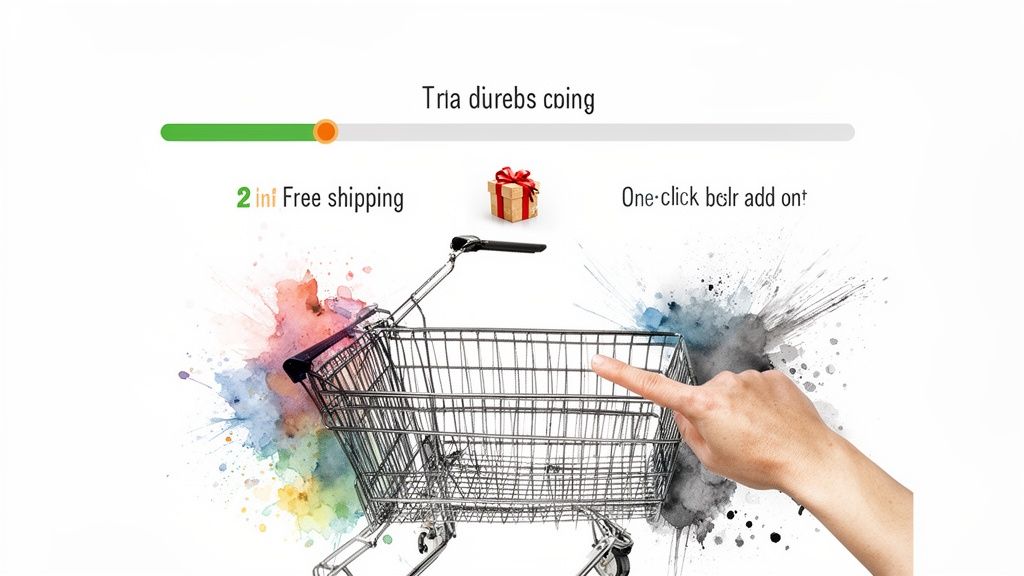
Spend-to-Unlock Shipping: A simple progress bar showing how close they are to free shipping is a massive motivator. No one wants to pay for shipping.
Buy More, Get a Reward: Create progressive rewards, like unlocking a special discount or a free product when they buy multiple items. This naturally encourages bigger orders.
The most profitable dropshipping stores don't just move products; they create rewarding experiences. By shifting from discounts to value-based incentives, you boost AOV and build a loyal customer base that sees your brand as more than just the cheapest option.
Implementing Seamless In-Cart Rewards
The trick to making this work is weaving these offers directly and smoothly into the shopping cart itself. When a customer adds an item, the cart should instantly show them how close they are to their next reward. It creates a real-time, engaging reason to keep shopping. To make this even more powerful, many apps also offer proven shopping cart abandonment solutions that work hand-in-hand with these AOV strategies to recover lost sales.
This is exactly what an app like Monster Cart was built for. It replaces your basic Shopify cart with an interactive engine designed to roll out these AOV-boosting tactics flawlessly. You can build a progress bar that fills up as shoppers add items, visually guiding them toward their next prize—whether that’s a free gift, a special discount, or free shipping.
Suddenly, your cart is no longer just a checkout tool. It’s a powerful profitability layer driving up order values without ever cheapening your brand.
Mastering In-Cart Upsells with Monster Cart
This is where your AOV strategy really comes to life. While plenty of apps can throw an upsell at a customer, the ones that actually work feel like a natural part of the shopping journey, not an annoying interruption. This is exactly where Monster Cart shines, turning your standard Shopify cart into an interactive rewards engine that boosts your bottom line while actually making customers happier.
Instead of hitting shoppers with a disruptive pop-up, Monster Cart swaps out the default cart with a slick, fully branded slide-cart. This little hub becomes the command center for all your value-driven offers, creating a frictionless path to a higher AOV by rewarding customers as they shop.
Turning Your Cart Into a Rewards Engine
The whole idea is to shift the customer's mindset from, "How much am I spending?" to "What reward am I about to unlock?" This gamified approach makes shopping more engaging and naturally encourages people to add more to their cart, all without you having to run margin-killing discounts.
Monster Cart makes this incredibly easy to set up. You can create a dynamic progress bar right inside the cart that visually shows customers how close they are to snagging their next reward.
Here are a few real-world examples of how this plays out:
Free Shipping Threshold: The progress bar shows, "You're only $12 away from FREE shipping!" This is hands-down one of the most powerful motivators for a customer to find one more item to buy.
Tiered Free Gifts: You can set up milestones like, "Spend $50 to get a free keychain!" and then, "Spend $75 to get a free tote bag!" The cart automatically updates as they add items, dangling the next available gift in front of them.
Unlockable Rewards: Create progressive offers that update in real-time. The cart can display tempting rewards like, "Add 1 more item to unlock 15% off your order!"
The approach is all about guiding, not forcing. By presenting value-based incentives at the perfect moment, you empower customers to increase their own order value to earn something they want, which builds a really positive feeling about your brand.
Adding Frictionless One-Click Offers
Beyond the gamified rewards, Monster Cart lets you stack other revenue-drivers directly inside the cart. These are simple, one-click offers that perfectly complement what the customer is already buying without breaking their flow.
Think of it like the candy and magazines at the grocery store checkout—they’re convenient, low-cost additions that really add up over time.
The most successful upsell strategies feel less like a sales pitch and more like a helpful suggestion. By embedding relevant, one-click offers directly in the cart, you make it easy for customers to say 'yes' and significantly increase AOV without creating any friction.
You can add simple offers like:
Shipping Protection: A simple checkbox to add low-cost shipping insurance for peace of mind.
Priority Processing: An option to pay a small fee to have their order jump to the front of the queue.
Complementary Products: Suggest a small, related item that pairs perfectly with what's already in their cart.
These small wins accumulate quickly, boosting the profitability of every single transaction. For dropshippers trying to stand out, finding the right app is everything. The Shopify App Store is a crowded space, with 11,217 vendors publishing nearly 18,000 apps. This intense competition is great for merchants, as it pushes developers to build high-quality tools that actually deliver value, and AOV-boosting apps are some of the most critical. You can discover more about the Shopify app ecosystem on Store Leads.
The beauty of Monster Cart is its laser focus on the in-cart experience—the final, most critical step before a purchase is made. By mastering this moment, you move beyond just making sales and start building a more profitable, customer-centric business. If you're looking to explore more options, check out our guide on the best Shopify upsell apps.
How to Choose Apps and Avoid Common Pitfalls
The Shopify App Store is a bit like a candy store—thousands of shiny options, all promising to make your business better. But if you’re not careful, you can end up with a serious case of “app bloat,” where conflicting, slow, or buggy apps drag your store’s performance through the mud.
Choosing the right apps is like hiring a skilled crew for your dropshipping business. The right ones work together seamlessly to get the job done, while the wrong ones just create chaos and cost you money. This is where having a sharp vetting process becomes your best defense.
Before you even think about hitting that ‘install’ button, you need a solid checklist to separate the high-performers from the potential headaches. The goal is to build a lean, effective tech stack that actually helps you grow. As you navigate this crowded space, a detailed guide can be a huge help in finding the best Shopify app for dropshipping.
Your Pre-Installation Checklist
Don't fall for a flashy marketing page. A few minutes of real digging now can save you weeks of frustration down the road. Treat every potential app like a job candidate and run them through this quick but critical evaluation.
Recent Reviews are Gold: Forget the five-star reviews from three years ago. What are people saying in the last 3-6 months? This is the most accurate snapshot you’ll get of the app’s current performance and the developer’s responsiveness.
Developer Support Matters: Look at the support section of the app's listing. Do they offer live chat, email, or a phone number? Read reviews that specifically mention how fast and helpful their support team is. A great app with terrible support is a nightmare waiting to happen.
Update Frequency: A well-maintained app is constantly being improved. Check the "Versions" or "Changelog" section on the app store page. If the developers are actively fixing bugs and adding features, it's a great sign.
Transparent Pricing: You want clear, straightforward pricing tiers. Steer clear of apps with confusing billing or a history of sudden price hikes that can throw your budget for a loop.
Think of every app installation as a business partnership. A great partner offers stellar support, communicates clearly, and consistently works to improve. A bad one just drains your resources and creates unnecessary stress.
Red Flags to Watch Out For
Knowing what to avoid is just as important as knowing what to look for. Certain red flags can signal an app that’s going to cause more harm than good, especially when it comes to your store’s speed and your customers' experience.
Be extra cautious of apps with:
Generic, Vague Reviews: A wall of five-star reviews with no real details can be a sign of fake or incentivized feedback. Real users talk about specific features and experiences.
Poor Documentation: If the help guides are thin, outdated, or poorly written, it’s a big red flag. It shows the developers don't prioritize the user experience.
Negative Impact on Site Speed: Actively search reviews for comments about the app slowing down store load times. Site speed is absolutely critical for conversions, and a slow app is a massive liability.
App Compatibility Issues: You need to know if the app plays well with others. A conflict between your upsell app and your sourcing app, for instance, can completely break your workflow and cost you sales.
By being selective and methodical, you can build a powerful set of tools that work together flawlessly—like using Monster Cart for in-cart rewards—to boost your AOV and create a smooth, profitable customer journey.
Answers to Your Toughest Dropshipping App Questions
Jumping into the world of dropshipping apps can feel overwhelming. There are thousands of options, and it’s tough to know where to start. I get it. Let’s cut through the noise and answer some of the most common questions merchants have when building out their app stack.
How Many Shopify Apps Should My Dropshipping Store Really Have?
Honestly, there's no magic number. But this much is true: quality always trumps quantity. While you’ll hear that successful merchants use around six apps on average, the real goal is to solve specific problems without bogging down your site. A lean, killer stack is what you're after.
Start with the absolute essentials. You need one great app for product sourcing, one for email marketing, another for customer reviews, and a dedicated tool to bump up your Average Order Value (AOV) by offering value-driven rewards. Don't add anything new unless you have a crystal-clear need for it and you've checked to make sure it won't slow your site to a crawl. Make it a habit to audit your apps every quarter and ditch anything you aren't using to avoid the "app bloat" that kills site speed.
Can Shopify Apps Genuinely Automate My Dropshipping Business?
Apps can automate a massive chunk of your day-to-day grind, but they can't do it all. Sourcing apps are brilliant at handling order placement and tracking, and marketing tools can fire off your email and SMS campaigns on autopilot. This is a huge time-saver.
But the things that truly build a brand—strategic thinking, real customer service, and building solid relationships with your suppliers—still need a human touch. Think of the best Shopify apps for dropshipping as your highly efficient operations team. They handle the repetitive, boring stuff, freeing you up to focus on the high-level strategy that actually grows your business.
How Do I Actually Measure the ROI of an Upsell App?
Measuring the return on an investment from a solid upsell app is surprisingly straightforward. The best ones come with built-in analytics that show you exactly how much money they're making you, plain and simple.
The number one metric you need to watch is "Attributed Revenue." This tells you the exact dollar amount of sales generated directly by the app's offers. You should also keep a close eye on your Average Order Value (AOV) before and after you install it. A winning app will show a clear lift in AOV without hurting your overall conversion rate, which proves that customers are actually happy with the value you're offering them.
What’s a Smarter Way to Increase Sales Than Just Offering Discounts?
Running constant discounts is a fast track to destroying your brand's value and gutting your profit margins. A much better strategy is to offer value-based incentives that reward customers for spending more. This builds real loyalty and shifts the focus to lifetime value.
Instead of just cutting prices, think about creating a rewarding shopping experience. This approach motivates customers to increase their own cart value to earn a tangible bonus, which feels like a win rather than a desperate sale.
This means switching from "15% OFF" to offers like:
Tiered free gifts that unlock at different spending levels.
"Buy More, Get a Reward" deals that give progressive savings or free items.
A free shipping progress bar that makes checkout feel like a game.
These methods boost AOV and make customers feel good about their purchase. Tools like Monster Cart are built specifically for this, letting you build these powerful reward systems right into your cart for maximum impact.
Ready to turn your cart into a profit engine? See how Monster Cart can help you boost AOV with value-driven rewards and frictionless upsells. Get started today!
Join 7000+ brands using our apps