8 Powerful Example of Cross Selling Strategies to Boost AOV in 2026
Jan 26, 2026
|
Published
In the world of e-commerce, increasing Average Order Value (AOV) is the holy grail. But what if the endless cycle of discounts is actually hurting your brand and training customers to wait for sales? The secret isn't just selling more, it's selling smarter. This article dives deep into powerful cross-selling strategies that enhance the customer experience, build long-term value, and encourage shoppers to spend more without slashing your prices. We’ll explore each real-world example of cross selling, breaking down how to implement them effectively in your Shopify store.
The goal is to shift from one-off transactional discounts to a rewarding, engaging shopping journey that boosts not just AOV, but customer lifetime value. Beyond individual transactions, a holistic approach to boosting your average order value is essential for overall business growth and to effectively increase retail sales. We'll show you how a tool like Monster Cart can transform your cart from a simple checkout step into your most powerful rewards and revenue engine, making these strategies seamless to implement.
This listicle isn't just a gallery of ideas; it's a strategic playbook. For each example, we provide a detailed analysis, recommended microcopy, visual layout tips, and common pitfalls to avoid. You will learn actionable tactics for:
Presenting "Frequently Bought Together" items that feel genuinely helpful.
Structuring "Buy More, Save More" tiers that maximize order value.
Offering a "Free Gift with Purchase" that drives excitement and conversion.
Optimizing "Free Shipping" thresholds to encourage that one extra item.
By the end of this guide, you will have a comprehensive understanding of how to implement sophisticated in-cart and checkout cross-selling campaigns that delight customers and drive sustainable growth for your Shopify brand.
1. Frequently Bought Together (FBT) Recommendations
The "Frequently Bought Together" (FBT) strategy is a classic and highly effective example of cross selling. It leverages customer data to identify and suggest products that are commonly purchased together. Instead of a random guess, this method uses social proof and past buying behavior to present a logical, helpful bundle. For example, a customer buying a new camera is almost always going to need a memory card and a case. FBT makes this connection for them, simplifying their shopping journey.
This approach is powerful because it feels less like a sales pitch and more like a helpful suggestion. It meets a customer's unspoken needs, enhancing their experience while simultaneously increasing your Average Order Value (AOV). For Shopify merchants, implementing this directly within the cart drawer, rather than just on the product page, is crucial for maximizing visibility and conversions without resorting to discounts.
Strategic Breakdown & Implementation
Why It Works: FBT taps into the psychological principle of social proof. Shoppers trust that items frequently bought together are a good combination, reducing decision fatigue and increasing confidence in their purchase.
KPI Impact: The primary goal is to boost AOV. Stores using Monster Cart’s optimized in-cart FBT feature often report a 20-25% lift in incremental revenue. It also has a positive, albeit smaller, impact on conversion rates by making the shopping experience more convenient.
Placement is Key: While product pages are a good start, placing FBT recommendations directly in the slide cart or a dedicated checkout step captures attention when purchase intent is highest. This prevents customers from having to navigate back to product pages, which can increase cart abandonment.
Actionable Takeaways with Monster Cart
To implement this on your Shopify store, start by analyzing your sales data. Identify your best-selling items and the products most frequently purchased alongside them.
Suggested Microcopy:
Headline: "Frequently Bought Together" or "Complete Your Order"
CTA Button: "Add All to Cart" or "Add Selected"
A/B Test Idea: Test a "Complete the Look" bundle against a standard "Frequently Bought Together" offer. The former works exceptionally well for fashion and apparel, while the latter is more universal.
Monster Cart Tip: Use the Monster Cart app to create dynamic, data-driven FBT bundles that appear directly in the cart drawer. This ensures every customer sees the most relevant offer without disrupting their flow, helping you grow AOV without relying on margin-cutting discounts.
2. Buy More, Save More (Tiered Discount) Strategy
The "Buy More, Save More" model is a powerful psychological pricing tactic and a strategic example of cross selling that incentivizes customers to increase their cart size. Instead of a simple, flat discount, this method offers progressive savings as customers reach specific spending thresholds. For example, a customer might get 10% off at $50, but a more enticing 20% off if they spend $100.
This approach gamifies the shopping experience, turning it into a challenge where the customer is rewarded for adding more items. It shifts the focus from a single product purchase to building a larger, more valuable order. By clearly visualizing the next savings tier, you encourage customers to add one more item to unlock a better deal, directly boosting Average Order Value (AOV) without resorting to site-wide, margin-eroding sales.
Strategic Breakdown & Implementation
Why It Works: This strategy leverages the principle of goal gradient theory, where people are more motivated as they get closer to reaching a goal. The visual progress bar showing how close a customer is to the next discount tier creates a compelling reason to spend more. It feels like an achievement, not just a transaction.
KPI Impact: The primary impact is a significant lift in AOV, with Monster Cart users often reporting a 25-35% increase when tiers are configured correctly. It can also improve conversion rates by making higher-value carts feel more justified and affordable to the customer.
Placement is Key: This offer is most effective when placed directly within the slide cart. A dynamic progress bar that updates in real-time as items are added provides instant feedback and motivation. It keeps the customer engaged in the cart environment, focused on reaching the next reward tier rather than navigating away.
Actionable Takeaways with Monster Cart
To get started, analyze your current AOV to set realistic and profitable tiers. Your first threshold should be set slightly above your current AOV to encourage a small stretch, with subsequent tiers offering progressively better value.
Suggested Microcopy:
Headline: "You're $15 Away From Free Shipping!" or "Spend $25 More to Unlock 20% Off"
CTA Button: "Keep Shopping" or "View Bestsellers"
A/B Test Idea: Test a discount-based tier ("Save 15%") against a reward-based tier ("Get a Free Gift at $100"). The free gift can often feel more valuable and protect your margins better than a straight discount.
Monster Cart Tip: Use Monster Cart’s in-cart rewards bar to create visually compelling, multi-tiered offers. You can combine free shipping, percentage discounts, and free gifts into a single, progressive journey. This turns your cart into a powerful AOV-boosting engine that enhances the customer experience and long-term value.
3. Free Gift with Purchase (GWP) Campaigns
The "Free Gift with Purchase" (GWP) model is a powerful promotional example of cross selling that incentivizes customers to spend more to unlock a reward. Instead of devaluing your products with discounts, you offer a complimentary item once a customer’s cart reaches a specific threshold. For example, a beauty brand might offer a free travel-size moisturizer on all orders over $75, encouraging shoppers to add one more item to their cart to qualify.
This strategy is highly effective because it reframes the transaction from saving money to gaining value. It creates a more positive, rewarding experience that can build brand loyalty and increase perceived value. For Shopify merchants, GWP campaigns are a brilliant way to boost Average Order Value (AOV) and move specific inventory without resorting to site-wide sales that can erode profit margins and damage brand perception over time.
Strategic Breakdown & Implementation
Why It Works: GWP leverages the psychological principle of reciprocity and the appeal of "free." Customers feel they are receiving something extra, which creates a more memorable and positive shopping experience than a simple percentage-off discount.
KPI Impact: The primary goal is to significantly lift AOV; stores using Monster Cart’s tiered GWP features often see AOV increases of 28-35%. It also positively impacts conversion rates by creating a compelling reason to complete the purchase now.
Placement is Key: The offer must be highly visible. Presenting the GWP offer directly in the cart drawer with a progress bar (e.g., "You're only $15 away from your free gift!") creates urgency and guides the customer's next action, turning the cart into an interactive conversion tool.
Actionable Takeaways with Monster Cart
To implement this on your Shopify store, choose gifts that have a high perceived value but a relatively low cost to you. These should complement your core products, not be random, unrelated items.
Suggested Microcopy:
Headline: "You've Unlocked a Free Gift!" or "Spend $50, Get a Free [Product Name]"
CTA Button: "Claim Your Gift" or "Add to Cart"
A/B Test Idea: Test a single, high-value gift offer against a tiered system where customers unlock better gifts as they spend more. For example, a free sample at $50, a deluxe sample at $75, and a full-size product at $100.
Monster Cart Tip: Use Monster Cart to create automated, tiered GWP campaigns that appear directly in the slide cart. The app’s progress bar visually motivates customers to hit the next spending threshold, making it one of the most effective ways to increase AOV and lifetime value without discounts. You can find more strategies in our guide to offering a free gift with purchase on Shopify.
4. Free Shipping Threshold Optimization
Setting a minimum purchase amount to unlock free shipping is a psychologically powerful example of cross selling. This strategy encourages customers to add more items to their cart to meet a specific spending goal. Instead of feeling pushed into buying more, customers feel they are earning a valuable reward, effectively gamifying the shopping experience and transforming a potential cost (shipping) into a savings opportunity.
This tactic works because shipping fees are a primary cause of cart abandonment. By offering a clear path to avoid them, you create a strong incentive for customers to increase their order size. For example, a customer with $42 in their cart is highly likely to add a $10 item to qualify for a $50 free shipping threshold, boosting your Average Order Value (AOV) while delighting the customer.
Strategic Breakdown & Implementation
Why It Works: This strategy taps into loss aversion. Customers perceive paying for shipping as a loss, and they are motivated to add items to their cart to avoid that feeling. It reframes the purchase from "spending more" to "saving on shipping," making it a positive action.
KPI Impact: The primary impact is a significant lift in AOV, with Shopify merchants often seeing a 22-28% increase when implementing a visual progress bar. It also positively affects conversion rates by removing the friction of shipping costs for customers who meet the threshold.
Placement is Key: The free shipping progress bar must be highly visible. Placing it prominently at the top of the cart drawer, like in Monster Cart, ensures the customer sees it immediately after adding an item. This constant, visual reminder is crucial for motivating them to reach the goal without disrupting their shopping flow.
Actionable Takeaways with Monster Cart
To implement this effectively, first analyze your current AOV and shipping costs. A common strategy is to set your threshold about 15-20% above your current AOV to encourage a meaningful, yet achievable, increase in spending.
Suggested Microcopy:
Headline: "You're only $X away from Free Shipping!"
CTA Button: "Keep Shopping" or "View Bestsellers"
A/B Test Idea: Test a static threshold (e.g., "Free Shipping on Orders Over $75") against a dynamic, personalized threshold for repeat customers (e.g., offering them free shipping at $60). This rewards loyalty and can boost lifetime value.
Monster Cart Tip: Use Monster Cart to add a dynamic, gamified progress bar directly into your slide-out cart. This visual cue updates in real-time as customers add items, creating a compelling sense of progress. It's a powerful way to increase AOV without resorting to margin-eroding discounts.
5. One-Click Add-Ons (Shipping Protection, Warranties, Services)
One-click add-ons are a subtle yet powerful example of cross selling that boosts profitability by offering value-added services at the point of highest commitment. This strategy presents low-cost, high-margin additions like shipping protection, extended warranties, or gift wrapping right before checkout. For instance, a customer buying a high-ticket electronic item is often willing to pay a small extra fee for an extended warranty, providing peace of mind and increasing your store’s revenue.
This method is exceptionally effective because it targets customers when their purchase intent is solidified. Instead of pushing another physical product, you're offering a complementary service that enhances the value of their primary purchase. This builds trust and improves the customer experience, all while adding incremental, high-margin revenue to each order without resorting to discounts.
Strategic Breakdown & Implementation
Why It Works: This strategy leverages the "endowment effect," where customers place a higher value on something they are about to own. Offering protection or an enhancement for that item feels like a logical, low-friction decision rather than an upsell.
KPI Impact: The main goal is to increase Profitability and AOV. While the AOV lift might seem small per order, the high margins on these services (often 80-95%) significantly boost your bottom line. Stores using Monster Cart for these add-ons often see a 3-8% lift in overall revenue.
Placement is Key: The ideal placement for one-click add-ons is within the slide cart or on the checkout page. This timing is crucial; the customer has already committed to the main products, making them more receptive to complementary service offerings that protect or enhance their purchase.
Actionable Takeaways with Monster Cart
Begin by identifying services that add genuine value to your products. For electronics, warranties are a must. For gift-centric stores, gift wrapping is a natural fit. For nearly any store, shipping protection is a universal value-add.
Suggested Microcopy:
Headline: "Protect Your Order" or "Enhance Your Purchase"
CTA Button: Use a simple checkbox or "Add for $X.XX"
A/B Test Idea: Test offering a single, highly relevant add-on (e.g., "Add 2-Year Warranty") against a small list of 2-3 options (e.g., Warranty, Gift Wrap, Priority Processing). This helps determine if choice or simplicity drives more conversions.
Monster Cart Tip: Implement these offers seamlessly within the Monster Cart drawer. You can set rules to display specific add-ons based on cart contents, ensuring maximum relevance. For example, show an "Extended Warranty" only when a product over $100 is added, helping you boost AOV intelligently and focus on long-term customer satisfaction.
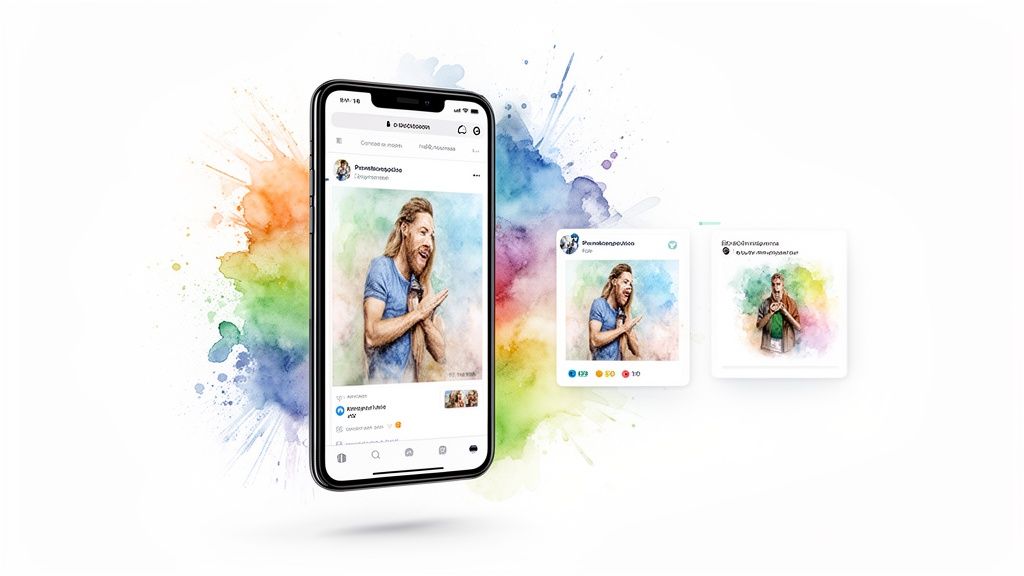
6. Personalized Product Recommendations (AI-Driven)
Leveraging AI for personalized recommendations is a sophisticated and powerful example of cross selling. This strategy moves beyond static suggestions by using machine learning to analyze individual customer data, including browsing history, past purchases, and real-time behavior. The result is a dynamic, one-to-one shopping experience where product suggestions are uniquely tailored to each user. Think of it as having a personal shopper for every customer, anticipating their needs before they even voice them.
This hyper-personalization makes customers feel understood, transforming a generic sales pitch into a genuinely helpful service. When a customer adds a new skincare serum to their cart, an AI engine might suggest a complementary toner that other customers with a similar skin profile purchased. This not only simplifies the discovery process but also builds brand loyalty and significantly boosts order value by showing customers products they are highly likely to want.
Strategic Breakdown & Implementation
Why It Works: Personalization taps into the core human desire to feel seen and understood. By showing relevant products, it reduces friction and demonstrates that the brand knows the customer's tastes and needs, fostering a deeper connection.
KPI Impact: The primary impact is on Average Order Value (AOV) and Conversion Rate (CVR). Shopify stores using AI-driven recommendations often report AOV lifts of 20-25%. It also positively affects Customer Lifetime Value (LTV) by encouraging repeat purchases.
Placement is Key: While effective on product pages, AI recommendations are most potent within the cart or checkout flow. At this stage, purchase intent is solidified, and a well-timed, relevant suggestion is more likely to be added without hesitation.
Actionable Takeaways with Monster Cart
To get started, integrate an AI-powered recommendation app with your Shopify store. Focus on an engine that analyzes real-time behavioral data for the most accurate suggestions.
Suggested Microcopy:
Headline: "Recommended For You" or "You Might Also Like"
CTA Button: "Add to Cart" or "Quick Add"
A/B Test Idea: Test a "Because You Viewed..." recommendation block against a "Top Picks For You" block. The first is based on recent browsing history, while the second is a broader, profile-based suggestion.
Monster Cart Tip: Use Monster Cart to integrate a powerful AI recommendation engine directly into the slide cart. This ensures that every customer receives hyper-personalized offers at the peak of their buying intent, increasing AOV without offering a single discount. Learn more about effective Shopify product recommendation strategies to refine your approach.
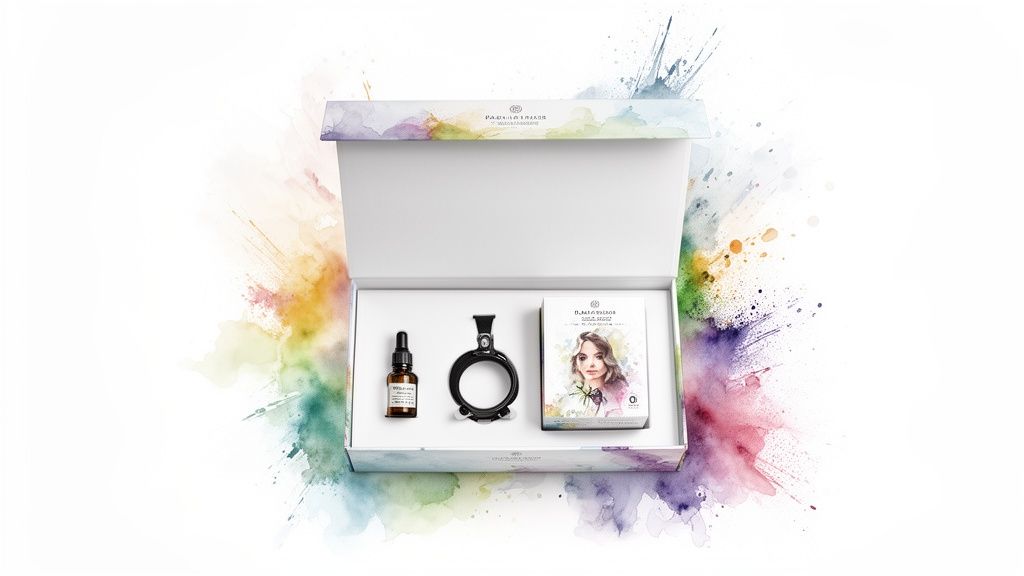
7. Product Bundling (Curated Packages)
Product bundling is a strategic example of cross selling where merchants group related items into a single, pre-curated package. Instead of hoping customers find and add multiple products to their cart, this method presents a complete solution as one purchasable unit, often at a slight value compared to buying each item separately. For instance, a skincare brand might offer "The Complete Morning Routine" bundle, combining a cleanser, serum, and moisturizer.
This approach is highly effective because it simplifies the customer's decision-making process and creates a strong sense of perceived value. It addresses a specific need or goal, positioning the bundle as an expert-curated solution rather than just a collection of products. By presenting a cohesive package, brands can significantly increase their Average Order Value (AOV) and introduce customers to a wider range of their product catalog, boosting lifetime value.
Strategic Breakdown & Implementation
Why It Works: Bundling taps into the psychology of convenience and value. Customers appreciate the ease of a one-click solution and perceive a curated package as a better deal, even if the discount is minimal. It shifts the focus from price to the value of a complete solution.
KPI Impact: The primary impact is a significant lift in AOV, with Shopify stores often seeing a 20-30% increase when implementing smart bundles. It also positively affects Customer Lifetime Value (LTV) by encouraging trial of multiple products that may lead to future individual purchases.
Placement is Key: Promote bundles on product pages of the individual items included, on dedicated landing pages, and directly within the slide cart as a one-click upgrade. An in-cart offer is especially powerful as it can convert a single-item purchase into a multi-item sale at the last minute.
Actionable Takeaways with Monster Cart
To build effective bundles, analyze your "Frequently Bought Together" data to see which products customers naturally pair. Create themed packages for occasions like holidays, back-to-school, or specific customer goals.
Suggested Microcopy:
Headline: "The Complete Set" or "Starter Kit"
CTA Button: "Add Bundle to Cart" or "Upgrade to the Bundle"
A/B Test Idea: Test a "Build Your Own Bundle" feature against pre-curated bundles. The former offers personalization, while the latter provides expert guidance. See which approach resonates more with your audience.
Monster Cart Tip: Use Monster Cart to offer a bundled upgrade directly in the cart drawer. For example, if a customer adds a single lipstick, you can trigger an in-cart offer for "The Perfect Lip Kit" bundle that includes the lipstick, a matching liner, and a gloss. This is a seamless way to boost AOV without disrupting the shopping experience.
8. Loyalty Rewards and Retention-Based Cross-Selling
Integrating loyalty rewards is a sophisticated and highly effective example of cross selling that focuses on retention and customer lifetime value (LTV). Instead of a one-time offer, this strategy turns every purchase into an opportunity for future engagement. By offering points or tiered benefits, you encourage customers to spend more and explore a wider range of your products to unlock valuable rewards. For example, a customer might add an extra item to their cart to reach the next reward tier, effectively cross-selling to themselves.
This approach transforms the shopping experience into a rewarding game, making customers feel valued for their repeat business. It shifts the focus from transactional discounts to building a long-term relationship, which is crucial for sustainable growth. By visualizing reward progress directly in the cart, you can gamify the journey and motivate customers to increase their order value without offering steep, margin-eroding price cuts.
Strategic Breakdown & Implementation
Why It Works: This strategy leverages the psychological principles of goal-setting and reciprocity. Customers are motivated to reach the next reward tier (goal-setting), and they feel a sense of loyalty and appreciation when their spending is acknowledged with tangible benefits (reciprocity). This builds an emotional connection that transcends price.
KPI Impact: The primary impact is on Customer Lifetime Value (LTV) and repeat purchase rate. Brands using in-cart loyalty features can see a 30-45% increase in repeat purchase frequency. It also positively affects AOV as shoppers add more items to earn points or unlock the next tier of rewards.
Placement is Key: While a dedicated loyalty page is important, the most critical placement is within the slide cart. Showing a customer they are "Only $10 away from your next reward!" at the peak of their purchase intent is a powerful motivator. It encourages immediate action to increase their cart value.
Actionable Takeaways with Monster Cart
To implement this, define a simple, compelling rewards structure. The key is making the path to earning and redeeming rewards clear and exciting.
Suggested Microcopy:
Headline: "You're Earning Rewards!" or "Your Loyalty Status"
Progress Bar: "You're only [Amount] away from a Free Gift!"
CTA Button: "Claim Your Reward" or "See Rewards"
A/B Test Idea: Test offering points redemption for a free product versus a percentage discount. A free product can often feel more valuable and is a great way to cross-sell a specific item you want to promote.
Monster Cart Tip: Use Monster Cart’s in-cart rewards layer to display a customer's point balance and progress toward their next reward in real-time. This visibility gamifies the experience, nudging them to add more to their cart and boosting AOV. It’s a powerful way to increase customer lifetime value by building a loyal community.
8 Cross-Selling Examples Compared
Strategy | Implementation Complexity 🔄 | Resource Requirements ⚡ | Expected Outcomes ⭐📊 | Ideal Use Cases 💡 | Key Advantages ⭐ |
|---|---|---|---|---|---|
Frequently Bought Together (FBT) Recommendations | Medium — needs recommendation engine + cart integration | Moderate — historical sales data, inventory sync, front-end work | AOV +15–30%; incremental revenue when enough data exists | Stores with rich purchase history and complementary SKUs | Natural cross-sells; data-driven; low checkout friction |
Buy More, Save More (Tiered Discount) | Medium — pricing rules + progress UI | Low–Moderate — pricing config, analytics, UI design | Encourages upsell; variable AOV lift depending on thresholds | Promotions where marginal margin supports discounts (fashion, accessories) | Motivates incremental adds with clear progress cues |
Free Gift with Purchase (GWP) | Medium — gift logic + inventory integration | Moderate — gift inventory, fulfillment coordination | AOV +30–40% (typical); boosts perceived value without direct discount | Beauty, luxury, seasonal campaigns, clearing slow stock | Preserves brand value; strong perceived reward effect |
Free Shipping Threshold Optimization | Low–Medium — threshold logic + messaging | Low — shipping cost analysis, carrier integration, progress UI | High impact on conversion; AOV +20–30%; reduces abandonment | Broad ecommerce use where shipping is a common abandonment reason | Powerful motivator; clear customer incentive to add items |
One-Click Add-Ons (Protection, Warranties) | Low — simple UI toggles at checkout | Low — product/service setup, pricing, fulfillment paths | Add-on uptake 10–20%; AOV +15–25%; high-margin uplift | High-ticket or fragile items (electronics, gifts) | Low friction; high margins; solves customer pain points |
Personalized Product Recommendations (AI-Driven) | High — ML models, data pipelines, testing | High — historical data, privacy compliance, ongoing tuning | AOV +10–35%; improved relevance and engagement | Large catalogs, repeat customers, cross-device shoppers | Highly relevant suggestions; long-term learning and optimization |
Product Bundling (Curated Packages) | Medium — bundle pricing + inventory handling | Moderate — merchandising effort, inventory coordination | AOV +25–40%; simplifies decision-making for buyers | Gift sets, complementary-product categories, seasonal offers | Perceived value; simplifies purchase; moves multiple SKUs |
Loyalty Rewards & Retention-Based Cross-Selling | High — program infrastructure + tier logic | High — program management, marketing integration, customer support | Increases CLV +25–40%; slower payoff but strong retention lift | Brands focused on repeat business and emotional loyalty | Encourages repeat purchases; builds long-term customer value |
Turn Your Cart into a Conversion Engine
We've explored a wide spectrum of powerful cross-selling strategies, moving far beyond generic product suggestions. From the classic "Frequently Bought Together" pairings to sophisticated AI-driven recommendations and value-packed bundles, each example of cross selling demonstrates a core principle: the most effective way to increase Average Order Value is by genuinely enhancing the customer's shopping experience.
The journey from a simple transaction to a rewarding interaction begins the moment a customer adds an item to their cart. This is your pivotal opportunity not to interrupt, but to guide and delight. The strategies we've detailed, such as tiered rewards, free gift thresholds, and one-click service add-ons, are not just sales tactics; they are tools for building a more engaging and valuable customer relationship that focuses on lifetime value.
Key Takeaways: From Theory to Action
Reflecting on the examples provided, several key themes emerge as critical for success. To turn these insights into tangible results for your Shopify store, focus on these strategic pillars:
Value Over Discounts: The most sustainable growth comes from adding value, not just slashing prices. A compelling free gift, a useful product bundle, or the convenience of reaching a free shipping threshold often provides a stronger incentive and protects your profit margins better than a simple percentage-off coupon.
Frictionless Implementation: Customers will not engage with clunky or confusing offers. The beauty of in-cart cross-selling is its seamless nature. Offers should appear contextually, be easy to understand, and require a single click to accept. This minimizes cart abandonment and maximizes conversion.
Visualize the Reward: Don't just tell customers about a potential reward; show them. Progress bars for free shipping or a "You're only $X away from a free gift!" message create a motivating, gamified experience. This visual feedback encourages customers to add more to their cart to reach the next milestone.
Your Next Steps: Building a High-Converting Cart
Now, it's time to apply these concepts. Start by analyzing your own product catalog and customer data to identify the most potent cross-selling opportunities.
Identify Your "Power Pairs": Begin with the low-hanging fruit. Use your Shopify analytics to find which products are most frequently purchased together and implement a "Frequently Bought Together" offer directly in your cart.
Define Your Value Tiers: Calculate your current AOV and set realistic goals for a "Free Gift" or "Free Shipping" threshold just above it. This encourages customers to spend a little more without feeling pressured.
Test and Iterate: Don't set your offers and forget them. Use A/B testing to experiment with different gift products, bundle combinations, and microcopy. The insights you gain from testing one example of cross selling can inform your entire promotional strategy.
Ultimately, the goal is to transform your cart from a static holding area into a dynamic, interactive conversion engine. By focusing on customer value and lifetime loyalty rather than one-time discounts, you build a healthier, more profitable business. You are not just selling products; you are creating a rewarding journey that makes customers excited to complete their purchase and eager to return.
Ready to turn these strategies into reality without custom code or complex setups? Monster Cart is the all-in-one Shopify app designed to implement these powerful in-cart cross-selling offers seamlessly. From free gift progress bars to one-click add-ons, it transforms your cart into the ultimate AOV-boosting tool. Install Monster Cart today and start creating a more rewarding checkout experience for your customers.
Join 7000+ brands using our apps