12 Gift Promotion Ideas to Boost AOV Without Hefty Discounts in 2026
Jan 13, 2026
|
Published
In the world of e-commerce, the race to the bottom with discounts is a losing game. It erodes margins, devalues your brand, and attracts one-time deal hunters rather than loyal customers with high lifetime value. But what if you could dramatically increase revenue and build lasting customer relationships without constantly slashing prices? The answer lies in shifting from costly markdowns to strategic, value-driven rewards. This guide explores a dozen powerful gift promotion ideas designed to enhance the customer experience, encourage higher spending, and focus on sustainable, long-term profitability by boosting customer lifetime value.
We will move beyond generic advice and provide a clear, actionable playbook for Shopify merchants. For each idea, you'll learn not just the what and why, but the how: step-by-step implementation notes on running these promotions directly within the shopping cart, turning a simple checkout into a powerful rewards engine. At the core of these smart reward strategies is the goal of boosting revenue; achieve this by further understanding how to grow your Average Order Value.
The goal isn't just to make a single sale; it's to create a more engaging shopping journey that boosts AOV, improves conversion rates, and builds a customer base that returns again and again. Let's dive into the strategies that will help you grow smarter, not cheaper.
1. Tiered Free Gift with Purchase (GWP) Rewards
Tiered GWP is a powerful gift promotion idea that entices customers to increase their spending by unlocking progressively more valuable gifts at set cart value milestones. This strategy, popularized by beauty giants like Sephora and Ulta, moves beyond a single gift offer and gamifies the shopping experience. As a customer adds items, a real-time progress bar in the cart shows them exactly how close they are to the next reward, creating a compelling reason to add one more item to their order.
This approach is highly effective for boosting Average Order Value (AOV) without resorting to margin-eroding discounts. By offering tangible products as rewards, you enhance perceived value and customer satisfaction, which contributes to long-term loyalty and higher lifetime value. For instance, exploring different approaches to offering free gift strategies can provide valuable insights into structuring successful GWP programs that resonate with your specific audience.
How to Implement Tiered GWPs
Set Strategic Tiers: Place your first tier just above your current AOV (e.g., 15-20% higher) to encourage the largest segment of your customers to spend more. Subsequent tiers should be challenging but achievable.
Select Compelling Gifts: Use high-perceived-value, low-cost items like deluxe samples, branded accessories, or complementary products. Ensure the gift's value clearly increases with each tier.
Visualize Progress: Use an in-cart rewards engine like Monster Cart to display a visual progress bar. This real-time feedback is crucial for motivating customers to reach the next spending threshold and is a core feature for boosting AOV intelligently. Learn more about setting up GWP campaigns on Shopify.
2. Free Shipping Thresholds with Visual Progress
Combining the psychological power of a reward with the practical appeal of free shipping is a highly effective gift promotion idea. This strategy motivates customers to increase their cart size to meet a specific spending threshold, directly boosting your Average Order Value (AOV). By framing free shipping as a reward to be unlocked, you transform a standard shipping fee into a compelling incentive, encouraging customers to add more items to their cart rather than abandoning it due to unexpected costs.
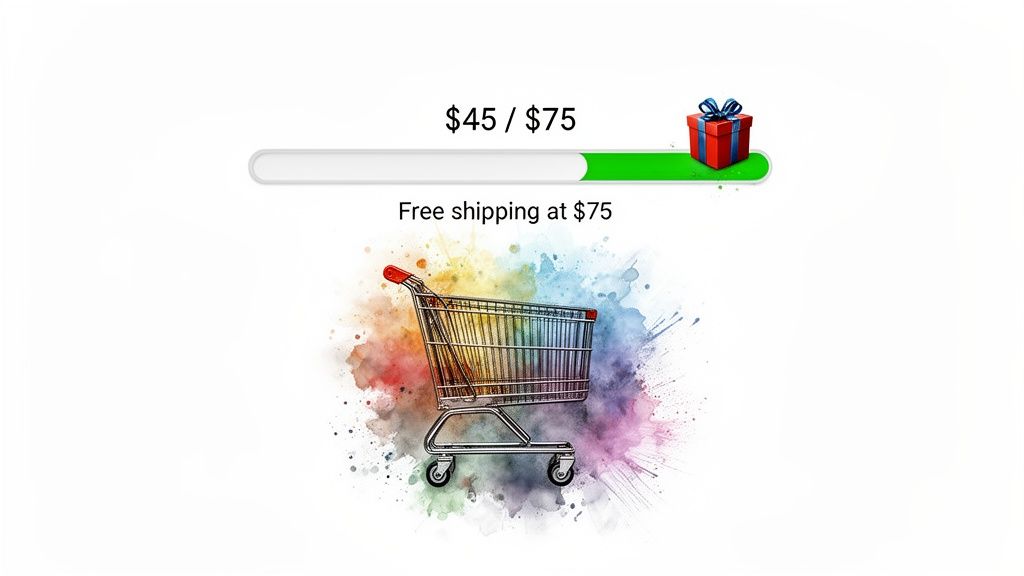
This approach, mastered by e-commerce giants like Amazon and Target, works because it targets one of the primary reasons for cart abandonment. Displaying a visual progress bar in the cart drawer creates a transparent and gamified experience. Customers can see exactly how much more they need to spend to earn their reward, which significantly increases conversion rates and enhances customer satisfaction without relying on product discounts, thus protecting your margins and encouraging repeat business.
How to Implement Free Shipping Thresholds
Calculate Your Threshold: Set your free shipping threshold approximately 15-30% above your current AOV. This makes the goal attainable for most customers while ensuring a profitable increase in order size.
Visualize the Journey: Use an in-cart rewards engine like Monster Cart to add a dynamic progress bar. This visual cue is a critical AOV-boosting feature for motivating customers to complete the final step and unlock their reward.
Promote It Everywhere: Announce your free shipping offer clearly on a site-wide banner, product pages, and within the cart itself. Consistent messaging reinforces the value and keeps the incentive top-of-mind. Learn more about how to set up a free shipping bar on Shopify.
3. Buy More, Save More Progressive Discounts
The “Buy More, Save More” model is a compelling gift promotion idea that frames discounts as an earned reward rather than a simple price cut. This tiered structure offers escalating savings as a customer's cart value increases, effectively motivating them to spend more to unlock a better deal. Unlike a flat percentage-off sale that can devalue your brand, this progressive approach gamifies savings and protects your margins by rewarding only high-value orders, which is crucial for long-term customer lifetime value.
This strategy is a proven method for boosting Average Order Value (AOV) by giving customers a clear financial incentive to add more items. Instead of offering a free product, you are gifting them savings, which can be just as powerful. Brands like Glossier and Warby Parker use this to encourage multi-product purchases, turning a discount into an upgrade and enhancing customer lifetime value by rewarding loyalty through spending.
How to Implement Progressive Discounts
Define Strategic Tiers: Structure your tiers to guide customers toward higher spending. For example: Save 10% on orders over $75, 15% over $125, and 20% over $200. The first tier should be set slightly above your current AOV.
Communicate Savings Clearly: Use announcement bars and product page messaging to inform customers about the savings tiers before they add to their cart. This sets expectations and frames the shopping journey.
Show Real-Time Progress: Utilize an in-cart tool like Monster Cart to display a progress bar and dynamically update the exact dollar amount saved as customers add items. This visual feedback is crucial for encouraging them to reach the next discount level without devaluing your brand.
4. Loyalty Points & Reward Accumulation at Checkout
Integrating a loyalty points system directly into the checkout process is a sophisticated gift promotion idea that builds long-term customer relationships. Instead of a one-time discount, this strategy rewards every purchase with points that customers can accumulate and redeem for future gifts, discounts, or exclusive perks. This transforms the shopping journey into an ongoing rewards cycle, significantly boosting customer lifetime value and encouraging repeat business without consistently sacrificing margins.
This method excels at fostering brand affinity by making customers feel valued for their continued support. Programs like Sephora's Beauty Insider have demonstrated how a well-executed points system can drive immense loyalty and repeat purchase rates. By showing customers their points balance directly in the cart, you remind them of their earned value and motivate them to stay engaged with your brand, focusing on retention over one-time sales.
How to Implement a Points Program at Checkout
Set an Accessible Earning Rate: Start with a simple rule, such as offering 5 or 10 points for every dollar spent. This makes it easy for customers to understand the value and see their balance grow.
Visualize Rewards in the Cart: Use an in-cart rewards engine to clearly display a customer's current points balance and show them the rewards they are eligible for. This real-time visibility is key to encouraging redemptions and repeat purchases.
Gamify the Experience: Create reward tiers and milestones. For example, use messaging like, "You're only 50 points away from a free deluxe sample!" to drive urgency and incentivize a slightly higher spend to unlock the next reward level.
Offer Point Multipliers: During key sales periods or for specific product categories, offer "Double Points" events to create excitement and accelerate reward accumulation, providing a powerful, margin-friendly alternative to site-wide discounts.
5. Frequently Bought Together (FBT) Bundle Promotions
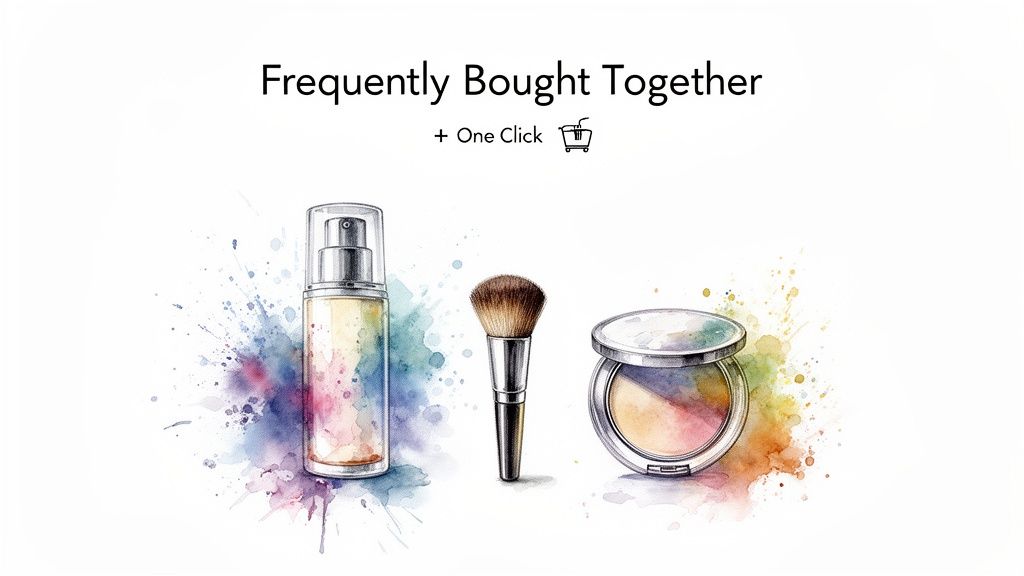
Frequently Bought Together (FBT) is a data-driven gift promotion idea that suggests complementary products customers often purchase together. This strategy, popularized by Amazon, moves beyond generic upsells by presenting relevant add-ons directly within the cart. By analyzing past order data, you can surface bundles that feel intuitive and helpful, encouraging customers to increase their cart size naturally.
This approach is highly effective for boosting Average Order Value (AOV) by enhancing the shopping experience rather than relying on deep discounts. Presenting a curated bundle with a small incentive makes customers feel like they are getting a smart deal, which in turn builds trust and increases lifetime value. The key is making the offer feel like a personalized recommendation, not an aggressive sales tactic, thereby protecting your brand's integrity.
How to Implement FBT Bundles
Analyze Purchase Data: Use at least three months of transaction data to identify which products are most commonly purchased together. Look for non-obvious pairings that solve a complete customer need.
Offer a Smart Incentive: Provide a small, compelling reward (e.g., 5-10% off the bundle or a free gift) when customers purchase the full bundle. This incentivizes the add-on without significantly eroding your margins. To explore different bundle strategies, you can find inspiration in these examples of price bundling.
Surface Bundles In-Cart: Use an in-cart rewards engine like Monster Cart to display FBT suggestions directly in the cart drawer. This presents the offer at the most critical moment of decision, making it easy for customers to add all items with a single click.
6. One-Click Add-Ons (Protection Plans, Shipping Upgrades, Services)
One-click add-ons are a subtle yet powerful gift promotion idea that boosts Average Order Value (AOV) by offering complementary services at the point of highest purchase intent. Instead of a traditional discount, you offer the "gift" of convenience, protection, or enhanced service. This strategy capitalizes on checkout momentum by presenting high-margin options like shipping protection, extended warranties, or gift wrapping as simple, single-click additions directly within the cart drawer.
This approach, seen in major retailers like Apple and Best Buy, increases cart value without discounting products, preserving your margins and enhancing the customer experience. By offering a valuable service like shipping protection, you build trust and increase the perceived value of the entire order. It’s an effective way to introduce a value-added upsell that feels like a helpful suggestion rather than an aggressive sales tactic, turning a standard checkout into a premium, full-service transaction that can lead to higher lifetime value.
How to Implement One-Click Add-Ons
Offer High-Value Services: Start with shipping protection, which has a very high attachment rate. Other strong options include extended warranties for electronics, priority processing for last-minute shoppers, or premium gift-wrapping services.
Price Strategically: Keep add-ons accessible by pricing them at 2-5% of the product's value. This makes the offer feel like a small, justifiable expense to protect a larger purchase (e.g., "Protect your $200 order for just $2.99").
Optimize In-Cart Placement: Use an in-cart rewards engine like Monster Cart to place these offers just above the checkout button. This ensures maximum visibility without disrupting the customer's journey, making it easy to add the service with a single click.
7. Social Proof & Limited-Time Gift Scarcity Campaigns
This strategy supercharges gift promotions by combining the psychological power of scarcity and social proof. It involves offering a limited-quantity or time-sensitive gift and then using real-time social proof elements like countdown timers, live purchase notifications, or "Only X gifts left" messages directly within the cart. This creates a powerful sense of urgency and FOMO (Fear Of Missing Out), compelling customers to complete their purchase quickly to secure the exclusive reward.
This is one of the most effective gift promotion ideas for driving immediate action and increasing conversion rates without offering steep discounts. By highlighting the gift's limited availability, you elevate its perceived value and build trust through transparent social proof. The goal is to motivate customers to spend more to claim a desirable item before it's gone, boosting AOV and customer engagement simultaneously, which contributes to better retention and lifetime value.
How to Implement Gift Scarcity Campaigns
Create Authentic Scarcity: Base your campaign on real inventory or a genuine time limit. For example, offer a special gift for the "first 100 orders" or only for 24 hours. Fake scarcity can severely damage brand trust.
Integrate Social Proof: Use an in-cart rewards engine like Monster Cart to display a countdown timer for the offer or a live inventory counter for the gift (e.g., "Only 12 left!"). This visual cue reinforces urgency and drives conversions without cheapening your brand.
Combine with Value: Clearly state the terms: "Claim your limited-edition gift with any $75+ purchase before midnight!" The combination of scarcity and a clear spending goal is key to maximizing AOV and conversions.
8. Personalized Recommendation Gifts Based on Purchase History
This data-driven gift promotion idea uses customer purchase history and browsing behavior to offer a highly relevant, personalized free gift. Instead of a one-size-fits-all reward, this strategy shows customers you understand their preferences, creating a powerful sense of individual recognition and significantly increasing the perceived value of the gift. This approach moves beyond generic offers to build deeper loyalty and boost Average Order Value (AOV) by presenting an irresistible, tailor-made incentive.
By analyzing past purchases, you can recommend a gift that perfectly complements a customer's collection or introduces them to a new product they are highly likely to love. This level of personalization makes the shopping experience feel curated and special, encouraging customers to complete their purchase to claim a gift chosen just for them. For merchants, this is a sophisticated way to increase conversions and lifetime value without defaulting to margin-cutting discounts.
How to Implement Personalized Recommendation Gifts
Segment Your Audience: Start by creating customer segments based on purchase history (e.g., first-time vs. repeat), product category preferences, or spending habits. More advanced setups can use browsing data for real-time recommendations.
Create Targeted Gift Rules: Assign specific free gifts to each customer segment. For example, a customer who frequently buys skincare could be offered a new serum sample, while a makeup enthusiast sees a mini lipstick.
Communicate the Personalization: Use clear messaging in your in-cart offers, such as "A special gift for you, based on items you love!" This highlights the tailored nature of the reward and makes the customer feel valued. Monster Cart can be configured to display these dynamic offers based on customer tags, strengthening the customer relationship and boosting lifetime value.
9. Seasonal & Holiday-Themed Gift Collections with Bundles
Leveraging seasonal and holiday moments with themed gift bundles is a classic gift promotion idea that capitalizes on peak shopping intent. This strategy involves creating curated product collections for occasions like Christmas, Mother's Day, or Valentine's Day, tapping into the gift-giving mindset to drive higher AOV. By bundling complementary items into an attractive, ready-to-give package, you simplify the customer's decision-making process and increase the perceived value far beyond that of a simple discount.
This approach is highly effective for moving inventory and boosting revenue during key sales periods without devaluing your brand with hefty sales. Instead of offering a sitewide discount, you present a high-value solution. For instance, brands like Glossier and Sephora build entire campaigns around these limited-edition sets, creating urgency and exclusivity that encourage customers to purchase immediately and often return for future collections, thus enhancing lifetime value.
How to Implement Seasonal Bundles
Plan Ahead & Price Strategically: Begin planning seasonal collections at least three months in advance. Create bundles at various price points (e.g., $25, $50, $100) to cater to different gifting budgets.
Combine Products Smartly: Pair best-sellers with slower-moving or newer items to introduce customers to more of your catalog and balance inventory. This is a great way to improve product discovery.
Promote In-Cart: Use a tool like Monster Cart to feature these seasonal bundles as targeted upsell or cross-sell offers directly in the cart. Add a sense of urgency with messaging like, "Limited Holiday Edition: Add to your order before it's gone!"
10. Referral & Share-to-Unlock Gift Rewards Programs
Referral programs are a viral growth strategy that transforms your loyal customers into powerful brand ambassadors. Instead of just acquiring new sales, this gift promotion idea focuses on acquiring new customers by rewarding existing ones for spreading the word. Shoppers unlock exclusive gifts or discounts when they successfully refer friends or share products on social media, creating a cost-effective, trust-based acquisition channel that prioritizes customer lifetime value.
This approach, famously used by growth giants like Dropbox and Glossier, leverages word-of-mouth marketing to drive sustainable growth and build a strong community. By offering tangible rewards for referrals, you incentivize sharing and enhance customer lifetime value, moving beyond one-off transactions. Instead of spending heavily on ads, you invest directly in your most valuable asset: your customer base.
How to Implement Referral & Share-to-Unlock Gifts
Set Compelling Rewards: Make the first referral reward valuable enough to motivate action, such as a gift equivalent to 15-20% of your AOV. Use a tiered structure (e.g., small gift for 1 referral, premium gift for 5) to encourage repeat sharing.
Make Sharing Frictionless: Use one-click sharing buttons for email, SMS, and social media with pre-written, customizable messages. The easier it is to share, the higher the participation rate will be.
Visualize Progress in the Cart: Implement an in-cart rewards engine like Monster Cart to show customers their referral progress. Displaying unlocked rewards and milestones gamifies the experience and encourages more sharing activity directly within the shopping journey.
11. Spend-to-Unlock Exclusive Access (Early Releases, VIP Perks, Member Events)
This premium gift promotion idea shifts the focus from tangible goods to intangible, status-driven rewards. Instead of a free item, customers who reach specific spending milestones unlock exclusive benefits like early access to new product drops, invitations to members-only events, or access to a VIP customer service line. This strategy builds an aspirational loyalty program that increases AOV and lifetime value by appealing to a customer's desire for status and exclusivity rather than just a discount.
This approach is highly effective for fostering a brand community and rewarding your best customers, turning them into powerful advocates. By offering perks that money can't directly buy, you create a powerful incentive for shoppers to consolidate their spending with your brand. The goal is to make customers feel like insiders, a core part of your brand's journey, which is a powerful driver for long-term retention and higher repeat purchase rates, maximizing lifetime value.
How to Implement Exclusive Access Tiers
Define Valuable Perks: Lead with experiential rewards over simple discounts. Consider early access to sales, a private online community, exclusive content, or an invitation to a digital brand event.
Set Attainable Tiers: Structure your tiers to feel accessible. The first VIP level might be achievable within 2-3 average purchases to quickly engage customers and show them the value of your program.
Communicate Progress Visually: Use an in-cart rewards tool like Monster Cart to display a customer's progress toward the next VIP tier. Showing "You're only $45 away from unlocking VIP Early Access!" creates a powerful, immediate incentive to increase cart value.
Deliver on the Promise: Once a customer unlocks a tier, deliver the reward swiftly. Send the early-access password or the exclusive community invitation within 24 hours to reinforce the value and exclusivity of their new status.
12. Gamified Spin-to-Win or Scratch-Off Gift Cards in Cart
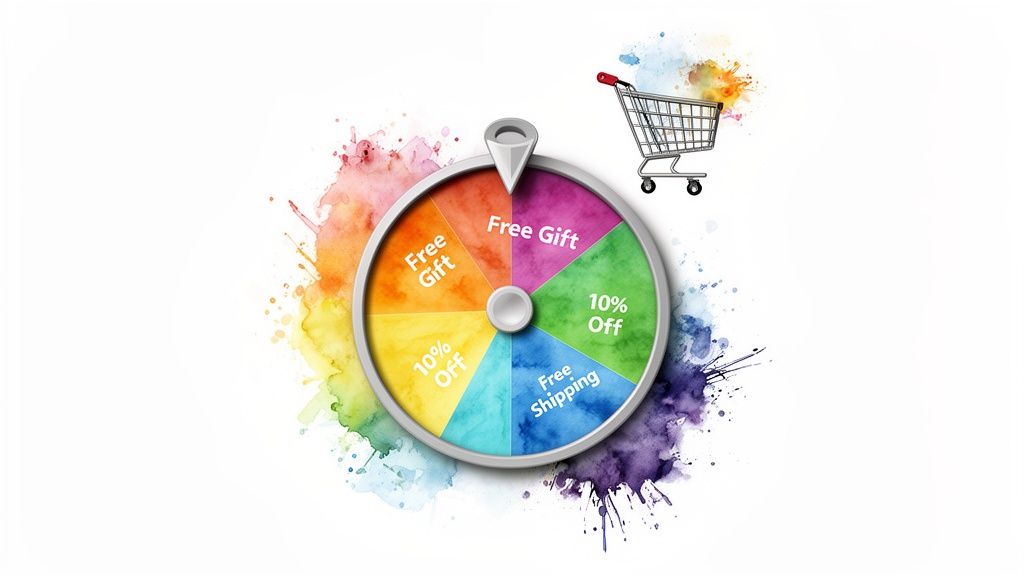
Gamified promotions transform the checkout process from a simple transaction into an exciting, interactive experience. By integrating a virtual spin-to-win wheel or scratch-off card directly within the cart, you can capture customer attention, drive immediate action, and boost conversions. This powerful gift promotion idea creates a sense of anticipation and instant gratification, encouraging shoppers to complete their purchase to claim their prize.
This strategy is highly effective for increasing engagement and reducing cart abandonment without devaluing your brand with site-wide discounts. The interactive element makes customers feel like they've earned their reward, enhancing its perceived value and strengthening their connection to your brand, which contributes to higher lifetime value. It's a smart way to offer controlled rewards like free gifts or free shipping without resorting to costly, predictable sales.
How to Implement In-Cart Gamification
Keep It Fast and Simple: Ensure the game is quick, ideally taking less than 10 seconds. The goal is to enhance, not interrupt, the path to purchase. A spinning wheel is often more engaging than a scratch-off.
Design Win-Win Outcomes: Eliminate any "lose" scenarios. Every spin should result in a reward, even if it's a smaller prize like free shipping or a low-value gift. This maintains positive momentum.
Balance the Rewards: Configure the wheel's probabilities to align with your goals. For instance, weight it so a high-value free gift is a common outcome, while a significant discount is rarer, protecting your margins. You can set this up easily within Monster Cart to deploy seamlessly in the cart drawer.
Comparison of 12 Gift Promotion Ideas
Strategy | 🔄 Implementation Complexity | ⚡ Resource Requirements | 📊 Expected Outcomes | 💡 Ideal Use Cases | ⭐ Key Advantages |
|---|---|---|---|---|---|
Tiered Free Gift with Purchase (GWP) Rewards | 🔄 Moderate — tier logic + cart visuals | ⚡ Low–Medium — gift SKUs, inventory sync, UI images | 📊 AOV ↑15–35%; higher conversion; preserves margins · ⭐⭐⭐⭐ | 💡 Mid–high margin brands, beauty, seasonal promos | ⭐ Feels like reward (not discount); native cart progress visualization |
Free Shipping Thresholds with Visual Progress | 🔄 Low — threshold rules + shipping integration | ⚡ Low — shipping calc, UI progress bar, testing | 📊 AOV ↑20–40%; reduces abandonment · ⭐⭐⭐⭐ | 💡 Stores with shipping friction; mass-market & DTC | ⭐ Simple, trusted incentive; clear customer progress |
Buy More, Save More Progressive Discounts | 🔄 High — complex pricing/stacking logic | ⚡ Medium — margin modeling, dynamic pricing, UI | 📊 Encourages multi-item spend; margin-manageable if tuned · ⭐⭐⭐ | 💡 Bundles, subscription or multi-item categories | ⭐ Gamifies savings; protects margins better than flat discounts |
Loyalty Points & Reward Accumulation | 🔄 High — points tracking, redemption flows | ⚡ High — program infra, CRM/CDP, ongoing ops | 📊 Repeat purchases ↑25–40%; LTV improvement · ⭐⭐⭐⭐ | 💡 Brands focused on retention and LTV | ⭐ Drives repeat behavior; deferred margin impact; data capture |
Frequently Bought Together (FBT) Bundle Promotions | 🔄 Moderate — recommendation engine + UI | ⚡ Medium — transaction data, ML/algorithms, creative | 📊 AOV ↑10–25%; low friction add-ons · ⭐⭐⭐ | 💡 Catalogs with complementary items; data-rich stores | ⭐ Personalized, relevant recommendations with one-click add |
One-Click Add-Ons (Protection, Upgrades, Services) | 🔄 Low — simple UI + fulfillment hooks | ⚡ Low — service partners, small ops overhead | 📊 AOV ↑8–15%; high-margin incremental revenue · ⭐⭐⭐ | 💡 Electronics, high-ticket products, gift purchases | ⭐ High-margin, minimal friction; high attach rates at checkout |
Social Proof & Limited-Time Gift Scarcity Campaigns | 🔄 Moderate — live notifications + inventory sync | ⚡ Medium — real-time tracking, creative assets | 📊 Conversion ↑4–5%; abandonment ↓10–20% when authentic · ⭐⭐⭐ | 💡 Limited-edition drops, seasonal promotions | ⭐ Urgency + trust; compound psychological triggers |
Personalized Recommendation Gifts Based on Purchase History | 🔄 High — ML models + data integration | ⚡ High — CDP/analytics, privacy compliance, engineering | 📊 Gift relevance ↑25–40%; improved loyalty · ⭐⭐⭐⭐ | 💡 Repeat customers, brands with rich customer data | ⭐ Higher perceived value; boosts lifetime value; stronger loyalty |
Seasonal & Holiday-Themed Gift Collections with Bundles | 🔄 Moderate — themed bundles + timing | ⚡ Medium–High — inventory planning, creative, lead time | 📊 AOV ↑20–35% during season; volume spikes · ⭐⭐⭐ | 💡 Holiday gifting, occasions, limited-time campaigns | ⭐ Emotional context justifies higher price; reduces decision fatigue |
Referral & Share-to-Unlock Gift Rewards Programs | 🔄 Moderate — referral tracking & reward logic | ⚡ Medium — tracking infra, incentive costs, UI | 📊 Lower CAC; viral acquisition; higher LTV cohorts · ⭐⭐⭐⭐ | 💡 Growth-focused DTC brands aiming for organic acquisition | ⭐ Scales acquisition via customers; gamified unlocks drive referrals |
Spend-to-Unlock Exclusive Access (VIP Perks) | 🔄 High — tier management, event & service ops | ⚡ High — premium perks, customer service, events | 📊 AOV & retention ↑25–40%; LTV lift · ⭐⭐⭐⭐ | 💡 Premium/luxury brands, aspirational positioning | ⭐ Status-driven spend; preserves margins vs discounts |
Gamified Spin-to-Win or Scratch-Off Gift Cards in Cart | 🔄 Low–Medium — game UI + reward weighting | ⚡ Medium — dev, reward pool, compliance (opt-ins) | 📊 Engagement ↑30–50%; conversion uplift; email capture boost · ⭐⭐⭐ | 💡 Holiday promos, list-building campaigns, carts with abandonment risk | ⭐ High engagement and list growth; surprise increases perceived value |
Turn Your Cart into Your Best Salesperson
The dozen gift promotion ideas we've explored share a powerful common denominator: they transform your shopping cart from a passive, transactional endpoint into an active, strategic sales channel. By embedding rewards, incentives, and value-driven offers directly within the cart experience, you stop interrupting the customer journey with pop-ups and start guiding them toward a more rewarding purchase. This is the fundamental shift away from a discount-centric model to a value-centric one focused on lifetime value.
Instead of training customers to wait for the next big sale, you're conditioning them to explore what they can earn with each order. Tiered gifts encourage higher spending, bundled offers increase basket size, and loyalty rewards build long-term affinity. The key is that these promotions feel like an achievement, not a simple transaction. Customers aren't just buying products; they're unlocking value, which fosters a deeper connection to your brand and significantly boosts customer lifetime value (LTV).
Key Takeaways for Immediate Action
To put these concepts into practice, focus on these core principles:
Move Beyond Discounts: While discounts have their place, relying on them erodes margins and brand perception. The most effective gift promotion ideas add tangible value—like free gifts and free shipping—to an order, making customers feel like they're getting more, not just paying less.
Visibility is Crucial: The magic happens when customers can see their progress. A visual progress bar showing how close they are to unlocking a free gift, free shipping, or a special bundle creates a powerful psychological incentive to add just one more item to their cart.
Empower the Customer: Let customers feel in control of their rewards. By presenting clear "spend X, get Y" thresholds or one-click add-ons, you empower them to build a better cart for themselves, which naturally leads to a higher average order value for you.
Focus on Lifetime Value: Don't just set and forget your promotions. Think about how each reward encourages the next purchase. Track KPIs like conversion rate, AOV, and offer redemption rates to understand what truly resonates with your audience and builds a loyal customer base over time.
Ultimately, mastering these gift promotion ideas is about building a more sustainable and profitable business. It’s about creating a shopping experience so seamless and rewarding that customers are excited to spend more with you, not just today, but for years to come. Your cart holds immense, untapped potential; it's time to leverage it as your most effective salesperson.
Ready to turn these ideas into reality? Monster Cart provides the powerful in-cart rewards engine you need to run sophisticated promotions like tiered gifts, progress bars, and one-click offers without needing a developer. Start building a smarter, higher-converting cart experience today at Monster Cart.
Join 7000+ brands using our apps