How to Increase Shopify Sales Without Constant Discounts
Jan 19, 2026
|
Published
If you want to increase your Shopify sales, you need to think beyond just driving more traffic. The real growth comes from optimizing every single visitor's journey to get the most value out of it.
This means focusing on two things: boosting your Average Order Value (AOV) and building genuine, long-term customer loyalty. Forget the race-to-the-bottom discounts. It's time to start thinking about smart, in-cart rewards that actually encourage customers to spend more while making their shopping experience better, ultimately increasing their lifetime value with your brand.
Your Blueprint for Sustainable Shopify Growth
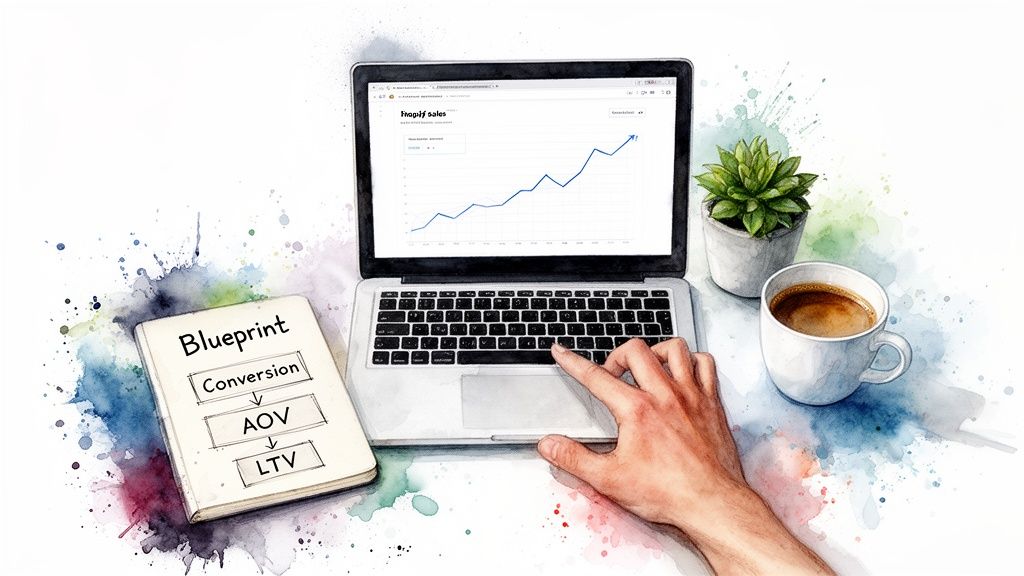
Let's be real—getting more eyeballs on your store is just the starting line. The real challenge, and where the money is made, is turning those visitors into high-value, repeat customers. This playbook goes beyond the basics of traffic to focus on the three pillars that actually build a sustainable Shopify business.
We're going to break down how to master:
Smarter Traffic Conversion: Optimizing the path from discovery to the final click on "buy now."
Higher Average Order Value (AOV): Nudging each customer to spend just a little more with every single transaction using value-driven rewards.
Greater Customer Lifetime Value (LTV): Fostering the kind of loyalty that brings people back again and again.
Relying on constant sales and hefty discounts is a trap. It trains your customers to wait for a deal, which slowly eats away at your profit margins and cheapens your brand. The true path to scaling is creating a premium shopping experience that makes customers want to spend more with you, not feel like they have to.
Shifting Focus From Discounts to Value
Instead of just slashing prices, the goal here is to add tangible value. Think about rewards that feel earned, like a free gift when they hit a certain cart total, unlocking free shipping, or even strategic discounts that encourage higher spending. This approach protects your margins, positions your brand as more exclusive, and builds a foundation for greater customer lifetime value. It’s a fundamental shift from a transactional mindset to a relational one.
The key is to transform your shopping cart from a simple basket into your most powerful revenue driver. By implementing smart, non-intrusive upsells and a tiered rewards system directly in the cart, you can guide customers toward a higher spend naturally.
This whole strategy hinges on making the shopping experience interactive and rewarding. For instance, a cart that visually tracks a shopper's progress toward unlocking a free gift—like the one offered by Monster Cart—gamifies the process and makes adding one more item genuinely exciting.
You're not just selling products; you're creating a journey that ends in a much more satisfying purchase. To see how these tactics fit into a larger strategy, check out this practical guide on how to increase online sales.
Plugging the Leaks in Your Conversion Funnel
Before you can even think about boosting your average order value, you’ve got to get one thing right: turning casual browsers into paying customers. This whole process is called Conversion Rate Optimization (CRO), and honestly, it’s the absolute bedrock of a profitable Shopify store.
Think of your store as a bucket. Pouring traffic into it is great, but if that bucket is riddled with holes, you’re just wasting time and money.
Our job is to plug those leaks. So many store owners get obsessed with driving traffic that they completely miss the small friction points that send potential customers running. Things like slow page loads, confusing navigation, or weak product pages are absolute conversion killers. They create just enough doubt and frustration to send shoppers straight to your competitors.
The goal is simple: make the path from the product page to the shopping cart so smooth and trustworthy that clicking 'Add to Cart' feels like the most obvious next step. Once they take that step, the real fun begins.
The Stark Reality of Shopify Conversion Rates
Let's get real about the numbers. The average Shopify store converts a measly 1.4% of its visitors. That means for every 100 people who land on your site, 99 of them walk away empty-handed. It’s a tough pill to swallow.
But here’s where it gets interesting. The top 20% of stores hit a conversion rate of over 3.2%, and the elite top 10% are crushing it at 4.7% or even higher, with some reaching 8%. That massive gap isn’t luck—it’s pure strategy. A huge piece of that strategy is supercharging the cart experience with tools like Monster Cart, which has already driven over $712 million in revenue for more than 7,000 Shopify brands.
Build Unshakeable Trust with Social Proof
In ecommerce, trust is the only currency that matters. Shoppers can’t touch or feel your products, so they lean on the experiences of others to feel confident in their decision. This is where social proof becomes your secret weapon.
When a potential customer hits a product page, their internal risk detector is on high alert. You can instantly disarm it by showing them that other real people have bought—and loved—your product.
Here’s how to do it right:
Customer Reviews and Ratings: Don’t hide them. Put star ratings and written reviews front and center on your product pages. One study found that products with reviews have a staggering 270% higher conversion rate than those without.
User-Generated Content (UGC): Get your customers to share photos of themselves using your products on social media. Featuring these authentic, real-world shots on your product pages is pure gold.
Testimonials and Case Studies: For bigger-ticket items, a detailed testimonial that tells a story—how your product solved a real problem—can be incredibly persuasive.
By letting your happy customers do the selling for you, you build a layer of credibility that no marketing copy can ever replicate.
Craft Product Pages That Convert on Sight
Your product page is your digital salesperson. It has one job: convince the shopper that your product is the answer they’ve been looking for. This takes a mix of killer visuals and compelling storytelling.
Forget generic descriptions and sterile, boring photos. Your page needs to spark emotion and scream value.
High-Quality Visuals: Invest in professional photos and videos. Show your product from every angle, show it in use, and get close-ups to highlight the details. A short video demo can be a game-changer.
Benefit-Driven Descriptions: Don’t just list features; sell the benefits. Instead of saying "100% merino wool," say "Stay warm without the itch, thanks to ultra-soft merino wool." You’re connecting a feature to a feeling.
Clear Call-to-Action (CTA): Your "Add to Cart" button should be impossible to miss. Use a bold, contrasting color that pops off the page and keep the text direct and simple.
That moment a customer clicks "Add to Cart" is critical. A clunky, page-reloading cart experience can completely kill the momentum you just built. A seamless slide-out cart, like the one from Monster Cart, keeps the shopper in the buying flow, slashing friction and making abandonment far less likely.
A poorly designed checkout is another major leak in the funnel. For a much deeper dive on this, check out our guide on how to reduce cart abandonment on your Shopify store.
Prioritize a Flawless Mobile Experience
This isn't a suggestion anymore; it’s a command. Over 73% of all ecommerce sales now happen on a mobile device. If your store isn’t built for smartphones, you are actively throwing away a massive amount of money.
A "mobile-first" approach is essential for survival. This means more than just a design that resizes itself. Every single element needs to be easy to use on a small screen. Buttons should be big enough for a thumb to tap, text should be readable without pinching and zooming, and the navigation needs to be dead simple.
Do yourself a favor: grab your phone and test your site. Then borrow a friend's phone and do it again. Make sure the experience is fast, smooth, and frustration-free for every single visitor.
Turn Your Cart Into a Profit-Generating Machine
The moment a customer clicks "Add to Cart," the most important part of their journey begins. This is your single best chance to go from just making a sale to maximizing its value. It's time to stop seeing your cart as a passive holding area and start treating it as your most powerful sales tool.
The old-school approach was to just throw a discount code at everyone and hope for the best. That’s a short-term play that bleeds profit and teaches your customers to never, ever pay full price. The modern, more sustainable way to grow is to sweeten the deal with value-driven rewards that actually enhance the shopping experience and boost customer lifetime value.
Replace Hefty Discounts with a Value-Driven Rewards System
Imagine a beauty brand that offers a free mini-serum on all orders over $50. As a customer shops, a slick progress bar inside the cart drawer shows them exactly how close they are to unlocking it. That little bit of gamification is way more engaging than a simple percentage-off coupon.
This strategy taps into a powerful psychological trigger. Instead of feeling like they’re just saving money, customers feel like they are earning something special. It transforms a transaction into an achievement. A seamless, slide-out cart like Monster Cart is perfect for this, letting shoppers see their rewards update in real-time without ever leaving the product page.
The Power of Tiered Rewards and Milestones
One reward is great, but a tiered system is a true AOV-booster. It creates a "ladder" of incentives that encourages shoppers to keep adding to their cart to reach the next level. This method protects your brand’s premium feel while giving your average order value a serious lift.
Here are a few proven tiered reward structures you can set up today:
Spend and Get (Free Gift): This is a classic for a reason. Set up milestones that reward customers with increasingly valuable free products. For example: "Spend $50, get a free lip balm. Spend $100, get a free travel-size moisturizer."
Buy More, Save More (BMSM): Instead of a flat discount, offer savings that grow with the cart size. For instance, "Buy 2 items, get 10% off. Buy 4 items, get 20% off." This drives bulk purchases without devaluing your products.
Unlock Free Shipping: Shipping costs are a notorious conversion killer. Put a free shipping bar in your cart that visually shows customers exactly how much more they need to spend. That last little item they add to their cart is pure profit for you.
This whole process is about smoothing out the entire funnel, from the moment a customer lands on your site to the final click.
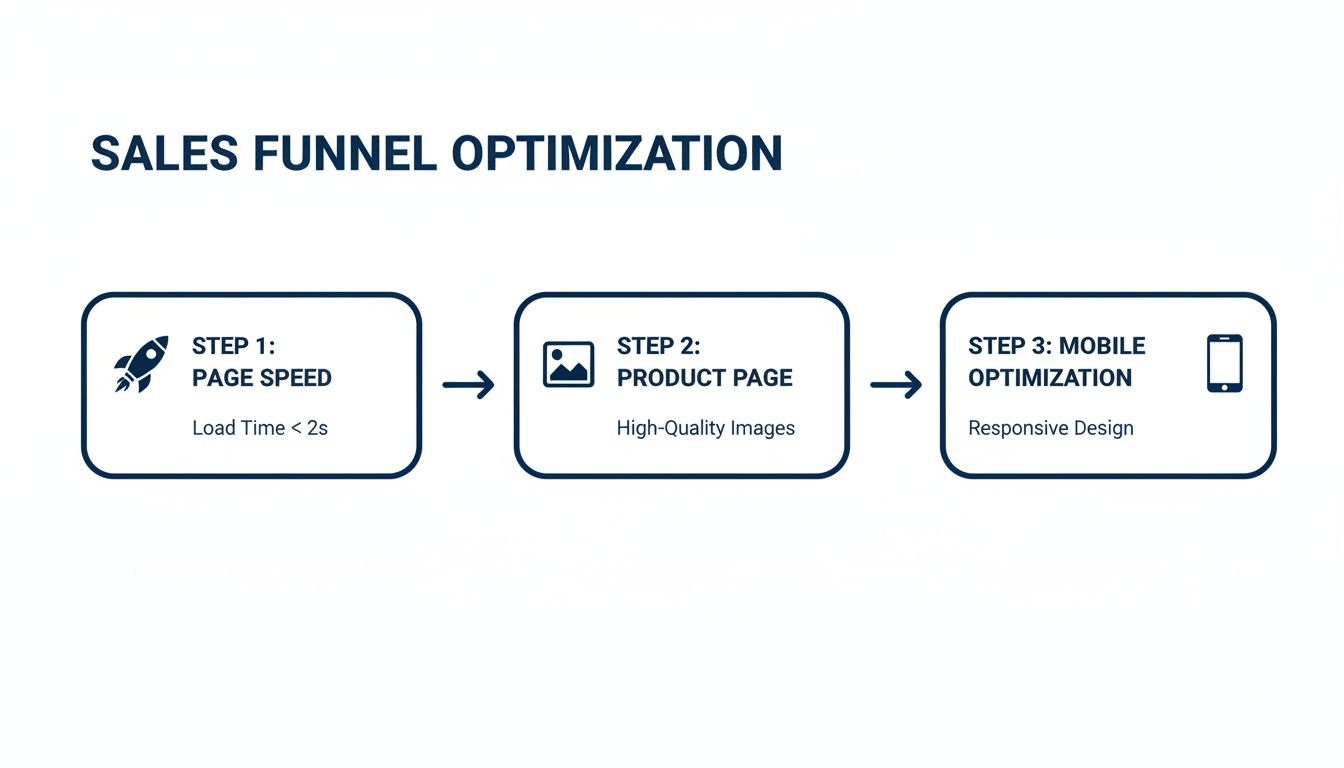
As the infographic shows, a buttery-smooth customer journey hinges on optimizing everything from page speed and product photography to mobile design—all leading to that pivotal in-cart experience.
Gamify the Cart Experience
Making these reward systems work comes down to seamless execution. Your cart should feel like a helpful shopping assistant, not an obstacle. When a customer adds an item, the cart should instantly slide out, showing them their progress toward the next reward.
This interactive feedback loop is incredibly powerful. It nudges the customer by saying, "You're only $12 away from getting a free gift!" This creates a sense of excitement and makes adding one more low-cost item to their order an easy decision.
This is exactly where a tool like Monster Cart shines. It turns the whole process into a smooth, branded experience that feels like it’s part of your store. The goal is to make increasing their own order value feel like the customer's idea—a smart move they made to get more value.
While steep discounts have a time and place, building your AOV strategy around value-added rewards is a far more sustainable way to grow. It protects your margins and builds a healthier customer relationship.
Discount-Free AOV Growth Strategies
Strategy | Impact on Margin | Customer Perception | Best For |
|---|---|---|---|
Free Gift Tiers | Minimal; fixed cost | High value; feels like a bonus | Increasing cart size with desirable, low-cost items. |
Free Shipping | Predictable; absorbs a known cost | Expected; removes a friction point | Reducing cart abandonment and nudging small carts over a threshold. |
BMSM Discounts | Controlled; scales with volume | Smart savings; encourages stocking up | Moving more units per transaction, especially for consumables. |
In-Cart Upsells | Positive; adds pure profit | Helpful; suggests relevant add-ons | Boosting AOV with complementary, high-margin products. |
Ultimately, these strategies shift the focus from "what can I save?" to "what can I get?"—a much more profitable conversation for your brand.
Use In-Cart Upsells to Intelligently Boost AOV
Beyond tiered rewards, the cart is the perfect spot for subtle, relevant upsells. Smart merchants often see AOV lifts of 20-30% without ever touching a discount code. While average add-to-cart rates hover around 7.5%, most stores leave money on the table by not capitalizing on that moment. In-cart upsells like "Frequently Bought Together" or one-click add-ons can increase order values by 15-25% on average.
The key is to offer upsells that genuinely make the purchase better. Instead of aggressive pop-ups, these offers should appear naturally right inside the cart drawer. To see just how effective this can be, you should learn more about how 'Frequently Bought Together' bundles can increase your AOV.
Great examples of non-intrusive upsells include:
Shipping Protection: A low-cost, high-margin add-on that offers peace of mind.
Product Warranty: For electronics or high-ticket items, an extended warranty is an easy yes.
Complementary Products: If someone buys a candle, suggest a wick trimmer. If they buy a plant, suggest a stylish pot.
By turning your cart into a profit-generating machine with rewards and smart upsells, you create a win-win. Customers get more value and a better experience, while you increase average order value and build a more sustainable, profitable business.
Adding Smart Upsells Customers Actually Appreciate
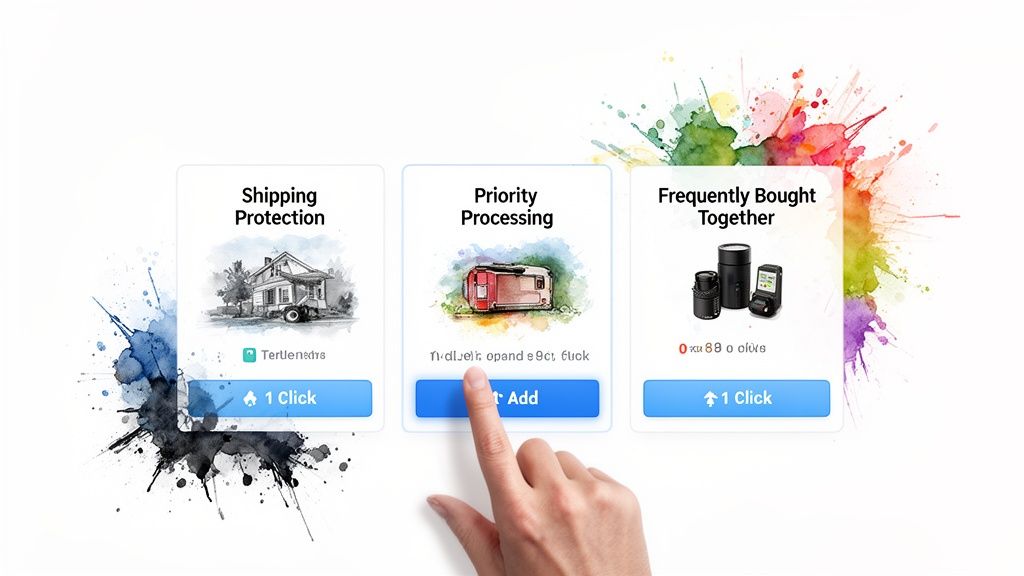
Once you have customers hooked with a great rewards system, you can layer in another powerhouse strategy to lift your Shopify sales: the smart upsell. I’m not talking about those obnoxious, full-screen pop-ups that kill the shopping vibe and torpedo your conversion rates. We’re talking about subtle, highly relevant suggestions made right inside the cart drawer.
The whole point is to present an offer that feels like a genuinely helpful recommendation, not a pushy sales tactic. By suggesting things that actually make the main purchase better, you can bump up your Average Order Value (AOV) while making the customer feel like you’ve got their back. It's a fundamental shift away from margin-killing discounts and toward building a more valuable, long-term customer relationship.
Identifying the Perfect One-Click Add-Ons
The absolute best in-cart upsells are usually low-cost, high-margin items that offer convenience or a bit of peace of mind. Think of them as the digital version of the candy bars and magazines at the grocery store checkout—impulse buys that don’t require a ton of thought but add immediate value.
They need to be simple, one-click additions that make perfect sense with what the customer is already buying. The key is to make it an effortless "yes."
Here are a few proven examples that work like a charm across different industries:
Shipping Protection: For a small fee, maybe $1.99, you can offer insurance against lost, stolen, or damaged packages. It’s a high-margin service that gives customers huge peace of mind.
Product Warranty: For electronics, appliances, or anything with a higher price tag, a one- or two-year extended warranty is an easy add-on that boosts buyer confidence.
Priority Processing: This is perfect for last-minute shoppers. Let them pay a small premium to jump to the front of the fulfillment line.
Gift Wrapping: During the holidays or other gifting seasons, offering a beautiful gift-wrapping service for a few dollars is a super convenient, value-added option.
The secret to making these work is presenting them seamlessly within the cart experience. A tool like Monster Cart lets you embed these offers directly in the slide-out cart, so customers can add them with a single click without ever leaving the page. That frictionless process is absolutely crucial for converting these small, profitable add-ons.
Suggesting What’s Frequently Bought Together
Another incredibly effective technique is to suggest complementary products based on what's already in the cart. This method is so powerful because it’s based on real customer data and behavior, which makes the suggestions feel personalized and intelligent. It’s the digital version of a great salesperson saying, "Hey, customers who bought that camera also loved this memory card."
This strategy goes way beyond just showing random products. It uses logic to present items that naturally go together, making the shopping experience feel more complete.
For example:
A customer buys a leather handbag: Suggest a bottle of leather cleaner and conditioner.
A customer buys a bag of premium coffee beans: Suggest a set of artisanal coffee filters or a stylish mug.
A customer buys a yoga mat: Suggest a yoga block and a mat-cleaning spray.
The power here is in the relevance. You’re anticipating the customer's needs and solving a future problem for them before they even think of it. This not only increases the order value but also builds trust and reinforces that you're an expert in your niche.
Shifting Focus to Lifetime Value
While these in-cart upsells give you an immediate AOV boost, their real power is in building long-term customer relationships. When you consistently offer value—through helpful suggestions and rewarding experiences—you create a rock-solid foundation for loyalty.
Instead of training customers to wait for the next 20% off sale, you’re teaching them that shopping with you is a premium experience filled with perks and thoughtful touches. A customer who adds shipping protection and also gets a free gift with their order feels genuinely cared for and valued.
That positive experience is exactly what turns a one-time buyer into a repeat customer. They are far more likely to come back and pay full price because they trust your brand to deliver more than just a product. This is how you dramatically increase Customer Lifetime Value (LTV), which is the true engine of sustainable growth for any Shopify store. Every upsell shouldn't just be a way to increase today's sale, but an investment in tomorrow's loyalty.
Building Loyalty That Lasts
Look, the best Shopify brands know a simple secret: the first sale isn't the finish line. It's the starting gun. While it's great to maximize that initial transaction, the real, sustainable cash comes from turning a one-time buyer into a loyal fan who keeps coming back.
The rewarding, positive in-cart experience we’ve been building is the perfect launchpad for this relationship. A customer who gets an unexpected free gift in their first order is far more likely to come back and pay full price later. That’s how you build a business that actually lasts.
From a Single Order to a Brand Advocate
The moment a customer completes their purchase, a critical window opens. This is your chance to make them feel valued, not just like another order number. Forget the generic "Thanks for your order!" email. Let's make this memorable.
Use the data you just got. Was this their first time buying from you? Send them a personalized welcome sequence. Did they grab a specific product? Follow up with a few pro tips on how to get the most out of it. These small, thoughtful gestures show you’re invested in their experience long after the transaction is over.
Create a Community, Not Just a Customer List
Loyalty is about more than just repeat purchases; it’s about feeling like you belong. You don’t need a complicated, points-based loyalty program right out of the gate.
Start with something simple.
Early Drops: Give returning customers first dibs on new products or sales.
Exclusive Content: Create behind-the-scenes videos or special guides just for them.
Special Perks: Offer unique rewards that new shoppers can't get.
The goal is to make your customers feel like insiders. When they feel seen and appreciated, they stop being just buyers and start being genuine advocates for your brand. That emotional connection is what truly drives up lifetime value.
To build that kind of trust, you also need to show you know your stuff. This means consistently engineering E-E-A-T for content credibility across your site, proving that your brand is a reliable authority in its space.
It's All About Lifetime Value
Every decision you make—from the in-cart rewards you offer to the post-purchase emails you send—should be seen through the lens of Customer Lifetime Value (LTV). Sure, a 10% discount might lock in a sale today. But what if a free gift unlocked at a higher spend creates a positive memory that brings that same customer back five more times this year?
That second scenario is infinitely more valuable. It’s a strategic investment in a long-term relationship. When you shift your focus to LTV, you stop chasing one-off sales and start building a predictable, recurring revenue stream from a base of happy customers. For a deeper dive into this metric, check out our guide on how to increase customer lifetime value.
A rewarding, non-intrusive cart experience is the perfect place to start. By delighting customers during their very first purchase, you set a positive tone for the entire relationship, making them far more likely to become a customer for life.
Common Questions About Increasing Shopify Sales
Navigating the path to more Shopify sales always brings up a few common questions. Getting clear, actionable answers is the key to building a strategy that delivers real growth—not just short-term bumps from margin-killing discounts.
How Can I Increase My Average Order Value Without Constant Discounts?
The smartest way to boost your AOV is to stop thinking about hefty discounts and start thinking about value-driven rewards. The goal is to add value, not just slash prices, to encourage both a higher initial spend and long-term loyalty.
A tiered reward system is a fantastic way to do this. Instead of a blanket coupon, you can offer customers a free gift once their cart hits a certain amount (e.g., a free tote bag on orders over $75) or unlock free shipping. This shift in framing turns shopping into a rewarding experience. The customer feels like they've earned something, which is a much more powerful driver than simply getting a cheap sale. Using a tool like Monster Cart to display a visual progress bar for these rewards makes the process even more engaging.
The core idea here is to enhance the shopping experience. When a customer feels like they are getting more for their money—whether it's a cool free gift or the convenience of free shipping—they are far more willing to increase their own cart size, boosting your AOV and their long-term value.
What Is the Best Way to Upsell on Shopify Without Annoying Customers?
Successful upselling is all about being helpful and non-intrusive. Let's be honest, those aggressive, full-page pop-ups are a guaranteed way to kill a sale. No one likes them.
Instead, you want to place subtle upsell opportunities right where the customer is already focused: the slide-out cart drawer.
The most effective approach is to offer "Frequently Bought Together" bundles that make perfect sense with what's already in the cart. For example, if a customer adds a high-end coffee maker, suggesting artisanal filters and a matching mug feels like a genuinely helpful recommendation, not a forced sales pitch. It respects the customer’s journey and leads to higher order values organically. With a tool like Monster Cart, these offers can be added with one click, making it a frictionless and positive experience.
My Store Gets Traffic but Very Few Sales. What Should I Fix First?
If you're getting visitors but your conversion rate is hovering below the 1.4% Shopify average, your first and only focus should be on Conversion Rate Optimization (CRO). Don't even think about AOV yet.
Before anything else, check your site speed, especially on mobile. Slow loading times are one of the biggest conversion killers, period.
Next, take a hard, honest look at your product pages. Do you have high-quality images and videos? Are your descriptions focused on benefits, not just features? Is there plenty of social proof, like customer reviews, to build immediate trust? Finally, walk through your checkout process yourself. Is it seamless, or are there annoying, unnecessary steps causing friction?
Once you’ve plugged these leaks and are turning more of your visitors into customers, then you can start layering in AOV-boosting strategies in the cart to maximize your revenue.
Ready to turn your cart into a profit-generating machine? Monster Cart helps you build a fully branded, rewarding in-cart experience with tiered gifts, free shipping bars, and non-intrusive upsells. Stop leaving money on the table and see why 7,000+ brands trust us to boost their AOV. Learn more at monsterapps.shop.
Join 7000+ brands using our apps