Boost AOV with post purchase upsell shopify: Increase CLV Now
Feb 24, 2026
|
Published
For Shopify store owners, a post-purchase upsell is a simple but powerful offer you show a customer after they've paid, but before they hit the final "thank you" page. It’s incredibly effective because it catches a buyer right at their peak moment of trust, letting them add another item to their order with a single click—no need to pull out their credit card again.
The Real Reason Post-Purchase Upsells Work
Let's be honest, every Shopify merchant is looking for that magic bullet to increase average order value (AOV) without just running another sale. The secret isn't another discount code; it's the post-purchase upsell. This is your single best opportunity to connect with a customer who has already decided to trust you with their money and build towards greater customer lifetime value.
Unlike those annoying pre-purchase pop-ups that can absolutely kill your conversion rates, a post-purchase offer is a smooth, frictionless experience. It taps into the buyer's momentum right after they've committed, which is why stores that nail this flow often see a remarkable AOV lift of 15-30%.
Tapping Into Peak Buyer Trust
The psychology here is pretty straightforward: after a customer has gone through the checkout process, their trust in your brand is at an all-time high. They've already vetted your store and decided your products are worth it, which makes them far more open to a relevant, high-value suggestion.
This isn't about being pushy. It’s about being genuinely helpful. A great post-purchase offer feels less like a hard sell and more like a thoughtful recommendation that makes their original purchase even better.
Key Takeaway: The goal of a post-purchase upsell isn't just to squeeze out one more sale. It's a strategic touchpoint to increase customer satisfaction and start building a long-term relationship that drives up customer lifetime value (CLV).
Before we go further, it's crucial to understand why this post-checkout timing is so much more effective than the pop-ups most customers have learned to hate.
Pre-Purchase Pop-ups vs. Post-Purchase Offers
Attribute | Pre-Purchase Pop-ups | Post-Purchase Offers |
|---|---|---|
Timing | Before payment is complete. | After payment is complete. |
Friction | High. Interrupts the checkout flow and can cause cart abandonment. | Zero. The initial sale is already secure; this is a pure bonus. |
Customer Mindset | Skeptical and focused on completing the purchase. | Trusting and receptive; "buyer's high" is in full effect. |
Conversion Impact | Often negative. Can lower the overall site conversion rate. | Neutral to positive. Doesn't risk the original sale. |
AOV Impact | Moderate, but at the risk of losing the entire order. | High, with stores often seeing a 15-30% AOV lift. |
The difference is clear. Post-purchase offers respect the customer's journey and add value without introducing risk, making them the superior choice for sustainable AOV growth.
Moving From Discounts to Actual Value
Constantly running sales can train your customers to wait for a discount, slowly chipping away at your profit margins and brand perception. The most successful post-purchase strategies look beyond simple price cuts and focus on adding real, tangible value through smart rewards.
Think about offering things that build excitement and loyalty instead:
Exclusive Free Gifts: Offer a complimentary product that pairs perfectly with what they just bought.
Free Shipping Upgrades: Let them get their order faster, a reward they’ll truly appreciate.
The Perfect Add-On: Suggest the one item they need to complete their set or get the most out of their new purchase, perhaps with a small, exclusive discount for adding it now.
This approach transforms the upsell from a mere transaction into a rewarding experience. It’s about making the customer feel smart for choosing to shop with you and encouraging them to return.
Ultimately, any post-purchase strategy hinges on building loyalty through a fantastic end-to-end experience. To really drive sustainable growth, you need to improve ecommerce customer experience across the board. By focusing on value-driven rewards instead of just another discount, you not only boost immediate AOV but also lay the foundation for a loyal, repeat customer base.
Choosing Your Upsell Tools: Native vs. Third-Party Apps
When you’re ready to roll out a post-purchase upsell on Shopify, you’ve got two main paths to choose from. You can either stick with Shopify's built-in tools or bring in a specialized third-party app. There's no single right answer here—the best tool really depends on your store's size, your growth goals, and how much control you want over the experience.
For a new store just finding its rhythm, Shopify’s native functionality is a solid, cost-effective place to start. It lets you pop up simple, one-click offers after checkout without any extra monthly fees. This is a great way to dip your toes in the water and see if the strategy resonates with your audience.
But as your brand grows, you'll start to feel the edges of what the native tools can do. Scaling up requires more than just a basic offer; it demands sophisticated tools to really squeeze every drop of revenue and customer lifetime value out of your funnel.
When to Graduate to a Third-Party App
A growing brand quickly runs into needs that go way beyond Shopify’s out-of-the-box features. This is where dedicated apps shine. They are built to handle complexity and unlock revenue streams that native tools simply can’t access.
It’s probably time to switch when you find yourself needing to:
Run Sophisticated A/B Tests: Is a free gift more compelling than a 10% discount? A good third-party app lets you test different offers, copy, and creative to see what actually moves the needle, taking the guesswork out of optimization.
Implement Dynamic Funnels: A seriously powerful strategy is showing an initial upsell and, if the customer says no, immediately offering a lower-cost "downsell" instead. This kind of multi-step logic can massively boost your take rate, and it’s a feature you'll only find in specialized apps.
Access Deeper Analytics: To make smart calls, you need good data. The best apps give you detailed dashboards tracking metrics like take rate, AOV lift, and total revenue per offer, painting a crystal-clear picture of what's working.
Thinking Beyond Simple Upsells
The real power of a third-party tool is its ability to weave in value-driven rewards that build loyalty, not just a bigger one-time sale. The smartest systems get that boosting AOV shouldn't come at the expense of the customer experience. Instead of just pushing another discount, they help you create moments that feel rewarding and build long-term value.
This decision tree gives you a great visual for timing your post-purchase offers based on what you’re trying to achieve.
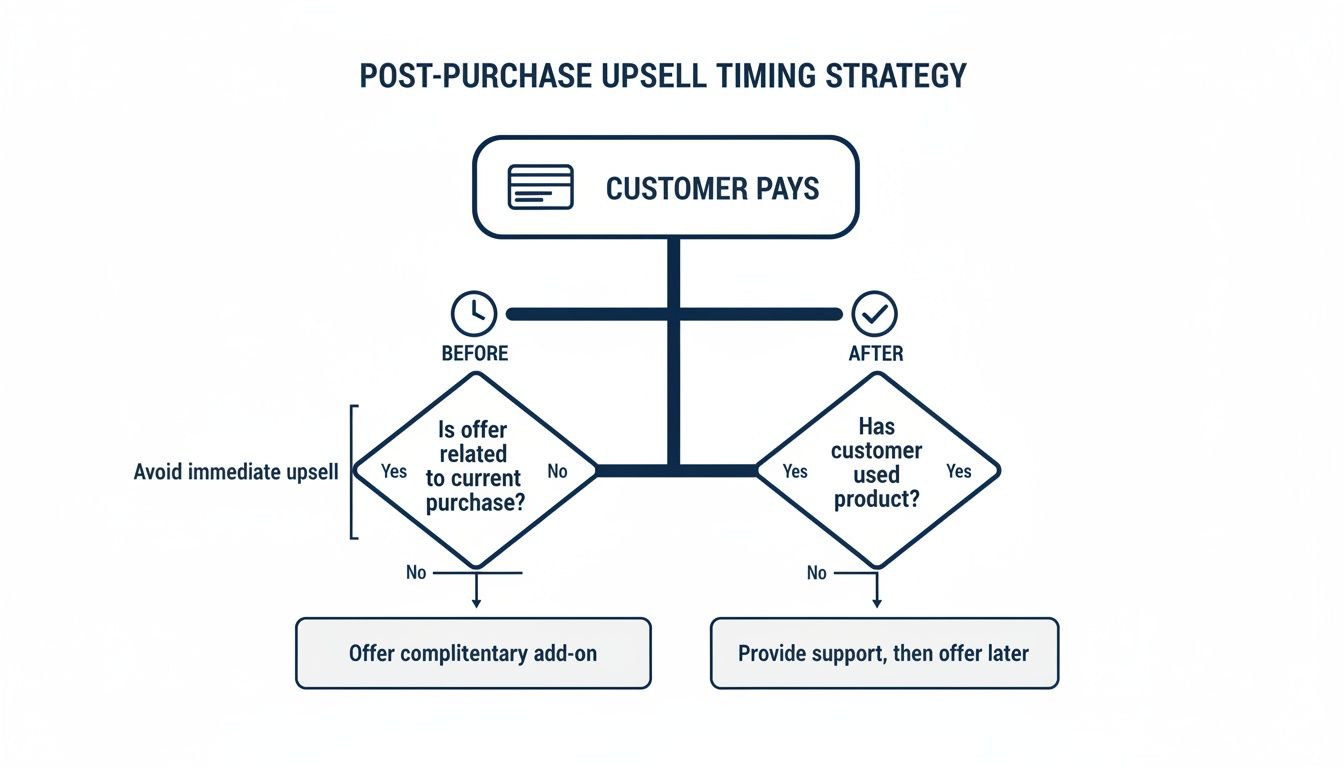
As the chart shows, the most effective upsells are shown after payment is complete. This capitalizes on the moment of peak trust without adding any friction to the core checkout process.
A common mistake is thinking only about the post-purchase screen. A truly cohesive strategy starts earlier. Tools like Monster Cart transform the entire shopping cart into a reward-building experience, encouraging customers to increase their cart value with rewards before they even check out, building AOV and CLV from the very first click.
Finding the Right Fit for Your Brand
The Shopify App Store is a crowded place, and picking the right tool can feel overwhelming. Don't get bogged down by a laundry list of features you'll never touch. Instead, stay focused on your primary goal: increasing AOV while making your customers happier.
For a deeper dive into the top solutions out there, check out our guide on the best Shopify upsell apps to compare features and find the perfect match for your store.
Ultimately, your choice of tool should line up with your long-term vision. While Shopify's native function is a fine starting point, a dedicated app provides the strategic depth you need to turn post-purchase offers from a simple tactic into a core part of your profitability and customer retention strategy.
How to Craft Offers That Actually Convert
An effective post-purchase upsell is part art, part science. When you nail it, the offer feels less like a last-ditch sales pitch and more like a genuinely helpful suggestion from someone who gets it. This is your moment to move beyond generic discounts and create irresistible offers that add real value, boosting not just your average order value (AOV) but customer lifetime value, too.
The secret is to stop thinking about a quick cash grab. Instead, focus on making their original purchase even better. A random discount feels desperate, but an offer that perfectly complements what they just bought? That feels thoughtful. It shows you're paying attention and value their business for the long run.
This shift in mindset is everything. You're not training customers to wait for the next sale; you're teaching them that shopping with you comes with unique perks and a superior experience that builds loyalty.
Go Beyond Discounts With High-Value Rewards
Sure, a small discount can work in a pinch, but relying on them is a race to the bottom that erodes your margins and brand value. The most successful brands focus on value-driven rewards that actually increase the perceived worth of the entire order. This is where you can get creative and genuinely delight your customers.
Here are a few high-converting offer types that focus on value, not just price cuts:
The Perfect Complement: This is the gold standard. If they bought shampoo, offer the matching conditioner. If they just bought a camera, offer a memory card. It’s the most logical, no-brainer next step that makes their primary purchase more complete.
The Trial-Sized Bestseller: Give them a low-cost, low-risk way to try another one of your hero products. A travel-sized version of your most popular serum is a brilliant way to introduce them to more of your catalog and set up a future full-sized purchase.
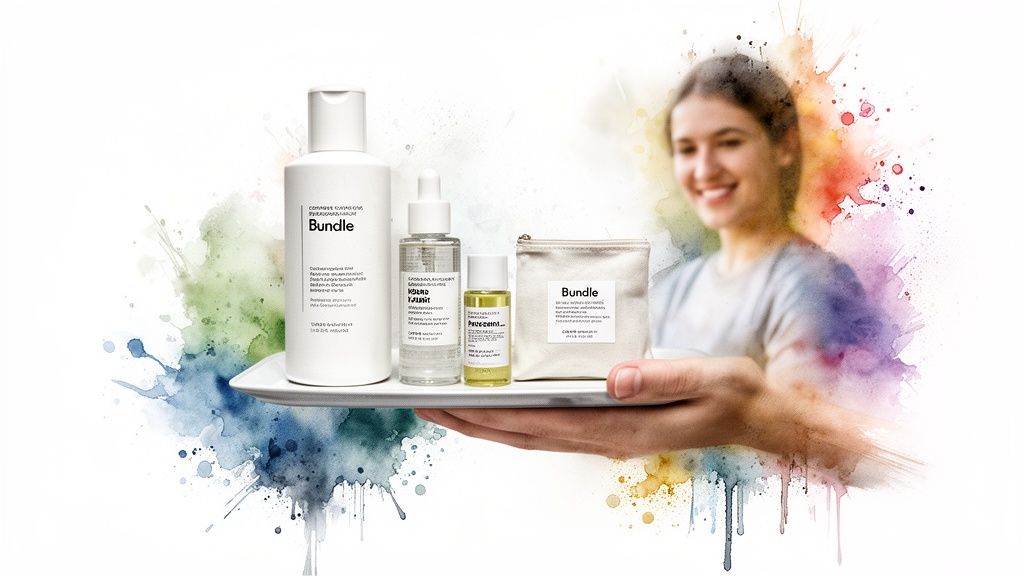
The Exclusive Bundle: Package their new item with one or two related products that aren't available as a set anywhere else on your site. For instance, bundle a new skincare product with a silk pillowcase and an eye mask as a "Complete Nighttime Routine" for a special one-time price.
These offers land so well because they’re tied directly to the customer’s original intent. They aren't random; they're curated suggestions that improve their experience with the product they were already excited about. You can dig deeper into building these kinds of smart product pairings by exploring frequently bought together strategies.
Don't Forget About Service-Based Upsells
Your offers don't always have to be physical products. Service-based upsells are often pure profit and can be incredibly effective because they tap into a customer's desire for convenience, speed, or peace of mind.
Consider these powerful service-based offers:
Priority Shipping: For just a few extra dollars, let the customer jump to the front of the fulfillment line. This is an easy win for impatient buyers who want their stuff now.
Extended Warranty or Product Protection: Offering an extended warranty adds a layer of security that builds confidence, especially for higher-ticket items like electronics or furniture.
Gift Wrapping Service: This is a perfect upsell during the holidays or for products commonly given as gifts, like jewelry, gourmet foods, or baby items.
By focusing on these types of value-adds, you shift the customer's thinking from "How much can I save?" to "How can I make this purchase even better?" This is the core of a sustainable, long-term growth strategy that builds brand fans, not just one-time buyers.
The Power of Irresistible Bundles
Strategic post-purchase bundling consistently delivers some of the highest returns for Shopify merchants. The right mix of products can feel like such an incredible deal that it prompts an immediate "yes." Some stores have seen massive revenue spikes by optimizing these flows, turning a single impression into multiple accepted offers and dramatically boosting AOV without adding any friction to the initial checkout.
Ultimately, the best offers feel like they were picked just for that customer. When you start thinking from their perspective, you unlock a world of possibilities that go far beyond a simple 10% off coupon. The goal is to make them feel like they've just discovered an exclusive perk, turning a simple transaction into a memorable brand experience that increases lifetime value.
Shifting Left: Boost AOV In The Cart, Before Checkout
While a post purchase upsell on Shopify is a fantastic safety net for grabbing extra revenue, what if you could bulk up the order before the customer even reaches for their credit card? This is about shifting your focus from the thank you page to the cart itself, transforming that simple order summary into a seriously powerful conversion and rewards tool.
The trick is to stop thinking of the cart as a static list. Instead, imagine a dynamic, interactive slide-cart that turns the whole shopping process into a rewarding game. It's a completely different way to engage with a shopper who is literally in the middle of deciding how much to spend with you.
Turning the Cart Into a Reward Engine
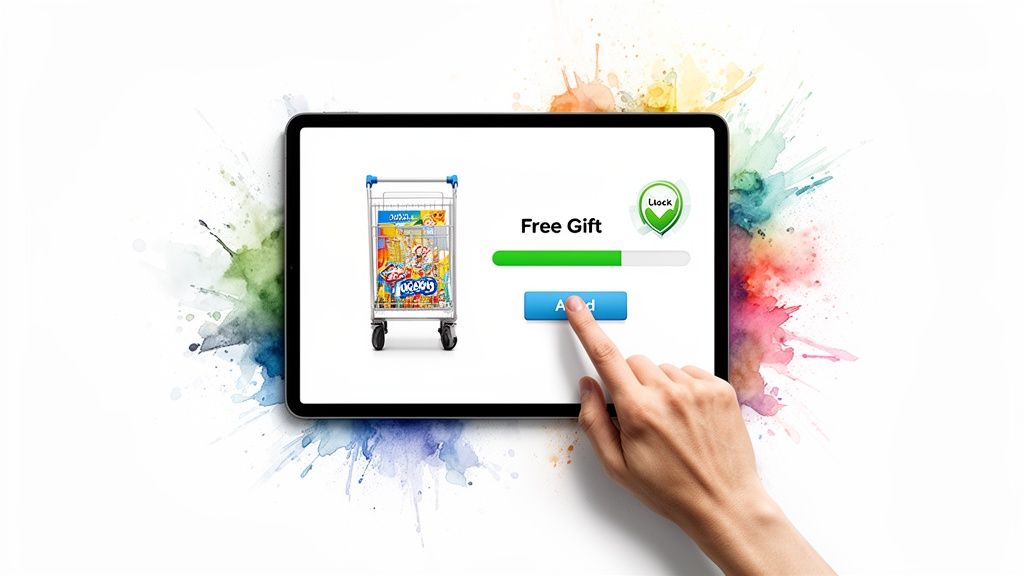
A modern shopping cart shouldn't just hold products; it needs to build excitement. The whole idea behind tools like Monster Cart is using the cart drawer to show a customer how close they are to unlocking a reward. This creates a really compelling sense of progress and actively encourages them to add just one more thing to their order to hit the next perk, boosting both AOV and lifetime value.
Best of all, this method avoids those jarring, brand-cheapening pop-ups entirely. The incentive is woven right into the shopping experience, making it feel helpful and rewarding instead of intrusive. It’s a subtle but incredibly effective way to nudge customers toward a higher spend.
Gamifying Rewards Beyond Simple Discounts
Relying on constant discounts is a race to the bottom. It can devalue your brand and train your customers to just wait for the next sale. A much better long-term play is to focus on value-driven rewards that build loyalty and enhance the customer's lifetime value.
With a smart in-cart system like Monster Cart, you can build out tiered rewards that get better as the customer spends more.
Free Shipping Thresholds: "You're just $12 away from free shipping!" This is a classic for a reason—it works.
Spend-to-Unlock Milestones: "Spend $75 and get a free travel-sized serum." This is a brilliant way to introduce them to another one of your products.
Tiered Free Gifts: "Spend $100 for a free face mask, or hit $150 to get the mask and a silk scrunchie!" This creates a fun little challenge that can seriously increase their final order size.
This in-cart approach transforms shopping from a simple transaction into an engaging game. The customer isn't just buying things; they're actively working towards a goal, which makes the whole purchase feel way more satisfying and builds a stronger connection to your brand.
Smart In-Cart Upsells Without Disruption
Beyond gamified rewards, the slide-cart is the perfect spot to show highly relevant cross-sells and upsells without ever getting in the way. Since these suggestions appear right inside the cart drawer, they feel like genuinely helpful additions, not aggressive sales tactics.
You can integrate smart recommendations that feel like a natural part of the experience.
Frequently Bought Together Show logical product pairings directly below an item in their cart. For example, if they add a leather handbag, you can suggest a matching leather cleaner. This strategy works because it capitalizes on their immediate interest and makes the add-on feel like an essential companion piece.
One-Click Add-Ons Offer low-cost, high-value additions that give customers a little peace of mind. Think about things like:
Shipping Protection
Priority Processing
Extended Warranties
These small, easy-to-add services can really add up over time while providing a genuinely useful benefit to the customer.
In-Cart Rewards vs Post-Purchase Upsells
Both in-cart rewards and post-purchase upsells are powerful, but they serve different purposes at different stages of the customer journey. Knowing when and how to deploy each one is the key to truly maximizing your AOV and CLV. I've broken down the core differences to help you see where each strategy shines.
Feature | In-Cart Rewards (Monster Cart) | Post-Purchase Upsells |
|---|---|---|
Timing | Before the customer checks out. | After payment is complete. |
Goal | Increase the initial cart value and build loyalty early. | Capture additional revenue after the sale is secured. |
Customer Experience | Gamified and integrated into the shopping flow. | A one-click, frictionless add-on. |
Risk Factor | Low. Enhances the cart without adding friction. | Zero. The original sale is already confirmed. |
In the end, these two strategies aren't competitors; they're teammates. An in-cart system like Monster Cart helps build a bigger, more valuable initial order. Then, a great post-purchase offer capitalizes on that peak moment of buyer trust for one final, frictionless AOV boost. Beyond just one sale, mastering both is fundamental to how you can increase average order value for the long haul.
By improving the cart experience first, you create a much stronger foundation for the entire customer journey, making every step—from adding that first item to accepting a post-purchase offer—smoother and more profitable.
How to Measure and Optimize Your Upsell Strategy
Launching a post-purchase upsell on Shopify is a great first step, but the real money is made in the optimization. If you just set an offer and forget it, you're leaving cash on the table. To really maximize your returns, you need a straightforward way to track what’s working, what isn’t, and how to make it better.
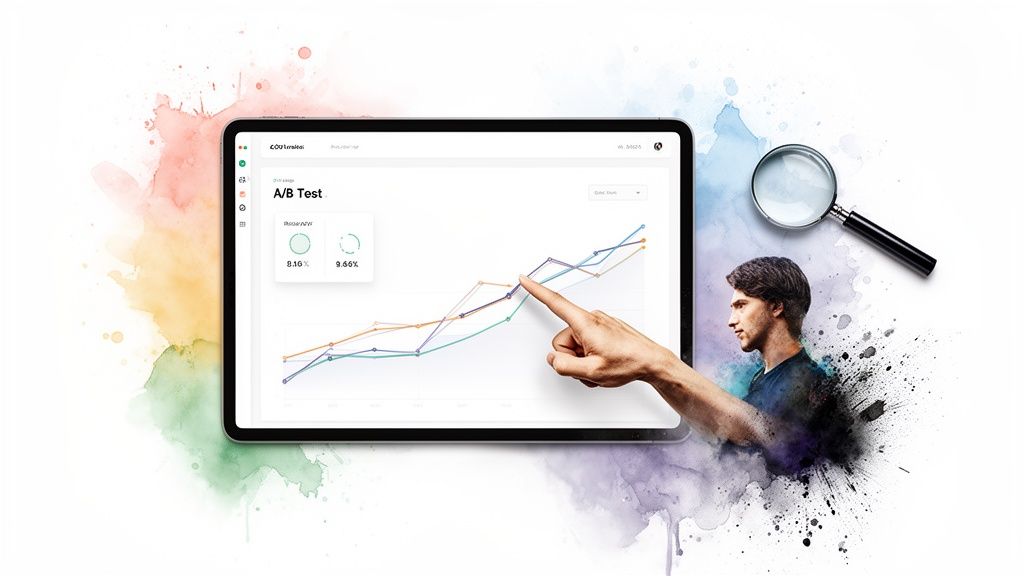
This isn’t about getting lost in complicated spreadsheets. It’s about focusing on a few key numbers that give you a direct line of sight into performance. Once you know what to look for, you can confidently tweak your offers for bigger and better results.
Key Metrics to Watch
Before you can optimize anything, you need to know your baseline. Your upsell app's dashboard should make this pretty easy, but you have to know which numbers actually matter. Instead of getting overwhelmed by data, just zero in on these three.
Offer Take Rate: This is the percentage of customers who see your upsell and say "yes." It's the cleanest signal you have for how compelling your offer really is.
Average Order Value (AOV) Lift: This shows you exactly how much your AOV has increased specifically from accepted upsells. It's the bottom-line number proving how much extra value each transaction is generating.
Attributed Revenue: This is the total dollar amount your upsell funnels have added to your top line. It’s the big-picture number that shows the overall financial impact of your entire strategy.
Keeping an eye on these will tell you the health of your upsell program at a glance. A low take rate might mean your offer isn't relevant enough, while a tiny AOV lift could signal your offer price point is too low. For a deeper dive on how this all fits together, check out our full guide on how to calculate Average Order Value.
A Simple Framework for A/B Testing
Once you're tracking your core metrics, it's time to start experimenting. A/B testing is your best friend for data-driven optimization. The concept is simple: pit one version of an offer against another to see which one performs better.
The most compelling stats show that post-purchase offers can convert at an incredible 15-25% on the thank-you page. This high conversion rate is fueled by the one-click nature of the offer; customers accept without re-entering payment details, making it feel like a seamless extension of their original purchase.
To get started, the golden rule is to test one variable at a time. If you change too many things at once, you’ll have no idea what actually caused the change in performance.
Here are a few high-impact tests you can run right away:
Offer Type Test: Try a value-based reward like a free gift vs. a percentage discount. This tells you if your audience is motivated more by a bonus item or by immediate savings, helping you build a more sustainable, long-term strategy.
Product Test: Put two different complementary products head-to-head. For a shampoo purchase, you could test an upsell for the matching conditioner against a travel-sized hair mask. You'll quickly see which one is more enticing.
Copy and Creative Test: Use the exact same offer but test two different headlines or images. You’d be shocked how much a simple change in wording can move the needle on your take rate.
The key is to let each test run long enough to get a meaningful amount of data—usually at least a few hundred impressions—before you declare a winner. By constantly testing and iterating, you can turn a good upsell strategy into a great one, ensuring you’re always presenting the most effective offers and continuously growing your store’s profitability.
Common Questions About Post Purchase Upsells
As you start mapping out your post purchase upsell Shopify strategy, a few questions are bound to pop up. I hear them from merchants all the time. Getting clear, straightforward answers is the key to moving forward with confidence and building a system that actually grows your store without ruining the customer experience.
Let’s break down the most common ones.
Will Post Purchase Upsells Slow Down My Checkout Process?
Nope, not one bit. This is probably their single biggest advantage. A true post-purchase upsell only shows up after the customer's payment has been fully processed and locked in.
The offer is presented on a page between the final checkout step and the thank you page, so it has zero impact on your core checkout speed or conversion rate. The original sale is already in the bag. Shopify securely vaults the customer's payment details, letting them add your offer with a single click—no re-entering credit card numbers, no friction, and absolutely no risk to that initial transaction. It's a clean, seamless process that makes this strategy so safe and effective.
Is a Free Gift Better Than a Discount for an Upsell Offer?
While both can work, a free gift almost always wins for building long-term brand loyalty and increasing customer lifetime value. The problem with discounts is that they can subtly devalue your products. You risk training customers to hold off on buying until the next sale hits, which slowly eats away at your margins and brand equity.
A well-chosen free gift that complements what they just bought feels like a genuine reward, not just another sales tactic. It’s a way to thank them for their purchase while introducing them to another product they might just fall in love with, encouraging future purchases.
For a different twist, you can bring this reward mentality into the cart itself. Instead of waiting until after checkout, tools like Monster Cart let customers watch their progress toward unlocking a free gift as they shop. This gamifies the experience, nudging them to increase their cart value organically to earn the prize.
How Many Upsell Offers Should I Show After Checkout?
Less is always more here. The best practice is to show one, or at the absolute most two, highly relevant offers. Bombarding a customer with a bunch of options right after they've handed over their money can cause decision fatigue and cheapens what should feel like a premium, helpful experience. You want the offer to feel like a curated suggestion, not a desperate cash grab.
A high-converting flow many successful brands swear by is the upsell/downsell model:
Primary Upsell: Present your main, high-value offer first.
Downsell (Optional): If they decline that initial offer, you can then present a "downsell"—a lower-priced or lower-commitment alternative.
This gives you a second shot at increasing the order value without ever overwhelming the customer. Always prioritize the relevance and quality of the offer over the sheer number of things you show them.
Can I Use In-Cart Rewards and Post Purchase Upsells Together?
Absolutely. In fact, this is a powerful, multi-layered strategy that top-tier brands use to maximize AOV and customer lifetime value at every single stage of the journey.
Using an in-cart rewards engine like Monster Cart enhances the shopping experience and lifts order value before the customer even hits checkout. Then, a post-purchase upsell capitalizes on that peak moment of buyer trust for a final, frictionless AOV boost.
The two strategies work in perfect harmony. The in-cart system gamifies the shopping experience to build a bigger initial basket, while the post-purchase offer secures that extra value after the sale is already confirmed. It’s a complete, start-to-finish approach to AOV optimization.
Ready to turn your cart into a revenue-driving machine? With Monster Cart, you can build a fully branded slide-cart with gamified rewards and in-cart upsells that boost AOV without annoying pop-ups. Join thousands of top Shopify brands and see what you can build.
Join 7000+ brands using our apps