Fixing Shopify Cart Abandonment and Boosting AOV
Feb 27, 2026
|
Published
That constant stream of abandoned carts isn't just a frustrating little problem—it's your single biggest growth opportunity just waiting to be tapped. Shopify cart abandonment is what happens when a customer loads up their cart with products they're excited about, only to leave your site without ever hitting "buy."
Think about that for a second. For every 10 shoppers who show genuine interest, seven of them just… disappear.
Unlocking the Hidden Revenue in Abandoned Carts
It’s way too easy to look at your Shopify analytics, see a sky-high cart abandonment rate, and feel completely defeated. You did all the hard work. You got a customer to your store, they found something they loved, and then poof—they vanished right at the finish line.
That moment of friction isn't just a lost sale; it's a massive communication breakdown between your brand and a customer who was this close to buying.
The hard truth is that Shopify cart abandonment is just part of the e-commerce game. But here’s the perspective shift you need: that abandonment rate isn't a failure. It’s a massive, untapped audience of highly-qualified buyers who just needed a slightly better, more compelling reason to follow through.
They're telling you they want your product, but something—big or small—is holding them back.
Shopify Cart Abandonment By The Numbers (2026)
Before we dive into solutions, let's get a clear picture of just how big this "problem" really is. These numbers aren't here to scare you; they're here to show you the scale of the opportunity.
Metric | Statistic | What This Means For You |
|---|---|---|
Average Abandonment Rate | 70.19% | The vast majority of your potential sales are leaking out at the very last step. |
Recoverable Revenue (US & EU) | $260 billion | A huge chunk of this lost money is recoverable with a smarter checkout experience. |
Mobile Abandonment Rate | ~85% | Your cart and checkout must be flawless on mobile, where most shoppers bail. |
Top Reason for Abandonment | Unexpected Costs (55%) | Surprise shipping fees and taxes are the #1 conversion killer. Be upfront. |
The takeaway is simple: even a small improvement in your cart abandonment rate can have an outsized impact on your bottom line. It's the lowest-hanging fruit for boosting your revenue.
From Frustration to Financial Opportunity
Instead of seeing abandonment as a loss, start thinking of it as a goldmine of feedback. Every abandoned cart leaves behind clues about the friction points in your buying process. Was it the unexpected shipping cost that popped up at the last second? The lack of a compelling offer? Or was it just a clunky, uninspired cart page that killed all their excitement?
The standard Shopify cart is functional, sure, but it's often just a passive holding area. It does very little to build momentum or make the customer feel good about their decision to buy. This is where the magic happens—transforming your cart from a simple list of items into an interactive, rewarding final step.
Your cart shouldn't just be a place where customers review their order. It should be the most compelling page on your site, one that builds momentum and makes checking out feel like a win.
This is how you move beyond just recovering sales and start proactively increasing your Average Order Value (AOV). By focusing on the customer experience inside the cart, you can solve the root causes of abandonment before they even become an issue.
A Smarter Way to Boost AOV
Many merchants jump straight to offering hefty discounts to fight cart abandonment, but that's a dangerous game. It erodes your margins and, over time, trains customers to never pay full price, damaging your lifetime value.
A far more sustainable strategy is to build value directly into the cart experience itself. This encourages customers to spend a little more to unlock rewards, boosting your conversion rates and building real, long-term customer loyalty.
Consider these powerful, value-driven incentives you can build right into the cart:
Tiered Free Gifts: Offer a killer freebie when a customer's cart hits a certain amount (e.g., "Spend $75, get a free gift!").
Gamified Free Shipping: Use a progress bar to show shoppers how close they are to unlocking free shipping, nudging them to add one more item.
Spend-to-Unlock Milestones: Create real excitement with escalating rewards like small discounts or exclusive products as the cart total climbs higher.
These tactics turn the cart from a boring summary into a dynamic conversion engine. By using a tool like Monster Cart, you can swap out the default Shopify cart with an engaging experience that makes customers feel genuinely rewarded for shopping with you, boosting AOV and building that crucial lifetime value.
This proactive approach doesn't just reduce Shopify cart abandonment—it turns your biggest point of friction into your greatest source of growth.
Finding the Leaks in Your Checkout Funnel
Before you can even think about fixing your Shopify cart abandonment problem, you have to play detective. Just knowing your abandonment rate is like seeing a puddle under your car—it doesn’t tell you if it’s oil, coolant, or just water from the A/C. You need to get your hands dirty and find the exact source of the leak.
I see so many merchants glance at their Shopify Analytics or GA4, see a 70% abandonment rate, and immediately jump to reactive fixes like more pop-ups or hefty discounts. That's a huge mistake. The real 'why' is hiding in the small, almost invisible friction points scattered throughout your customer’s journey from cart to checkout.
This simple flowchart breaks down the critical moment every single shopper faces.
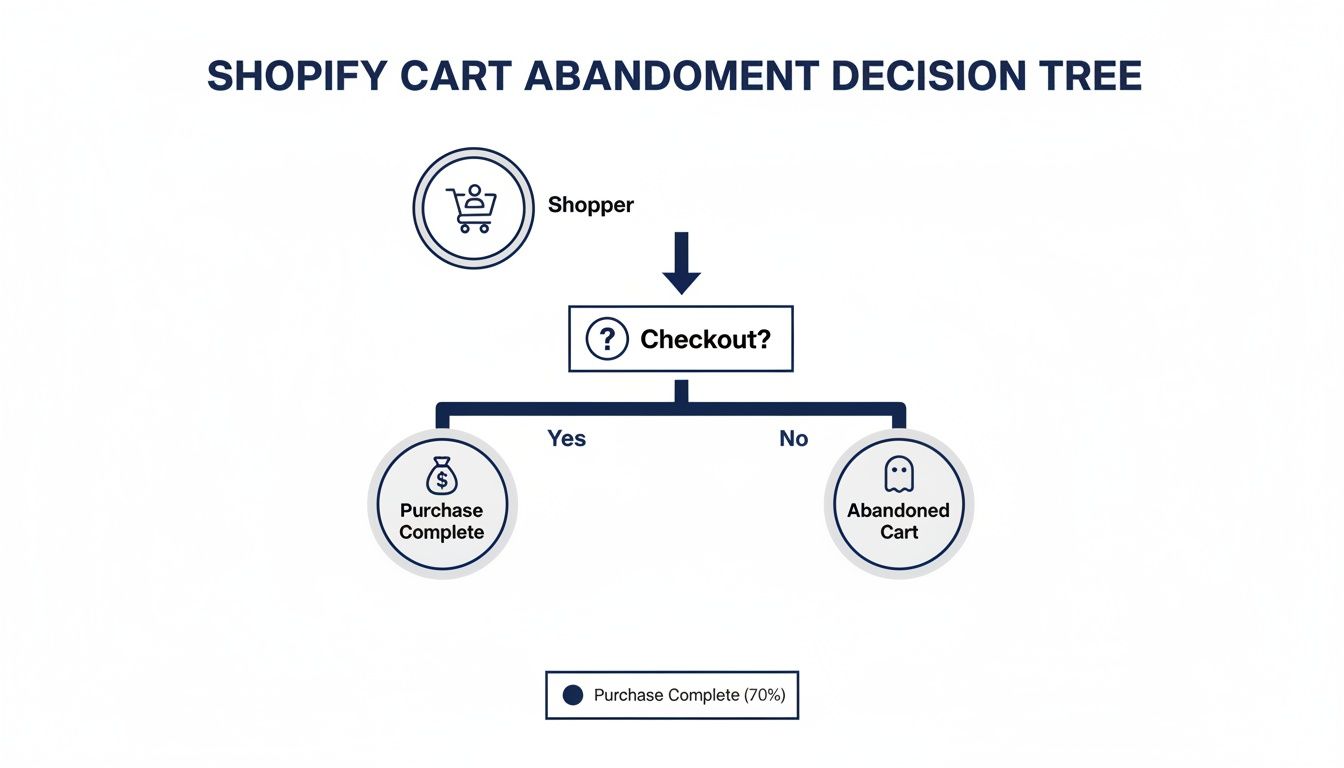
It really is that binary: a shopper either commits to buying or they're gone. Your entire job is to make the path to "Yes" as smooth, rewarding, and obvious as possible.
A Diagnostic Checklist for Your Store
To find your leaks, you have to think like a skeptical, first-time buyer. Pull out your phone and go through your own checkout process. Then do it again on a desktop. Be brutally honest with yourself. What feels clunky? What makes you hesitate, even for a split second?
Here's a quick audit checklist I run through to spot the most common checkout killers:
The Shipping Surprise: Do your shipping costs only show up on the final checkout page? This is the undisputed #1 reason people bail. Customers feel tricked when a $50 order suddenly becomes a $65 order right at the end. Get those shipping estimates out in the open early on.
Forced Account Creation: Are you demanding shoppers create an account before they can buy? This is a massive conversion killer, responsible for nearly a quarter of all abandoned carts. Always, always offer a guest checkout option and make it the most prominent choice.
The Coupon Code Panic: Does a big, empty "Discount Code" box stare back at every customer? This is an open invitation for them to leave your site and go hunting for a code. If they come back empty-handed, they feel like they’re getting a bad deal and often abandon the purchase entirely.
Clunky Payment Process: How are you letting people pay? If you only take credit cards, you’re shutting the door on customers who live and die by the speed and security of PayPal, Shop Pay, or Apple Pay.
Beyond the Basics: Uncovering Hidden Friction
Once you’ve cleared out those obvious culprits, it’s time to dig deeper. The less obvious issues are the ones that quietly poison your conversion rate, creating just enough hesitation to send a customer packing.
Think about the psychological shift that happens. A customer is excitedly adding items to their cart, riding a wave of positive emotion. But the standard Shopify checkout? It’s sterile, transactional, and instantly kills that momentum. It’s a purely functional step, not an engaging or rewarding one.
The moment a customer hits the checkout, their mindset flips from the excitement of "shopping" to the scrutiny of "spending." Any friction, doubt, or lack of value at this stage can be enough to trigger abandonment.
This is where you can shift from just fixing what's broken to proactively building value. Instead of just patching leaks, you can add elements that build excitement and make checking out feel like a win.
For example, a standard cart does absolutely nothing to encourage a higher spend. But what if your cart actively showed a customer they were only $10 away from unlocking a free gift? Or that adding one more small item would push them over the threshold for free shipping?
This isn't about giving away the farm with deep discounts. It’s about using smart, in-cart rewards to increase the perceived value of the purchase. You're shifting the customer's focus from the pain of spending to the joy of earning. That simple change in perspective can dramatically boost your AOV and build a sense of loyalty that a 10% off coupon never could.
Tools like Monster Cart are designed specifically for this. They replace the passive, default cart with an interactive rewards engine. By building these AOV-boosting incentives directly into the cart experience, you stop leaks before they even start and turn a point of friction into your most powerful conversion tool.
Turning Your Cart into a Conversion Hub
The standard Shopify cart is functional, but let's be honest—it’s where the excitement of shopping often goes to die. Customers who were just enthusiastically adding products suddenly land on a sterile, transactional page that feels more like an invoice than an experience. This is a huge mistake. This moment is your last, best chance to reduce Shopify cart abandonment and actually increase the order's value.
It's time to stop thinking of the cart as a simple holding area and start treating it as your most powerful conversion tool. That means shifting from a passive summary of items to an interactive and rewarding journey that builds momentum straight to the checkout.
Boost AOV Without Harming Your Margins
When faced with cart abandonment, too many merchants reach for the emergency brake: site-wide discounts. This is a short-term fix that can cause long-term damage. It erodes your profit margins, devalues your products, and trains customers to just wait for the next sale.
A much smarter approach is to build value directly into the cart itself, encouraging customers to spend a little more to earn tangible rewards. This strategy focuses on boosting your Average Order Value (AOV) in a way that feels like a win for the customer, strengthening their relationship with your brand. Instead of slashing prices, you give them a compelling reason to add just one more item.
The goal isn't just to make a sale; it's to make each sale more profitable. By offering strategic rewards instead of hefty discounts, you increase the total order value while protecting your margins and building genuine customer loyalty.
Gamify the Cart with Progress-Based Rewards
One of the most effective ways to turn your cart into a conversion machine is by gamifying the experience. This means using visual cues and milestones that make customers feel like they're working toward a goal, not just spending money. This is where tools like Monster Cart really shine, swapping out the default cart with an interactive slide-out that visually tracks their progress toward awesome rewards.
Here are a few powerful, value-driven strategies you can implement right away:
Tiered Free Gift Offers: This is a classic for a reason. Instead of a generic "Free Gift with Purchase," create tiers like "Spend $75, get a free sample" or "Spend $150, get our best-selling travel-size product." It gives customers a clear target to aim for.
Free Shipping Progress Bars: Unexpected shipping costs are the #1 killer of conversions. A dynamic progress bar that shows "You're only $17 away from free shipping!" is an incredibly effective nudge to encourage a higher spend.
'Buy More, Save More' Milestones: This is a step up from a simple BOGO. You can structure offers like "Buy 2, Get 10% Off; Buy 3, Get 20% Off." The cart can visually update as items are added, showing the customer how close they are to unlocking the next level of savings.
This is a perfect example of how Monster Cart displays these rewards in a clean, motivating way right inside the cart drawer.
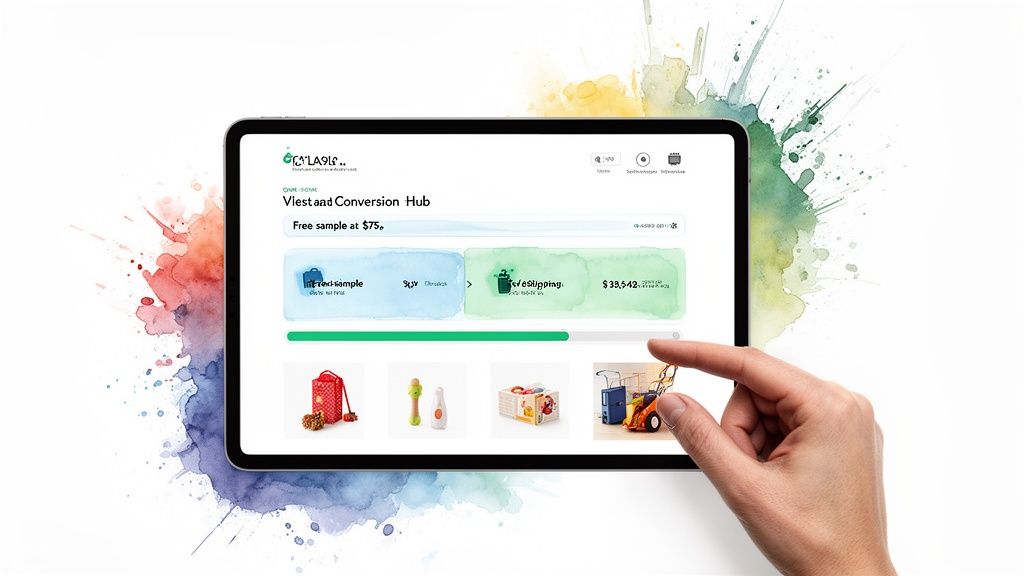
The interface makes the incentive obvious and visualizes the customer's progress, motivating them to add more to their order to hit that next goal.
Why This Approach Builds Lifetime Value
This method does more than just combat Shopify cart abandonment in the moment. It fundamentally changes the customer's perception of your brand. Each purchase feels more rewarding, which builds positive associations and encourages repeat business. A customer who received a surprise free gift they loved is far more likely to return than one who just used a generic 10% off code.
To take this even further, you can add complementary products using in-cart upsells, a topic we cover in our guide on frequently bought together recommendations.
By focusing on value-adds like gifts and free shipping, you're investing in the customer experience. This creates a more loyal following that is less price-sensitive over time. They come back for the great products and the great experience, not just for the next discount.
Ultimately, the goal is to consistently learn how to improve website conversion rate, and a data-driven framework is essential for that. An interactive, rewarding cart is a cornerstone of that framework, turning a point of friction into a hub of opportunity.
Adding Seamless In-Cart Upsells
Once a customer loads up their cart, they’ve sent a powerful signal—they're engaged and ready to buy. This is the perfect moment to increase their order value, not by hitting them with annoying pop-ups, but by offering helpful, relevant additions that feel like a genuine convenience. This is where seamless in-cart upsells come in.
The trick is to dodge the jarring experience of traditional post-purchase upsell pages or aggressive pop-ups. Instead, by integrating small, relevant offers directly into the slide-out cart, you keep the shopper in a smooth, uninterrupted flow toward completing their purchase.
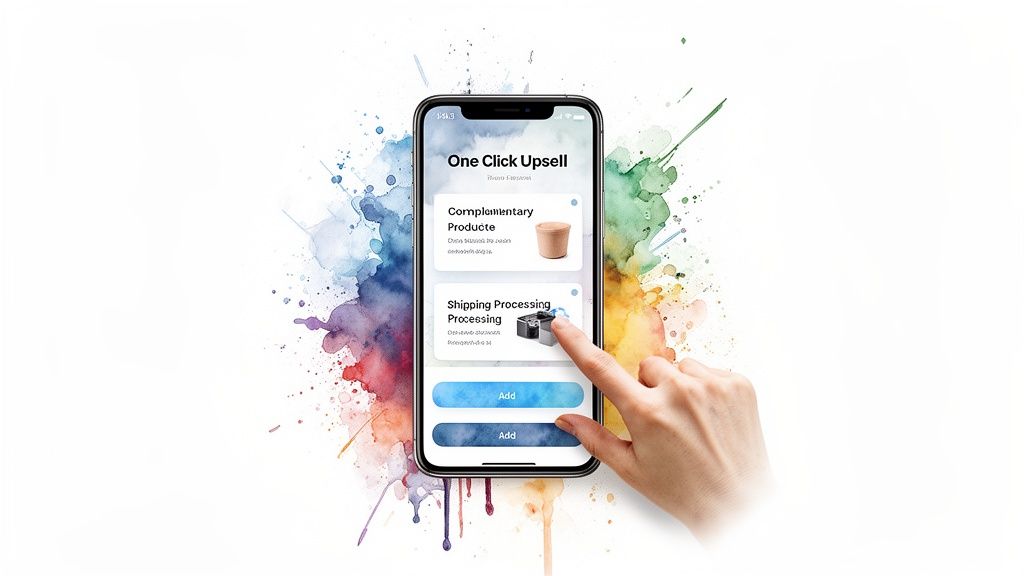
This approach is all about compounding revenue through small, high-margin additions that customers genuinely appreciate. It’s a subtle yet incredibly powerful tactic for reducing Shopify cart abandonment by making the final purchase feel even more complete and valuable.
Making Upsells Feel Like a Feature
The best upsells don’t feel like a sales pitch; they feel like a helpful suggestion. You're anticipating a customer's needs and offering an easy, one-click solution right where they are already focused. This is a world away from tactics that pull customers out of their buying journey.
Forget about big-ticket items. We're talking about low-cost, high-value additions that are easy "yes" decisions. These are impulse-friendly offers that enhance the main purchase without causing sticker shock or making the customer second-guess their entire order.
Here are a few examples that work like a charm:
Shipping Protection: Offer peace of mind with optional, low-cost package protection against loss, theft, or damage.
Priority Processing: For a few extra dollars, let customers jump to the front of the line for faster fulfillment.
Product Warranties: Add an extended warranty for electronics or high-value items with a single click.
Gift Wrapping: During holidays or key gifting seasons, this is an incredibly convenient and profitable add-on.
These small wins add up fast. A $3 shipping protection add-on might not sound like much, but across thousands of orders, it becomes a significant, high-margin revenue stream that also improves the customer experience.
An upsell should never cause hesitation. It should resolve a potential concern or add a small delight, making the final 'buy' button an even easier click. This is how you boost AOV while actively decreasing cart abandonment.
Focus on Lifetime Value, Not Just One-Time Sales
This strategy is about more than just a single transaction. It’s about building a better, more thoughtful relationship that encourages long-term loyalty. When your upsells genuinely help the customer—by protecting their purchase or making it more special—you build trust.
This is the polar opposite of the old method of just pushing hefty discounts. While a 20% off coupon might close a sale today, it trains customers to undervalue your products. Offering a valuable add-on, on the other hand, preserves your brand's integrity and profit margins.
A tool like Monster Cart makes this incredibly easy by letting you build these one-click upsells directly into the cart drawer. It presents these offers cleanly, without ever disrupting the path to purchase. This turns the cart into an engine for increasing AOV and customer lifetime value, rather than just a summary of items.
By focusing on helpful, non-intrusive add-ons, you provide a superior shopping experience that customers remember. They are more likely to return because they feel understood and well-cared for, not just sold to. For merchants aiming to build a sustainable brand, this shift in thinking is critical. If you're looking for more ways to integrate these strategies, exploring the best Shopify upsell apps can provide additional inspiration.
Winning Back Customers The Right Way
Even with a perfectly optimized, reward-filled cart, some shoppers will inevitably get distracted and wander off. But this is where you can turn a near-miss into a long-term loyal customer.
The old-school, single "You left something behind!" email just doesn't cut it anymore. Modern recovery is about continuing the positive experience you started in the cart, not just clawing back a sale.
Instead of a generic reminder, your recovery messages should be a seamless extension of your brand's value. This means a thoughtful, multi-channel approach using both email and SMS, with a heavy emphasis on personalization and reminding them of what they were so close to achieving.
Beyond the Basic "Forgot Something" Email
A truly effective recovery sequence is less of a nudge and more of a helpful guide back to the value they were about to receive. The key is to shift the focus from what they left behind to what they nearly unlocked.
The most powerful abandoned cart message isn't "You left items in your cart." It's "You're only $10 away from earning that free gift!" This reframes abandonment from a forgotten task into a missed opportunity, creating a much stronger incentive to return.
Think about the psychology here. You aren't just pushing them back to a static, empty cart. You are reminding them of the specific rewards and progress they made. It's about nurturing the relationship, not nagging them for a transaction. By using a tool like Monster Cart, you can track these in-cart achievements, making your recovery emails incredibly specific and powerful.
Structuring a Modern Recovery Sequence
A multi-touch recovery plan works best because it addresses different reasons for abandonment over time. One of the most effective strategies for winning back customers is through targeted, powerful email drip campaign examples, designed to re-engage those who left items in their cart.
Here’s a simple, high-impact sequence you can set up:
Message 1 (1-2 Hours Later - Email/SMS): This is a gentle, helpful reminder. The goal is to catch shoppers who were simply distracted or had a technical hiccup.
Subject/Intro: "Still thinking it over?" or "Your items are waiting!"
Content: Show their cart items clearly and include a compelling reminder like, "You were so close to unlocking free shipping!" No discount is needed here; the focus is on service and value.
Message 2 (24 Hours Later - Email): If they haven't returned, it's time to build a little more value and address potential concerns.
Subject: "Your cart is about to expire..."
Content: Reiterate the rewards they were close to. This is also a great place to add social proof, like a top review for one of the items in their cart. This builds confidence and reminds them why they wanted the product in the first place.
Message 3 (48-72 Hours Later - Email/SMS): This is your final shot, and it's where a small, strategic incentive can make all the difference. Instead of a hefty discount that devalues your brand, offer a value-add.
Subject: "A little something to help you decide"
Content: Offer a small, time-sensitive incentive like a free sample with their order or free shipping, regardless of their cart total. This respects your pricing while still providing a compelling reason to complete the purchase.
This approach focuses on building customer lifetime value. By communicating thoughtfully and offering genuine value instead of just deep discounts, you re-engage customers in a way that builds trust and encourages them to come back again and again.
Your Questions, Answered
Diving into Shopify cart abandonment can stir up a lot of questions. I've heard them all. Let's tackle the most common ones I get from merchants, so you can sidestep the usual pitfalls and start turning those abandoned carts into a real source of growth.
What’s a “Good” Cart Abandonment Rate, Really?
While industry benchmarks often float around 70%, a "good" rate is all relative. It really depends on what you sell and who you sell it to. For most Shopify stores, getting your abandonment rate below 60% is a fantastic goal to shoot for.
But honestly, the most important number isn't some static benchmark. It’s your own, month-over-month trend line. Is it going down? If so, you're winning. The best way to keep that line moving in the right direction is to focus on the in-cart experience—think clear communication and compelling rewards that make people genuinely excited to complete their purchase.
Will In-Cart Rewards Destroy My Profit Margins?
Not if you’re smart about it. In fact, it’s quite the opposite. The whole point of strategic in-cart rewards is to bump up your Average Order Value (AOV) so much that it more than pays for the cost of the reward itself.
Think of it this way: slapping a 10% discount on your store cuts into your margin on every single sale, big or small. But offering a free gift—which you buy at cost—when a customer hits a higher spending goal? That encourages larger orders. This approach is almost always more profitable because you're boosting total revenue and moving inventory, all while making the customer feel like they got a special treat. You're shifting the focus from cutting the price to adding value, which is a much healthier way to build a brand long-term.
Smart rewards don't cost you money; they make you money. By nudging customers to spend a little more to unlock a gift or free shipping, you increase the overall profitability of each transaction and enhance customer lifetime value.
How Can I Cut Down on Abandonment Without Using Discounts?
Discounts are just one tool in the box, and frankly, they’re often overused. If you want to reduce Shopify cart abandonment without cheapening your brand, your focus should be on two things: removing friction and adding value.
Kill the Surprises: The number one reason people bail is unexpected costs. Shipping fees and taxes appearing out of nowhere at the final step are conversion killers. Be upfront about all costs as early as you can.
Build Unshakeable Trust: Your site needs to look and feel professional. Prominently display security badges and make your checkout process feel rock-solid.
Offer Value-Adds, Not Price Cuts: This is where in-cart rewards shine. Things like free gifts or unlocking free shipping at a specific spending level add tangible value to the order.
With a tool like Monster Cart, you can build these reward tiers and progress bars right into your slide-out cart. It gamifies the experience and encourages customers to spend a little more, all on their own.
Are Abandoned Cart Emails Even Worth It Anymore?
Absolutely, but the old, generic "You forgot something!" email is dead. Today, your recovery emails need to be a lot smarter. A multi-step sequence that offers real value is what actually works.
Personalization is everything. Instead of just showing them the products they left behind, remind them of the rewards they were so close to getting. A message like, "Hey, you were only $12 away from your free gift!" is way more powerful than a bland cart reminder. This approach continues the positive, rewarding experience you started on your site and gives them a compelling reason to come back and finish.
Ready to stop bleeding sales and turn your cart into your most powerful conversion tool? With Monster Cart, you can build an interactive, rewarding cart experience that boosts AOV and crushes abandonment—all without resorting to margin-killing discounts. Learn more and start your free trial today.
Join 7000+ brands using our apps