Shopify Conversion Rate Optimization That Actually Works
Jan 25, 2026
|
Published
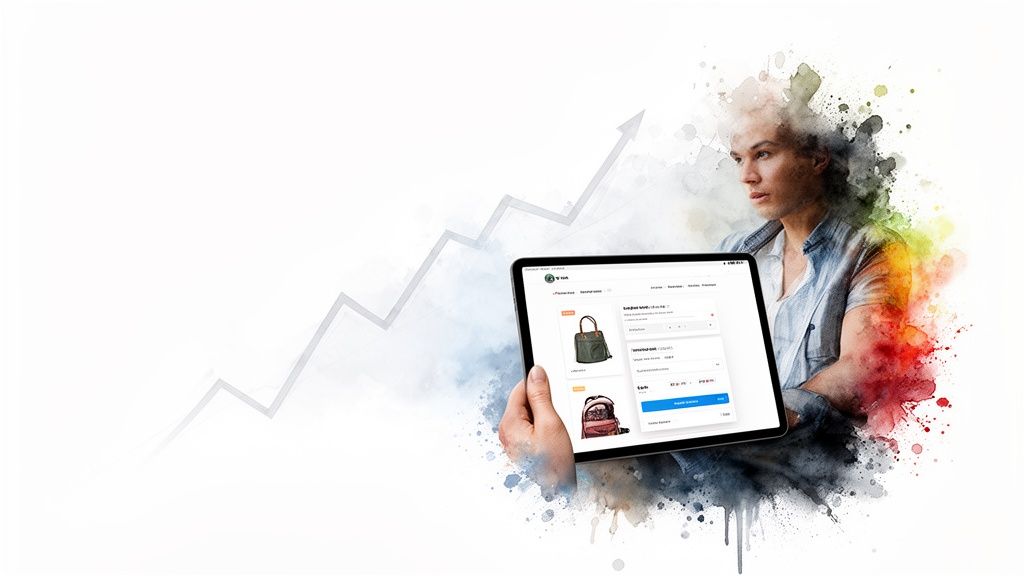
Shopify conversion rate optimization is all about systematically tweaking your online store to turn more of your hard-won visitors into actual, paying customers. It's a deep dive into shopper behavior, followed by data-driven changes to your product pages, checkout flow, and the entire site experience to squeeze more sales out of the traffic you already have.
Unlocking Growth Beyond Just Traffic
When merchants want to grow, the knee-jerk reaction is almost always the same: pour more money into ads. But what if you could double your sales without spending another dime on customer acquisition? That’s the entire promise of Shopify conversion rate optimization (CRO).
It’s a fundamental mindset shift. You stop chasing traffic for traffic's sake and start focusing on maximizing the value of every single visitor who lands on your site. This isn't about fluff like changing button colors. It's about getting into your customer's head, understanding their journey, and systematically removing every bit of friction that keeps them from hitting "Buy Now."
The Real Impact of Small Improvements
The numbers don't lie—there's a massive opportunity hiding in plain sight. The average Shopify store converts at a modest 1.4%, but the top 10% of stores are converting at 4.7% or higher. That gap proves that smart optimization can more than triple your sales without tripling your ad budget. Even small, foundational improvements, like getting your site load time under two seconds, can deliver a major lift. You can find more of these Shopify benchmarks from the team at RedStag Fulfillment.
Making the leap from an average store to a top performer isn't about running the steepest discounts. Aggressive, site-wide sales might give you a short-term sugar rush, but they attract one-time bargain hunters, torch your margins, and devalue your brand over time. Sustainable growth comes from a different playbook entirely, one focused on creating customers for life, not just for a single transaction.
True optimization is about building a shopping experience so seamless, valuable, and rewarding that customers don't just buy—they come back. It's the difference between a one-time transaction and creating a loyal, high-value customer for life.
Focusing on Value and Lifetime Loyalty
Instead of just slashing prices, the smartest brands are obsessed with increasing Average Order Value (AOV) and Customer Lifetime Value (LTV). They pull this off not with hefty discounts, but by adding real value at every step of the journey, especially in the shopping cart through rewards like free gifts, free shipping, and strategic offers.
To get a clearer picture of where to focus your efforts, it helps to see the potential impact of different CRO tactics.
Key CRO Levers And Their Potential Impact
This table breaks down some common CRO tactics, their typical impact on conversion rates, and the primary business goal they help achieve.
Optimization Tactic | Average Conversion Rate Lift | Primary Goal |
|---|---|---|
In-Cart Rewards | 15-30% | Increase AOV & LTV |
Free Shipping Threshold | 10-25% | Increase AOV |
One-Click Upsells | 5-15% | Increase AOV |
Mobile Speed Optimization | 5-20% | Reduce Cart Abandonment |
Social Proof (Reviews) | 5-15% | Build Trust & Confidence |
Guest Checkout Option | 10-30% | Reduce Friction |
As you can see, the biggest wins often come from enhancing the cart and checkout experience, not from pre-purchase tweaks. These are powerful, margin-friendly strategies that work.
Consider rewards like these:
Tiered Rewards: Nudge customers to spend a little more to unlock a free gift or an exclusive product.
Free Shipping Thresholds: Motivate shoppers to add just one more item to their cart to qualify.
Strategic Upsells: Offer relevant, complementary products right in the cart when buying intent is highest.
This is where a tool like Monster Cart becomes an absolute game-changer. It transforms the standard Shopify cart into an interactive rewards engine. As customers add items, a sleek slide-out cart drawer shows their progress toward unlocking the next reward—like a free gift or free shipping—turning the experience into a fun challenge that naturally boosts AOV and nurtures lifetime value.
By focusing on these value-driven incentives, you create a positive feedback loop. Customers feel rewarded for spending more, your AOV skyrockets, and you build a base of loyal shoppers who are excited to return. This is the foundation of a durable, profitable ecommerce business—one built on an exceptional customer experience, not deep discounts.
Building The Trust That Drives Conversions
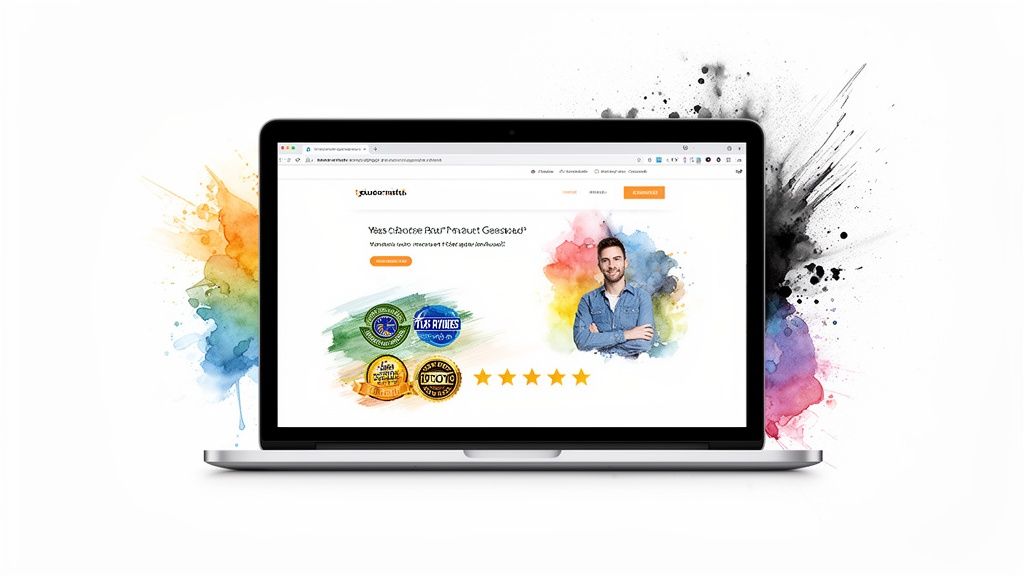
Before a customer even thinks about adding something to their cart, they're asking a silent, crucial question: "Can I trust this store?" If the answer isn't a firm "yes," you've already lost the sale. In ecommerce, trust isn't a nice-to-have; it's the bedrock of every single transaction.
Shoppers today are skeptical. They have their guard up, and they're actively looking for any little red flag that gives them a reason to leave. Your job is to systematically dismantle that skepticism. This goes way beyond just having a pretty website—it means strategically weaving signals of credibility into every step of their journey.
Building that trust is everything. A huge part of this is the constant effort to improve ecommerce customer experience, because it directly shapes how willing a customer is to buy from you. When a shopper feels safe and confident, clicking "buy" feels natural and easy.
Weaving Social Proof Into Your Pages
Social proof is just today's word-of-mouth, and it’s an absolute powerhouse for Shopify CRO. It's the collective voice of your happy customers telling new visitors, "You're in the right place." But just collecting reviews isn't enough. You have to deploy them like a surgical tool.
The numbers here are staggering. We’ve seen Shopify stores with ratings get 38% higher conversion rates in electronics, and positive star ratings lead to 85% more purchases. Other data shows that 82% of shoppers are more likely to convert when they see testimonials, followed closely by 78% for star ratings and 76% for seller badges.
Here’s how to put this into action on your own store:
Showcase User-Generated Content (UGC): Get those photos and videos from real customers onto your product pages. This isn't just a review; it's authentic, relatable proof that people love what you sell.
Feature Detailed Testimonials: Go deeper than a simple star rating. Pull out reviews that tell a story—how your product solved a real problem or completely blew away their expectations.
Display Trust Badges Everywhere: Don't hide your secure checkout badges (like Shopify Secure or PayPal). Make them prominent on product pages and all through the checkout process to squash any security fears before they can even start.
Crafting High-Confidence Product Pages
Your product page is the final battleground. This is where a visitor's casual interest either converts into a purchase or dies on the vine. Every single element needs to work together to answer questions, kill doubt, and build an undeniable case for your product. You want the customer to feel smart and secure in their choice.
Think of it as pre-emptively handling objections. Is the material good quality? What does it look like from the back? When will it actually get here? Answering these questions upfront eliminates the friction that leads people to abandon their carts.
Your product page shouldn't just describe a product; it should sell a solution and a promise. When you eliminate uncertainty, you clear the path to the 'Add to Cart' button. This focus on clarity is a cornerstone of effective Shopify conversion rate optimization.
Start by auditing your product pages with these trust-building elements in mind:
Crystal-Clear Imagery: You need high-resolution photos from every conceivable angle. Add lifestyle shots showing the product in its natural habitat and throw in a short video to show off its features and scale.
Benefit-Driven Descriptions: Stop listing specs. Start explaining how those features actually benefit the customer. Instead of "10,000 mAh battery," write "All-day power so you're never caught with a dead phone."
Upfront Policies: Make your shipping and return policies impossible to miss. A clear, generous return policy is a safety net. It dramatically reduces the perceived risk for the customer and makes them far more likely to commit.
When you build this foundation of trust, you're not just winning a single sale. You're creating a confident customer who will spend more, come back sooner, and tell their friends about you—driving up both AOV and lifetime value.
Boosting AOV By Rewarding Your Customers
The fastest way to kill your profit margins? Get addicted to site-wide discounts. While a 20% off sale might give you a nice revenue spike for a weekend, it also trains your customers to wait for the next price drop. This erodes your brand's value and fills your customer list with one-time bargain hunters, not loyal fans who contribute to long-term lifetime value.
True Shopify conversion rate optimization isn't about selling more by charging less. It's about getting customers to happily spend more because you’re offering them greater value through thoughtful rewards like free gifts, free shipping, and exclusive perks.
The goal here is a simple but powerful mindset shift: move from discounting to rewarding. This strategic pivot takes the focus off a race-to-the-bottom on price and puts it squarely on thoughtful investments in customer loyalty and lifetime value. Instead of slashing prices across the board, you create smart incentives that encourage shoppers to willingly increase their basket size.
Move Beyond The Discount Mentality
Constant sales can feel like a necessary evil, but they often do more long-term harm than good. They shrink your margins—making it harder to reinvest in product and marketing—and cheapen the perception of your brand. A much smarter approach is to protect your price points while increasing the perceived value of each transaction with rewards that build loyalty.
This is where your Average Order Value (AOV) becomes a critical health metric. By focusing on lifting AOV, you're not just making a single sale more profitable. You're creating a better, more engaging experience for your customer, making them feel like they're getting an exclusive perk, not just a temporary price cut. This focus on rewards is key to building customer lifetime value.
The most successful brands don't just sell products; they create rewarding experiences. By replacing deep discounts with strategic incentives, you encourage higher spending while building a loyal customer base that values your brand, not just your sales calendar.
This approach is all about building a sustainable growth engine. You stop competing solely on price and start competing on the value and experience you provide, which is a much stronger foundation for long-term success.
Implement Tiered Incentives To Drive Action
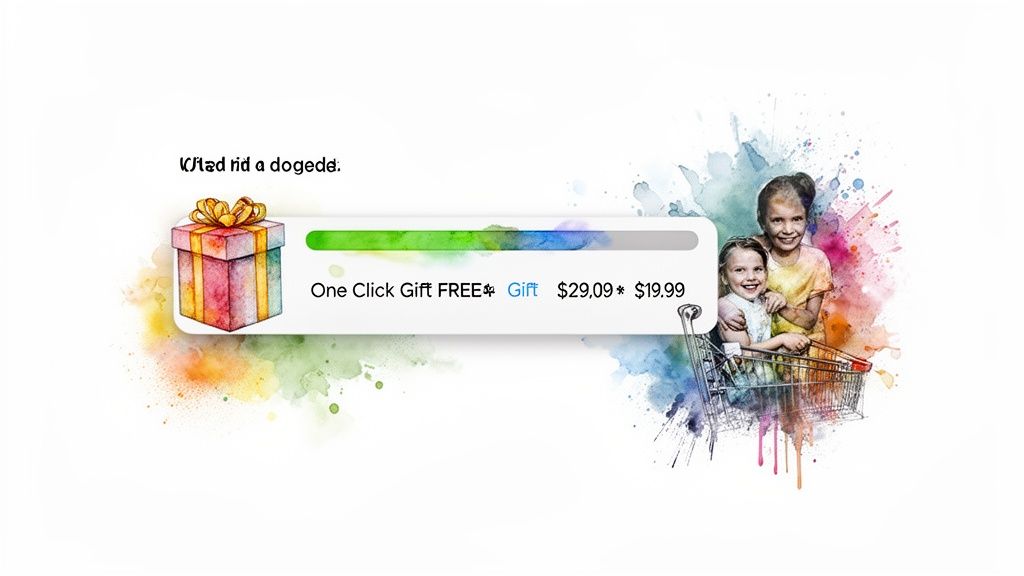
One of the most effective ways to boost AOV without defaulting to hefty discounts is through tiered rewards. This strategy gamifies the shopping experience by setting clear spending goals that unlock progressively better incentives like free shipping or a free gift. It taps into a powerful psychological trigger: our innate desire to achieve a goal and earn a reward.
Think about it: shipping costs are a massive point of friction and a primary driver of cart abandonment. In fact, a staggering 55% of shoppers will ditch a purchase if extra costs like shipping are too high. Turning this pain point into a reward is a huge opportunity.
Here are a few proven tiered reward structures you can implement right away:
Spend-to-Unlock Free Shipping: This is the classic AOV booster. Set a clear threshold like, "Free Shipping on Orders Over $100." It’s the perfect nudge for customers to add one more item to their cart to avoid that pesky shipping fee.
Tiered Free Gifts: This is an incredibly powerful strategy. For example: "Spend $75 and get a free travel-size moisturizer. Spend $125 and get the full-size version." This creates a compelling, tangible reason to reach that next spending tier.
Progressive Savings (Buy More, Save More): Instead of a flat discount, offer savings that increase with the cart value. Something like, "Save 10% on orders over $100, 15% on orders over $150," encourages larger purchases while protecting your base margin.
The key is to make these rewards feel valuable and, most importantly, attainable. If your spending threshold is too high, it will demotivate shoppers. Set your tiers just above your current AOV to create an achievable goal that nudges customers to spend just a little bit more. If you're looking for more ideas, you can explore our guide on finding the best Shopify app for free gifts with purchase.
Gamify The Cart Experience
The magic of tiered rewards gets amplified when customers can see their progress in real-time. A static announcement banner at the top of your site is easily ignored, but an interactive progress bar directly in the shopping cart creates a dynamic and engaging experience. This is a core component of modern Shopify conversion rate optimization.
This is where a tool like Monster Cart completely changes the dynamic. It can replace the standard Shopify cart with a branded, interactive slide-cart drawer. As a customer adds items, a progress bar fills up, visually showing them exactly how close they are to unlocking their next reward—whether it’s free shipping, a free gift, or a special discount.
This simple visualization turns shopping from a transactional chore into a mini-game. The customer isn't just buying products; they're working toward a goal. This subtle shift makes adding another item to the cart feel like a win, not just another expense.
By integrating these rewards directly into the cart, you make the offer impossible to miss at the most critical moment of the entire customer journey. You're not interrupting their flow with an annoying pop-up; you're enhancing their experience by showing them the extra value they are about to receive. This seamless integration is what makes the strategy so effective at driving up AOV while simultaneously improving the customer experience and fostering long-term value.
Seamless Upselling That Happens In The Cart
Forget about those jarring, full-screen pop-ups that kill the shopping vibe and send customers running. The single best moment to increase order value is when a shopper has already committed—when items are sitting right there in their cart. This is the heart of a smarter Shopify conversion rate optimization strategy.
Instead of interrupting the flow, the goal is to weave in offers so smoothly they feel like a helpful, natural part of the experience. This is where frictionless, in-cart upselling completely changes the game. By embedding relevant offers directly within the cart drawer itself, you create a much smoother, more cohesive journey for your customer.
From Disruption To Enhancement
Let's be real: traditional upselling often feels aggressive. A pop-up appears just as you're about to check out, completely derailing your focus and creating a moment of friction. In contrast, modern in-cart upselling is all about enhancing the experience, not hijacking it.
Imagine a customer adds a new camera to their cart. Instead of a jarring pop-up, a “Frequently Bought Together” bundle showing a memory card and a case appears right below the camera, inside the cart drawer. It’s contextual, genuinely helpful, and adds value without breaking their momentum.
Here are a few examples of seamless in-cart offers that just plain work:
One-Click Add-Ons: Offer low-cost, high-value items like shipping protection, product warranties, or priority processing with a single click.
Complementary Product Bundles: Suggest items that perfectly pair with what’s already in the cart, like offering socks to go with a new pair of sneakers.
Personalized Suggestions: Use a customer’s cart contents to recommend other products they are highly likely to love.
The most effective upsells don't feel like a sales pitch; they feel like a thoughtful recommendation from a helpful expert. By placing these offers inside the cart, you're meeting the customer where their attention is already focused, making the decision to add more to their order feel intuitive and easy.
Unlocking The Power Of The Cart Drawer
The real secret to making this strategy work is to keep the entire interaction contained within a sleek, branded cart drawer. When a customer adds an item, a slide-out cart should appear, allowing them to see their order and any relevant upsells without ever leaving the product page. This maintains momentum and dramatically reduces the risk of abandonment.
This is where an integrated solution like Monster Cart becomes essential. It replaces the default cart page with a fully customizable drawer that acts as a conversion engine. You can build these frictionless upsells directly into the cart, keeping the entire interaction clean and on-brand. The customer stays in the shopping mindset, sees the value of the add-on, and can continue their journey without a single frustrating interruption. For more inspiration on this front, take a look at our roundup of the best Shopify upsell apps.
Thinking Beyond The One-Time Sale
This approach does more than just boost your AOV for a single transaction. It fundamentally shifts the customer relationship from a transactional one to a more valuable, long-term partnership. When you consistently offer relevant, helpful suggestions instead of just pushing for a quick sale with a discount, you build trust.
Customers begin to see your brand as a helpful guide—one that actually understands their needs. This subtle shift is crucial for fostering loyalty and increasing customer lifetime value (LTV). They’re not just buying a product; they're buying into a better experience. Every seamless upsell is another opportunity to prove you get them, which is far more powerful than any percentage-off coupon. This turns the final step of their journey into one last chance to delight them and grow your bottom line in a way that feels rewarding for everyone.
How To Test And Refine Your CRO Strategy
A killer Shopify conversion rate optimization strategy is never a "set it and forget it" deal. Think of it as a living, breathing part of your business—a constant cycle of learning, testing, and tweaking. Getting into a data-driven rhythm is what separates the stores that see a temporary sales bump from those that build sustainable, long-term growth in both conversions and AOV.
This process is all about moving past guesswork. You stop making decisions based on what you think will work and start making them based on how real customers actually behave in your store. The goal is to get into an iterative loop of testing your in-cart offers, refining reward tiers, and optimizing your messaging to see what truly moves the needle.
Demystifying A/B Testing
A/B testing, also known as split testing, is the engine that drives all of this. At its core, it’s pretty simple: you create two versions of a single element—maybe a headline, an offer, or a reward threshold—and show them to different segments of your audience to see which one performs better.
The concept is simple, but the impact can be massive. Data consistently shows that solid landing page tests can boost conversions by up to 30%. Even tiny copy changes can make a difference. Bing famously ran a series of headline A/B tests that resulted in a 12% revenue jump, proving just how powerful methodical testing can be.
To get started, focus your tests on high-impact areas that directly influence a customer's decision to buy or spend more:
Reward Thresholds: Does a free gift at $75 pull in more orders than one at $85? Test different tiers to find that AOV sweet spot.
Offer Types: Pit a free gift against a "Buy 2, Get 1 Free" offer. See which incentive actually motivates more people to complete their purchase.
In-Cart Headlines: Test urgent, specific copy like "You're $15 Away From Free Shipping!" against softer messaging like "Add a small item to unlock your reward."
This simple visual flow shows how an in-cart suggestion can seamlessly turn a standard purchase into a higher-value one.
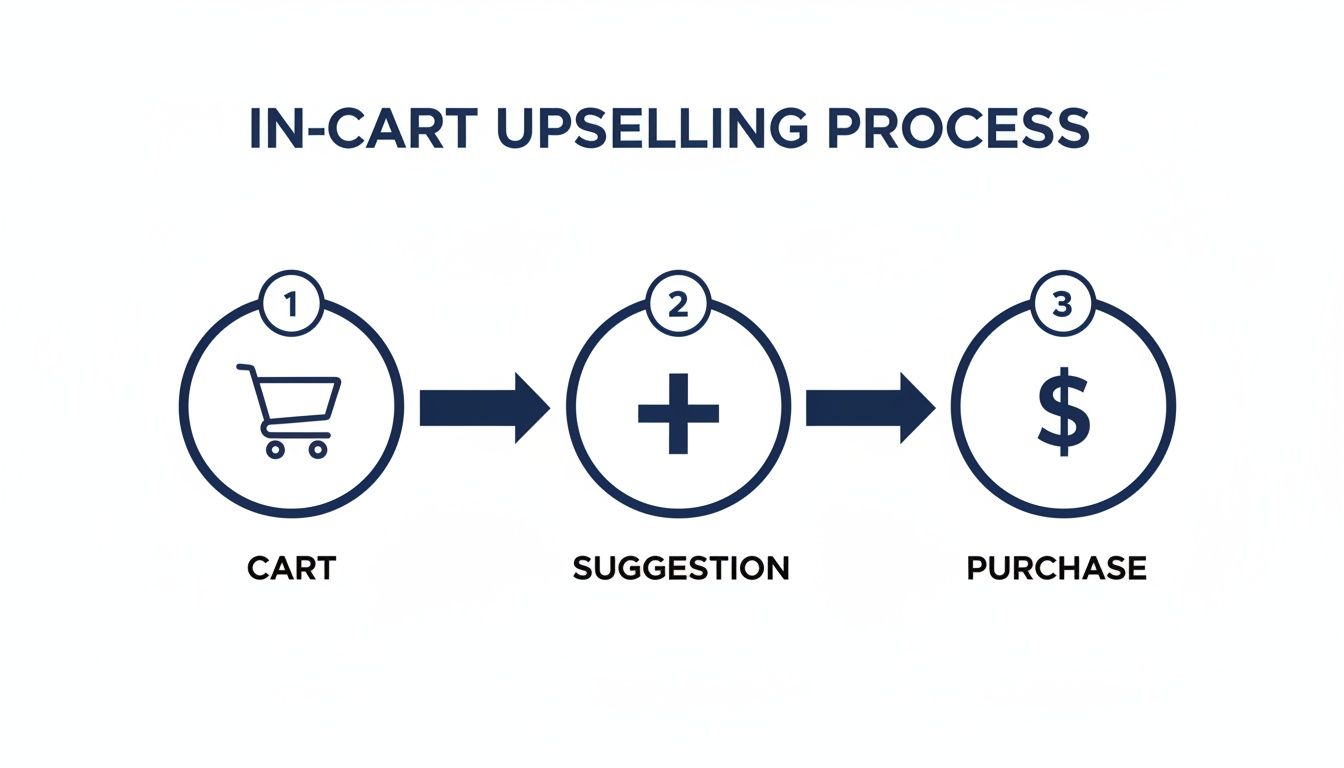
The key takeaway here is that the suggestion happens at the moment of highest intent—right inside the cart—making the path to a larger order feel smooth and helpful, not pushy.
Looking Beyond Basic Analytics
While A/B testing tells you what is working better, it doesn't always explain why. To get the full story, you need to pair that quantitative data with qualitative insights. This is where tools like heatmaps and session recordings become your secret weapons.
Heatmaps give you a color-coded visual of where users are clicking, scrolling, and hovering. They instantly highlight the parts of your pages that are getting all the attention and the parts that are being completely ignored. Session recordings go a step further, letting you watch anonymized replays of actual user journeys. This is where you'll spot the hidden friction points you’d never find in a standard analytics report.
You might discover that customers are repeatedly trying to click on a non-clickable image, or that they get stuck and confused on your shipping options page. These are the golden nuggets that fuel your next round of tests and lead to major conversion breakthroughs.
By combining these tools, you can build much stronger, more informed hypotheses for your tests. For example, if a heatmap shows that your rewards banner is being ignored, you can test a new design or placement. If session recordings show shoppers hesitating at checkout, you can A/B test different trust badges or payment options.
These insights are critical for anyone serious about Shopify conversion rate optimization. They help you understand and fix the root causes of cart abandonment, not just the symptoms. You can learn more about how to reduce cart abandonment in our detailed guide.
When you're trying to nail down your CRO strategy, clear metrics are everything. Using a dedicated tool like a Conversion Rate Calculator can help you accurately measure the impact of every change you make. This continuous improvement cycle—hypothesize, test, analyze, and repeat—is the true engine of long-term growth, turning your Shopify store into a finely tuned conversion machine.
Your Shopify CRO Questions, Answered
As you start digging into Shopify conversion rate optimization, you're going to have questions. It's only natural. I've pulled together some of the most common ones we hear from merchants, with direct, actionable answers to give you some clarity and confidence.
What’s A Good Conversion Rate For A Shopify Store?
Look, the global average for Shopify stores hovers around 1.4%, but honestly, that number is mostly noise. A "good" rate is completely relative to your industry, your price point, and who you're selling to. The top-tier stores might hit 4-5% or even higher, but obsessing over some universal benchmark is a surefire way to get distracted.
A much healthier way to think about it is focusing on consistent, incremental growth. Moving your store's conversion rate from 1% to 1.5% doesn't sound like much, but that's a massive 50% jump in sales from the traffic you already have. The real goal is to get into a rhythm of testing and shipping value-driven improvements, like tiered rewards or mobile optimizations, to steadily lift your own benchmark.
How Can I Increase My Shopify AOV Without Slashing Prices?
You have to completely shift your mindset from discounting to rewarding. This one change protects your margins and builds a much healthier relationship with customers, one that's focused on value, not just the lowest price. It’s a foundational piece for building long-term profitability and customer lifetime value.
Instead of running another site-wide sale, build a tiered incentive system where customers unlock better rewards as they spend more.
Free Gift Tiers: Offer a genuinely cool free gift when a cart hits a specific number, like $75.
Free Shipping Thresholds: Set a clear goal, like free shipping on all orders over $100. It’s amazing how often this motivates shoppers to add one last item.
In-Cart Upsells: Suggest relevant add-ons right in the cart when their intent to buy is peaking.
By rewarding customers for spending more, you gamify the experience and make increasing their order value feel like a personal win. This is how you build loyalty and boost AOV far more sustainably than any temporary price cut ever could.
This is exactly where a tool like Monster Cart comes in. It lets you visualize this progress right in the cart drawer, showing customers exactly how close they are to unlocking that next reward like a free gift or free shipping. It turns the whole thing into an engaging little game that naturally drives bigger orders and builds loyalty.
Are Pop-Ups Actually Bad For Conversion Rates?
The interruptive, full-screen kind? Absolutely, especially on mobile. They completely hijack the shopping flow, feel aggressive, and are a massive source of frustration that sends people heading for the exit. Shoppers today expect a smooth, controlled experience.
A much smarter approach is to weave your offers natively into the shopping journey. Using a slide-out cart drawer to present "Frequently Bought Together" items or show progress towards a free gift is non-intrusive and genuinely helpful. It keeps the customer in the driver's seat and actually enhances their experience instead of derailing it, which always leads to better conversion outcomes.
How Long Does It Take To See Results From CRO?
Honestly, it depends. The timeline for seeing a real impact from your CRO efforts can be all over the map. Some changes deliver a near-instant lift, while others are more of a slow burn that pays off over time.
For instance, a simple fix like making your shipping policy crystal clear on product pages can show a positive result almost overnight. But a properly structured A/B test on a high-traffic page might need a few weeks to gather enough data for you to be confident in the results.
Then you have the bigger strategies, like refining a rewards program or building a deep well of social proof. These deliver compounding returns over months. The most important thing is just to be consistent. Small, iterative improvements tested over time will always build into significant, long-term growth.
Ready to stop the discount cycle and start rewarding your customers? With Monster Cart, you can transform your Shopify cart into a powerful AOV-boosting engine. Build tiered free gift offers, gamified progress bars, and seamless in-cart upsells that delight customers and drive profitable growth. Learn how Monster Cart can elevate your Shopify conversion rate optimization strategy.
Join 7000+ brands using our apps