Shopify rewards program: Boost AOV and LTV with modern strategies
Feb 19, 2026
|
Published
Think of your Shopify cart as more than just a final tally before checkout. What if it was an interactive game, a place where customers could unlock instant rewards as they shop? This is the simple, powerful idea behind a modern Shopify rewards program. It's a strategic shift away from slow, clunky points systems toward real-time incentives that boost your average order value (AOV) on the spot and encourage long-term customer lifetime value (LTV).
Rethinking Loyalty Beyond Points and Discounts
For years, customer loyalty was all about earning points. You'd spend money now to slowly accumulate points you could maybe, eventually, redeem for a small discount on a future purchase. It’s a well-meaning but flawed model because it creates a huge disconnect. You’re asking the customer for more money today in exchange for a vague promise of savings later, which does almost nothing to increase the value of their current cart.
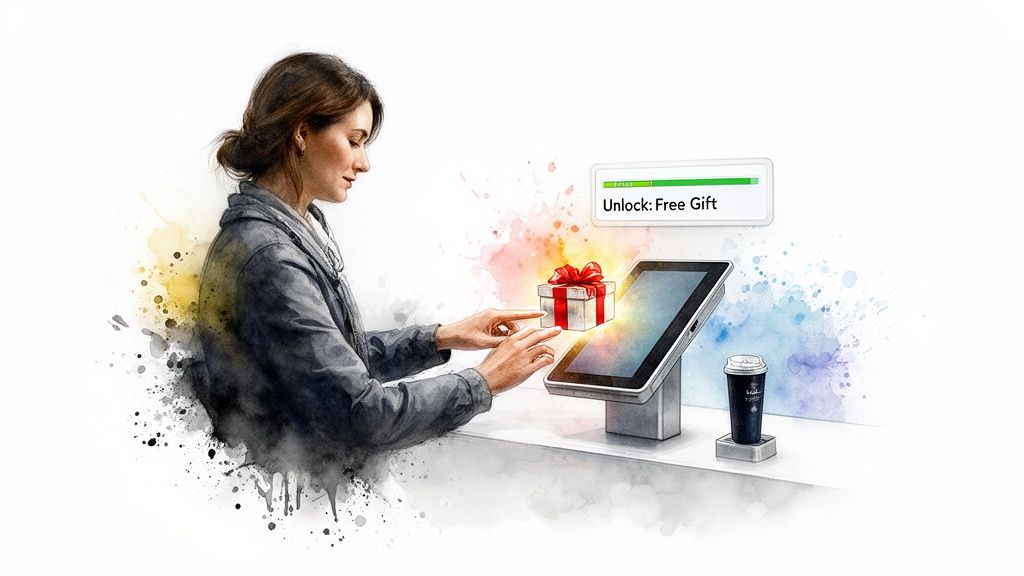
The smartest brands are flipping this model on its head. They're bringing the rewards directly into the shopping cart, turning a passive list of items into an active, engaging experience. Instead of waiting for a discount next month, customers are motivated to add one more thing to their cart to unlock free shipping or a free gift right now. This approach focuses on boosting today's AOV while creating the kind of positive experience that builds true lifetime value.
The Power of Immediate Gratification
This shift is grounded in some pretty basic human psychology: we love instant rewards. They're far more compelling than something we have to wait for. When a customer sees they are just "$10 away from a free gift," the incentive feels tangible and urgent. It’s less of a marketing ploy and more of a fun challenge they want to win.
This approach gamifies the entire shopping journey, making it more exciting and, for you, more profitable. It’s a brilliant way to increase AOV without falling back on steep, margin-killing discounts that can devalue your products and erode lifetime value over time.
The real goal is to make customers want to spend more, not feel pressured to. By offering a desirable reward like a great free gift or free shipping, you’re adding real value to their order instead of just slashing the price, which is key for building a sustainable, long-term business.
This strategy has a direct, measurable impact on the metrics that matter most by encouraging specific, profitable actions in real-time.
Boosts Average Order Value (AOV): Customers naturally add more to their cart to hit a rewarding threshold.
Enhances Customer Lifetime Value (LTV): Positive, fun shopping experiences build genuine brand affinity and bring people back again and again.
Protects Profit Margins: Offering a low-cost gift with a high perceived value is almost always more profitable than a blanket 15% discount.
From Static Checkout to Interactive Rewards Layer
Making this happen means you have to stop seeing the cart as just a functional step before payment. It needs to be an interactive rewards layer that guides and motivates your customer. Tools like Monster Cart are built specifically for this, replacing the standard Shopify cart with a dynamic side-cart where rewards are unlocked as someone shops.
This kind of in-cart system builds excitement and nudges customers toward a higher spend, setting a completely new standard for customer engagement. By focusing on instant value and a seamless experience, you can build a Shopify rewards program that not only drives sales today but also grows the long-term loyalty that every lasting brand is built on.
Why Do So Many Loyalty Programs Fail to Lift AOV?
Plenty of Shopify stores jump into traditional loyalty programs expecting a big win, only to see them fall flat. You roll out a points system, shout about it from the rooftops, and then… nothing. The average order value (AOV) barely budges.
So, what’s going on? The problem is rooted in a simple but powerful psychological hurdle: delayed gratification.
A customer earns points on today's purchase, but the actual reward—usually a small discount—is locked away for some future shopping trip. This creates a massive disconnect between the action (spending money now) and the benefit. It completely fails to answer the one question every shopper has: “What’s in it for me, right now?” This is a missed opportunity to not only increase AOV but also to create a memorable experience that builds lifetime value.
The Problem with Post-Purchase Promises
Old-school, points-based systems are built on a shaky promise of future value, which does next to nothing to influence how much a customer spends in their current session. The reward feels distant, abstract, and honestly, not always worth the hassle. This model is riddled with friction points that work directly against your goal of a higher AOV.
These delayed-reward systems are famous for a few common pitfalls:
Customer Confusion: Shoppers have no idea how many points they need or what those points are actually worth. This confusion quickly turns into apathy. An ignored program is a useless program.
Low Engagement: When the payoff is weeks or months away, motivation dies. A $5 discount on their next purchase just doesn’t create the urgency needed to add another $30 item to their cart today.
The Goal Feels Impossible: If your reward thresholds are set too high, customers feel like they'll never get there and just check out. The effort simply isn't worth the prize.
These programs are essentially asking customers to make an investment in your brand for a tiny return later on. While this might work for a small handful of die-hard fans, it's a passive strategy that misses the massive sales opportunity sitting right in front of you. It’s banking on a future visit instead of making the current one more valuable.
The fatal flaw of most loyalty programs is that they reward the last purchase instead of influencing the current one. They are reactive, not proactive, and miss the most critical window of opportunity while a customer is actively shopping.
Shifting the Focus to In-Cart Action
To actually move the needle, you need a Shopify rewards program that closes that gap. The entire focus has to shift from earning points for later to unlocking real value now. This is where the power of an in-cart rewards system really shines, encouraging a higher spend without resorting to hefty, brand-devaluing discounts.
Instead of a vague promise, you dangle a tangible, immediate incentive right in front of them: "Spend $15 more and get a free gift," or "You're just $10 away from free shipping."
Suddenly, the shopping experience isn't just a transaction; it's a fun little challenge. The value is clear, immediate, and directly tied to what the customer is doing at that very moment. This not only drives a higher AOV but also makes the whole experience more enjoyable—which is the real secret to building long-term customer lifetime value.
By building rewards directly into the cart, you’re not just hoping for loyalty; you're actively creating it with every single interaction. This is the exact approach that tools like Monster Cart are built on, turning the simple shopping cart into your most powerful AOV-boosting machine.
When a customer adds that first item to their cart, the real game begins. This is your single best opportunity to influence their spending, and a smart Shopify rewards program built directly into the cart makes all the difference. The goal is to get them excited about spending more, but without resorting to those margin-killing, site-wide discounts. It’s a shift from passive promotions to active, in-cart incentives that build momentum and long-term value.
The best rewards are the ones that feel immediate and within reach. When shoppers see a clear path to a prize, they’re far more likely to toss another item in their cart. This isn't about pressure; it's about making the shopping experience more fun and valuable, all while protecting your profits and building real customer loyalty.
Spend-to-Unlock Reward Tiers
Spend-to-unlock tiers are the bedrock of a modern in-cart rewards strategy. Forget about vague points systems that customers have to track over months. This tactic is a direct and compelling challenge: “Spend $25 more to get a free deluxe sample.” That simple message gamifies the whole process, turning a routine purchase into a mini-quest.
The magic is in the visual feedback. As a customer adds items, a progress bar fills up, showing them exactly how close they are to their reward. This creates a powerful sense of momentum and makes the goal feel totally achievable. When you get this right, you’ll see a serious lift in your AOV because customers want to hit that next threshold.
Free Shipping Thresholds Reimagined
Free shipping isn't new, but its power is almost always underestimated. Study after study shows that unexpected shipping costs are the #1 reason people abandon their carts. Turning this major pain point into a reward is one of the easiest wins you can get.
A simple "Free Shipping on Orders Over $75" banner is a decent start, but an interactive in-cart progress bar blows it out of the water. Imagine a dynamic message that says, “You’re just $17.50 away from free shipping!” It provides a clear, actionable next step that keeps the shopper engaged and focused on reaching the goal—often by adding a small, high-margin item they were already considering.
Buy More, Save More Incentives
Another fantastic way to drive up AOV is with "Buy More, Save More" offers. This strategy is all about encouraging customers to purchase multiple units of the same product or related items by offering tiered discounts that get better with quantity. For example:
Buy 2, Get 10% Off: A gentle nudge that turns a single purchase into a pair.
Buy 3, Get 15% Off: A stronger incentive for customers to stock up on their favorites.
Buy 4, Get 20% Off: The top tier, offering the best value and driving the biggest possible order.
This approach works especially well for consumables like skincare, supplements, or coffee. Not only does it boost the immediate AOV, but it also increases customer lifetime value by making sure they have enough product to last until their next order.
To help you decide which in-cart reward strategy fits your goals, let's break down how each one typically impacts your key metrics.
Reward Strategy Impact on AOV vs. Margin
Reward Strategy | AOV Impact Potential | Margin Impact | Best Use Case |
|---|---|---|---|
Spend-to-Unlock Gift | High | Low (Fixed Cost) | Introducing new products or moving specific inventory. |
Free Shipping Threshold | Medium to High | Moderate | Reducing cart abandonment and converting on-the-fence shoppers. |
Buy More, Save More | Medium | Moderate (Scaled) | Selling consumables or items people buy in multiples. |
Tiered GWP | Very High | Low to Medium | Maximizing cart value from high-intent shoppers. |
While each strategy has its place, you can see a clear trend: in-cart rewards are designed to grow the total order value first, making their impact on your profit margins much healthier than a simple percentage-off discount.
The Power of Free Gifts with Purchase (GWP)
Offering a free gift with purchase (GWP) is a brilliant way to pump up the perceived value of an order without giving away margin. The secret is to pick low-cost items that your customers will find genuinely desirable. A $5 item with a perceived value of $20 is always going to be more profitable than a blanket 15% off coupon.
A well-chosen free gift does more than just boost AOV. It introduces customers to other products in your catalog, acts as a delightful surprise, and strengthens their emotional connection to your brand, directly contributing to higher lifetime value.
Visualizing the reward is everything. When a customer hits the GWP threshold, the free gift should pop right into their cart automatically. This moment of instant gratification confirms they’ve "won," solidifying their decision to spend more. If you're looking for ideas on what to offer, you can learn more in our comprehensive guide to Shopify free gift strategies.
These in-cart rewards, brought to life with dynamic visual cues, transform your cart from a boring checkout tool into a powerful sales engine. Solutions like Monster Cart are built for exactly this—creating a frictionless and engaging experience that naturally guides customers toward a higher spend, building both immediate revenue and long-term loyalty.
Choosing Your Shopify Rewards Program Tools
Alright, you’re sold on the idea of in-cart rewards over a delayed points system. Smart move. But how do you actually build it? The good news is, you don’t need a massive budget or a team of developers to implement a powerful Shopify rewards program that lifts your average order value without relying on hefty discounts.
The next step is picking the right tool for the job. This decision is a big one—it'll shape not only what you can offer but also how you manage and grow your strategy down the road.
Generally, you’ve got three paths to choose from. Each comes with its own trade-offs in cost, flexibility, and its real-world impact on your AOV and customer lifetime value.
Standard Loyalty Apps
Head over to the Shopify App Store, and you’ll find it packed with traditional loyalty apps like Smile.io or LoyaltyLion. These tools are the go-to for building classic, points-based programs. They're great at rewarding long-term customer behavior, like earning points over several months, which is super valuable for nurturing your most dedicated brand fans.
But here’s the catch: their main focus is on post-purchase, delayed rewards. That means they’re often less effective at influencing what a customer does in their current shopping session. While they're solid for long-term retention, they don't usually provide the immediate, in-cart gamification needed to drive instant AOV growth.
Custom Development
For enterprise-level brands with deep pockets, custom development offers total freedom. You can build a rewards system perfectly tailored to your brand’s unique needs, weaving it seamlessly into every corner of your customer journey. This approach gives you absolute control over the user experience and functionality.
The downside? A seriously steep price tag and long, painful development timelines. A custom solution can easily run you tens of thousands of dollars and requires constant maintenance, making this route a non-starter for most merchants. It’s powerful, for sure, but it’s a resource-intensive option that’s just out of reach for many.
The In-Cart Rewards Layer
This brings us to a third, more modern approach: the "in-cart rewards layer." This method, championed by tools like Monster Cart, flips the script by replacing the standard, static Shopify cart with a dynamic and interactive side cart. The entire rewards experience is built right into the cart itself, creating a seamless and engaging journey for your shoppers.
This is what we’re talking about—the most popular types of in-cart rewards that savvy merchants are using to drive real results.
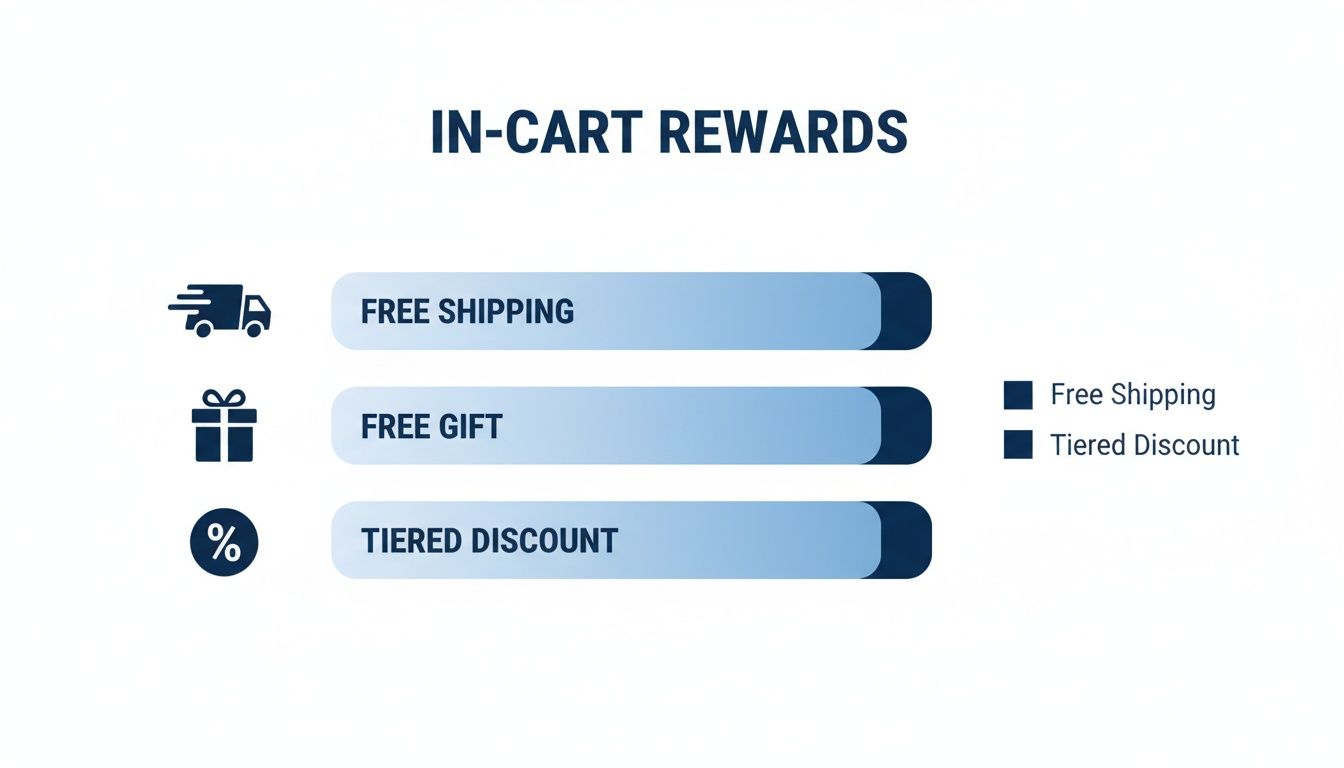
As you can see, while tiered discounts are popular, many merchants lean heavily on non-discount incentives like free gifts and free shipping to boost AOV without killing their margins.
This approach combines the best of both worlds: the power of a custom-built experience with the simplicity and affordability of an app. It's designed specifically to boost AOV and conversions in real-time, without the delayed impact of points or the heavy cost of code.
By focusing on the cart, you're meeting customers at the most critical moment of their shopping journey. As they add items, they see progress bars fill up and unlock rewards like free gifts, tiered discounts, or free shipping on the spot. This instant feedback loop gamifies the experience, encouraging a higher spend without you having to offer huge discounts. When choosing your tools, it helps to understand Shopify's capabilities as an e-commerce platform to see how these apps bolt on new functionality.
This method gives you advanced, AOV-boosting features straight out of the box, turning your cart into your most effective sales tool. For merchants looking to learn more about this strategy, exploring the best upsell apps for Shopify can provide deeper insights. Ultimately, an in-cart rewards layer is the most direct path to increasing order value and making your customer experience genuinely better.
Designing a High-Converting In-Cart Experience
You can have the most generous Shopify rewards program in the world, but if it’s confusing, clunky, or hidden away on a separate page, it’s going to fall flat. A great offer can easily fizzle out if the user experience (UX) is a mess. The real secret is designing an in-cart experience that feels intuitive, exciting, and instantly rewarding—turning a simple transaction into a fun journey that builds lifetime value.
A powerful offer needs to be presented with absolute clarity and momentum. This is where the psychology of visual feedback comes in. When a customer adds an item, their focus snaps to the cart, making it the most critical moment to guide their next move. Instead of blasting them with disruptive pop-ups, you need to weave rewards seamlessly into their natural flow.
The Psychology of the Progress Bar
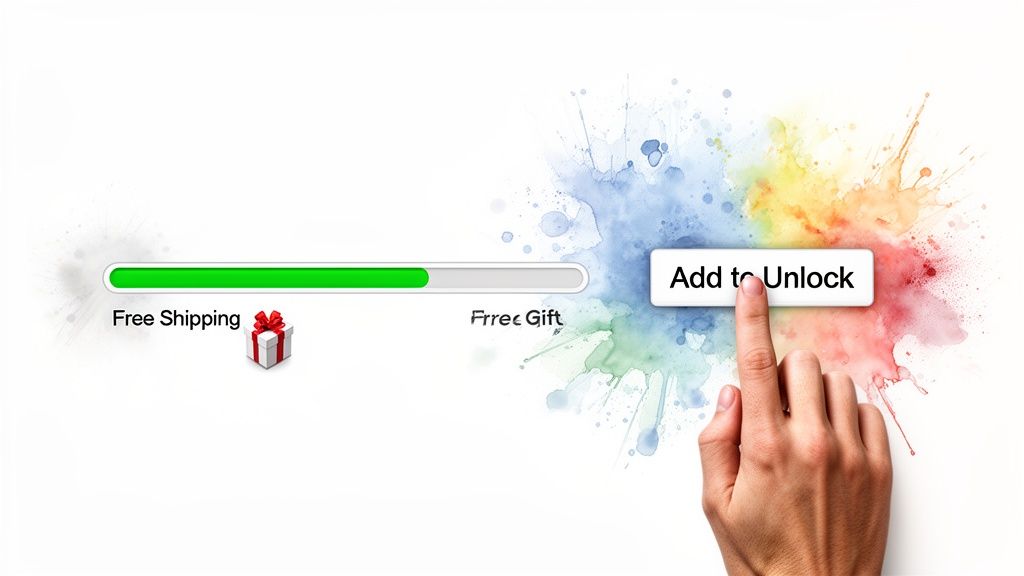
One of the most effective tools in your UX arsenal is a simple progress bar. A straightforward message like, "You're $15.20 away from free shipping!" creates a clear, achievable goal. It taps into our natural desire to finish what we start, a psychological tic known as the Zeigarnik effect—we’re wired to remember unfinished tasks more than completed ones. This creates a gentle, internal nudge to close that gap.
As customers add more items, the bar fills up, giving them instant, positive feedback. This visual momentum makes them feel like they're winning a game, not just checking items off a list. The goal is to make hitting that next reward feel like the natural, satisfying end to their shopping session.
Creating Momentum with Instant Feedback
Beyond progress bars, instant visual feedback is king. When a customer's cart total crosses a threshold, the reward should appear automatically. Imagine the delight when a free gift just materializes in their order summary—it’s a powerful moment of surprise and gratification.
This instant validation confirms their decision to spend a little more was a smart one. It reinforces the value they're getting and builds a positive emotional connection to your brand. Clear, motivating messaging like "Congratulations! You've unlocked a free gift!" only makes that feeling stronger.
The best in-cart experiences make customers feel smart for spending more. When the rewards feel like an achievement rather than a marketing tactic, you build trust and significantly increase the odds of boosting both AOV and long-term customer lifetime value.
A Cohesive and Profitable Journey
A well-designed cart layer can do way more than just dish out rewards. It becomes the central hub for boosting order value in a way that feels helpful, not pushy. This is where a specialized tool like Monster Cart really shines. It lets you create a cohesive journey by pulling other AOV boosters directly into the cart.
Think about layering these elements alongside your rewards:
One-Click Upsells: Offer relevant add-ons like shipping protection or priority processing with a single click, right there in the cart.
Product Recommendations: Suggest complementary items based on what’s already in their cart, making it easy to discover more great stuff.
By folding these elements into a single, unified cart experience, you avoid overwhelming the customer with separate pop-ups or other distractions. The journey from adding an item to unlocking a reward to adding a final upsell feels like one smooth, logical sequence. While rewards are powerful, a holistic approach means optimizing the entire customer journey. You can learn more about how to improve ecommerce conversion rates with practical, fashion-focused tactics.
Ultimately, a high-converting in-cart experience isn't about any single feature. It's about creating a smart, guided system that makes customers feel valued for choosing to shop with you, encouraging them to build a better cart every time.
Measuring the True Success of Your Program
A Shopify rewards program isn't a 'set it and forget it' feature. It's a growth engine, but like any engine, it needs a tune-up now and then to make sure it's actually delivering results. The real measure of success isn't just about how many points customers redeem. It's about tracking the numbers that have a real impact on your bottom line.
To get it right, you have to look past the surface-level stuff. The goal is to drive profitable growth, not just give away free product. That means shifting your focus from simple metrics like redemption rates to the KPIs that prove you’re building a healthier, more valuable customer base.
Key Metrics That Truly Matter
Your data tells the real story of whether your rewards strategy is working. Instead of getting bogged down in vanity metrics, zero in on these three core indicators to see the program's actual impact.
Average Order Value (AOV): Is the program actually nudging customers to spend more per order? This is the most direct sign that your in-cart incentives are hitting the mark.
Conversion Rate: Are more window shoppers turning into actual buyers? A great rewards system can be the final push someone needs to complete their purchase, especially when it adds real, tangible value at the last second.
Customer Lifetime Value (LTV): This one is the ultimate test of loyalty. A well-designed rewards program creates positive experiences that keep people coming back, which is how you dramatically boost their long-term value. You can find more strategies on how to increase customer lifetime value on our blog.
Optimizing Your Offers with Data
The only way to dial in your program is by testing constantly. Don't just guess which offers will land best—let your customers show you what they want. A/B testing is a super practical way to pit different incentives against each other and see what actually drives profit.
The goal is to boost AOV and LTV, not just offer the biggest discount. Sometimes a high-perceived-value free gift will outperform a 15% discount, protecting your margins while delighting your customers.
For example, you could run a simple test comparing a free gift against a percentage discount, both unlocked at the same $75 spend threshold. Let it run for a couple of weeks, then look at the numbers. Which offer led to a higher AOV? Which one gave you a better profit margin? This data-driven approach lets you evolve your program based on what your customers actually do, not just what you think they'll do.
This whole process is way easier with platforms that have analytics baked right in, like Monster Cart. With built-in tracking, you can monitor performance, test out new reward tiers, and make smart decisions on the fly to ensure your program is always delivering the best possible return.
Your Shopify Rewards Program Questions, Answered
As you start exploring a modern Shopify rewards program, a few questions are bound to pop up. I’ve put together a quick guide to tackle the most common ones, all based on the core idea that rewards should make today's order bigger while building a relationship for tomorrow.
Do I Really Need a Points-Based System for a Rewards Program?
Not at all. In fact, if your main goal is to lift your average order value (AOV), you'll get far more mileage out of immediate, in-cart incentives than a traditional points system.
Modern programs are all about instant gratification—think rewards like, "You're just $15 away from a free gift!" This creates a sense of urgency and excitement right in the middle of the shopping session, encouraging customers to act now. The focus shifts to boosting the value of today's cart, not just crossing your fingers for a future purchase. This is exactly what tools like Monster Cart are built for: delivering those real-time rewards without the headache of managing a delayed points program.
Will a Rewards Program Hurt My Profit Margins?
A thoughtfully designed program should actually do the opposite—it should improve your profitability. The trick is to stop leaning on deep, site-wide discounts and instead use rewards to nudge customers toward a higher spend. An intelligent Shopify rewards program is about adding value, not just slashing prices.
The most profitable rewards are the ones that feel like a huge win for the customer but have a low cost for you. Offering a desirable free gift on orders over $100 is almost always more profitable than a generic 15% off coupon, because it motivates a bigger purchase while protecting your margins on the entire order.
How Can I Add In-Cart Rewards Without Custom Coding?
This is where specialized Shopify apps are a game-changer. Instead of bringing in developers for a complex and expensive custom build, you can use a solution that turns your cart into an interactive rewards layer. It’s the easiest way to get the power of a custom-coded feature with the simplicity of an app.
An app like Monster Cart, for example, replaces your theme's default cart with a fully customizable side cart. Right from its dashboard, you can build progress bars for free shipping, create tiers of spend-to-unlock gifts, and set up other offers—all without ever touching a line of code.
What’s the Difference Between a Loyalty and a Rewards Program?
While people often use the terms interchangeably, there's a subtle but important difference.
A loyalty program usually refers to a long-term, points-based system built to retain your most dedicated, repeat customers. It’s all about the long game.
A modern rewards program, like we've been talking about, focuses on in-the-moment incentives available to any shopper to increase the value of their current cart. The best strategies often blend the two: using in-cart rewards to boost AOV on every transaction, and a points system to nurture that customer's lifetime value over time.
Ready to turn your Shopify cart into a powerful AOV-boosting engine? With Monster Cart, you can build a seamless, in-cart rewards experience that delights customers and grows your revenue—no coding required.
Get started with Monster Cart today and see why over 7,000 brands trust it to power their rewards and upsell strategies.
Join 7000+ brands using our apps