Aov Meaning Marketing: Boost Your Store's Average Order Value
Jan 24, 2026
|
Published
Let's get straight to it. In the world of ecommerce, AOV (Average Order Value) is simply the average dollar amount a customer spends each time they buy from you. But that simple definition hides its real power. AOV is a direct pulse check on your store's health, profitability, and customer behavior—it tells you exactly how much value you're generating from every single transaction.
What AOV Meaning Marketing Reveals About Your Business

Average Order Value is easily one of the most important metrics for any online store, yet so many merchants only track it passively. It’s calculated with a simple formula: Total Revenue / Number of Orders = AOV. That one number tells a huge story about your customers' buying habits and whether your marketing is actually working. If you want a closer look, we have a whole guide on how to calculate average order value.
But here’s the thing: the goal isn’t just to watch your AOV. It’s to grow it. The smartest brands have figured out that sustainable AOV growth comes from improving the customer experience, not just running endless, margin-killing discounts. This approach also nurtures a higher customer lifetime value (LTV), which is the true key to long-term success.
The most effective AOV strategies shift the focus from "How can we get customers to spend more?" to "How can we offer more value so customers want to spend more?" This subtle change in perspective is the key to building long-term, profitable customer relationships.
This means you stop leaning on constant price cuts and start using value-added incentives that make customers feel like they're getting a genuinely great deal.
The Shift to Value-Driven Growth
Smart merchants know that real, sustainable growth comes from offering compelling rewards that encourage bigger carts. These incentives make every transaction more valuable—for both the customer and the business.
Instead of just slapping a 15% off coupon on everything, consider these powerful alternatives:
Free Shipping Thresholds: The classic nudge to get shoppers to add one more item to unlock a perk they really want.
Free Gift Tiers: Build excitement by offering an exclusive gift once a customer hits a certain spending goal.
Tiered Rewards: Turn shopping into a game with "spend more, get more" milestones that keep customers engaged.
This strategic shift is playing out across the entire ecommerce landscape. Back in 2019, the global AOV was hovering around $111. Fast forward to 2024, and it's jumped to $144 worldwide. That’s a 30% climb, and it’s not because everyone started offering steeper discounts. It's because brands got better at upselling and encouraging customers to bundle more items into a single order. You can see more details in this e-commerce benchmarks report.
By using a seamless in-cart rewards system, like Monster Cart, you can show these offers at the perfect moment. This turns your shopping cart from a boring summary into a dynamic tool that boosts both AOV and customer lifetime value.
Why AOV Is Your Most Powerful Growth Lever
Seeing Average Order Value (AOV) as just another number on your dashboard is one of the biggest missed opportunities in ecommerce. Its real power isn’t just in tracking sales trends; it’s in its direct, undeniable link to your profitability and the overall health of your business. A higher AOV isn't just about bigger orders—it’s about building a smarter, more resilient company.
Think about it like this: every dollar you put into ads is an investment. The real question is, how fast do you get that money back? This is where AOV changes the entire game. It has a massive impact on two other metrics that every founder obsesses over: Customer Acquisition Cost (CAC) and Customer Lifetime Value (LTV).
When you successfully bump up your AOV, you get your ad spend back faster. Let's say your CAC is $50. If your average order is only $55, your profit margin is paper-thin. You might need several repeat purchases just to break even on acquiring that one customer. But if you can push that AOV up to $95, you're profitable on the very first purchase.
Accelerating Your Payback Period
This faster payback period is what separates the brands that struggle from the ones that scale with confidence. It’s the difference between needing three, four, or even five orders to cover your marketing costs versus just one.
A higher AOV means every customer visit is more like a grand slam instead of just a base hit. You’re not just covering your costs; you’re generating immediate profit that can be reinvested back into growth.
This creates a powerful growth loop. With more cash in hand from each order, you can suddenly afford to be way more competitive with your advertising. You can bid more aggressively for those premium ad placements, test out broader audiences, and outspend competitors who are trapped by their own weak AOV economics. Understanding the wider world of ecommerce strategies for conversion growth can also shed light on how to leverage metrics like AOV more effectively.
Building a Long-Term Foundation
Ultimately, a strong AOV strategy shifts your focus from a frantic, expensive chase for new customers to maximizing the value of every single one you already have. This is absolutely critical for long-term health. When customers spend more on their first order, they're often more invested in your products from a psychological standpoint. That initial commitment frequently leads to better retention and a much higher LTV down the road.
The goal is to stop relying on constant, margin-killing discounts. Instead, you encourage larger carts by offering genuine value—think a free gift, an exclusive product, or a free shipping threshold. This approach not only juices your immediate AOV but also builds real customer loyalty. This is exactly what tools like Monster Cart are built for, seamlessly presenting these value-add rewards right inside the cart to encourage customers to spend a little more, all without wrecking their shopping experience.
Alright, you’ve figured out your Average Order Value. That’s step one. But a number without context is just… well, a number. To really understand what your AOV says about your marketing, you need to see how it stacks up against everyone else in your industry.
After all, a shop selling pet supplies is playing a completely different game than a luxury jeweler. Their AOV benchmarks are naturally going to be worlds apart.
Context is everything. Your AOV is pulled in a dozen different directions by things like what you sell, your customers' spending habits, and even the time of year. Knowing where you stand against the industry average helps you set goals that are ambitious but realistic. More importantly, it shines a spotlight on the gap between where you are and where you could be.
Think of your business as having three main growth levers: acquiring customers more cheaply (CAC), getting them to spend more per order (AOV), and keeping them coming back (LTV).
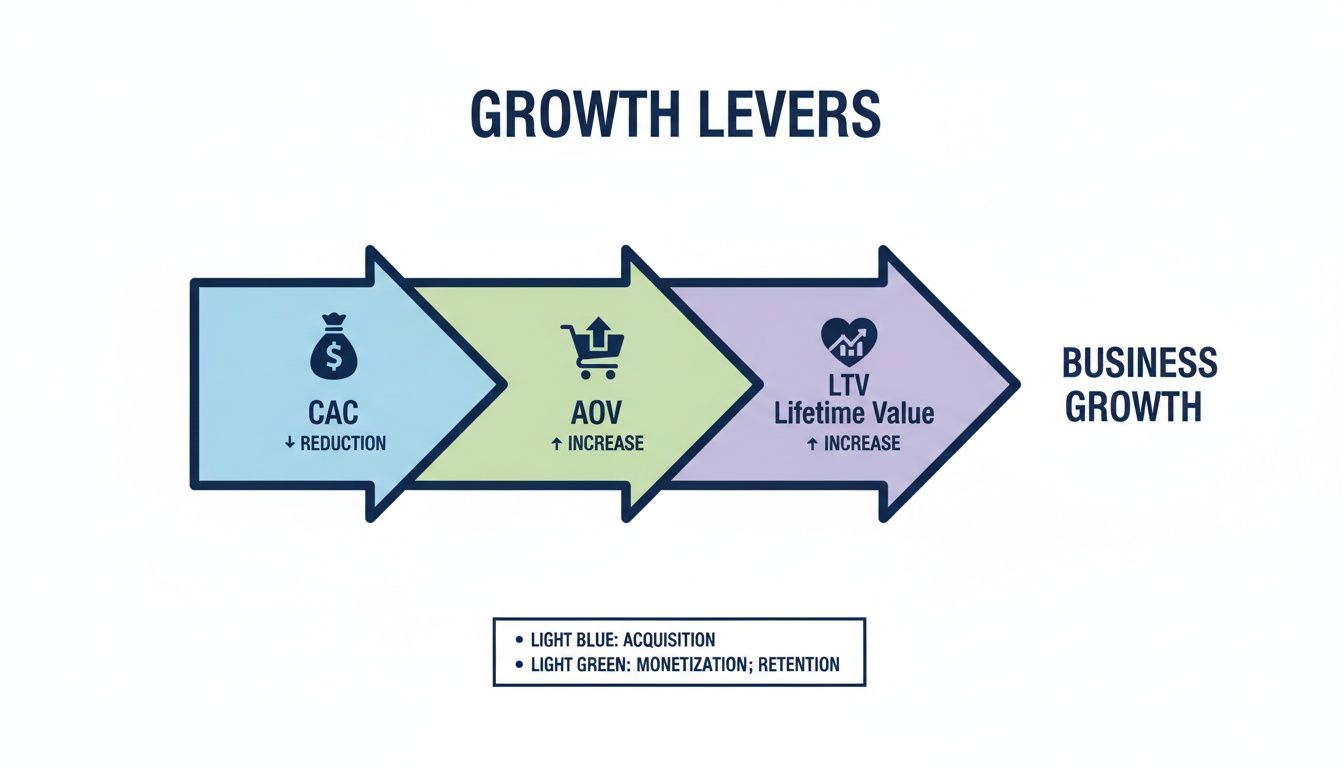
As you can see, AOV sits right in the middle. It’s a core pillar that directly impacts how efficiently you can acquire new customers and how valuable they become over time.
Average Order Value (AOV) by Industry and Device
To give you a clearer picture, let's look at some real-world data. This table breaks down typical AOV benchmarks across a few e-commerce sectors and shows the big difference in spending habits between desktop and mobile shoppers.
Category | Average AOV (USD) | Key Insight |
|---|---|---|
Luxury & Jewelry | $336 | High-ticket items naturally lead to a massive AOV, especially during peak gift-giving seasons like December. |
Pet Care | $68 | A lower AOV here suggests a focus on smaller, repeat purchases like food and treats. Opportunity lies in bundling. |
Desktop Shoppers | $204 | People still make their biggest, most considered purchases on a larger screen. The desktop cart experience is critical. |
Mobile Shoppers | $137 | Mobile carts are often for smaller, quicker buys. Simplicity and one-click add-ons are key to boosting this number. |
These numbers aren't just trivia; they're strategic clues. If your pet store’s AOV is sitting at $45, you know there's a clear opportunity to close that gap. For a deeper dive, you can explore more of these e-commerce average order value benchmarks to see exactly where your store fits in.
Setting Realistic AOV Goals
Let's be clear: the goal isn't just to chase a random number. The real win is building a strategy that sustainably lifts your AOV by offering customers more value.
Don’t just chase a number. The goal is to build a strategy that sustainably lifts your AOV by offering more value, which in turn nurtures a higher Customer Lifetime Value (LTV).
Instead of defaulting to discounts that kill your margins, think bigger. Encourage customers to add just one more thing to their cart by offering compelling rewards. Think free gifts, exclusive product access, or a simple free shipping threshold.
These value-adds do more than just boost your AOV today. They build loyalty and create a better customer experience.
This is where a tool like Monster Cart comes in. It integrates these kinds of incentives directly into a slide-out cart. As shoppers add items, they can literally watch a progress bar move toward their next reward. It turns the checkout into a fun, engaging experience that naturally increases order value and sets the stage for a much more profitable, long-term customer relationship.
Proven Strategies to Increase AOV Without Sacrificing Margins
Knowing what AOV means is one thing. Actually improving it is where the real growth happens. The most sustainable way to lift your Average Order Value is to break the habit of running constant, margin-killing discounts.
Instead, the smartest brands focus on adding genuine value that encourages customers to spend more because they want to, not because they’re chasing a temporary price cut.
This approach is a total mindset shift—from chasing short-term sales to building long-term customer relationships. When you offer rewards like a free gift or free shipping, you're not just bumping up a single transaction. You're building loyalty and making it more likely that customer will come back again and again, which is the whole secret to a high Customer Lifetime Value (LTV).
The key is to present these value-driven offers at the perfect moment: right inside the shopping cart. This simple move transforms a static checkout page into a dynamic rewards engine. Instead of hitting customers with disruptive pop-ups that kill conversion rates, you can guide them toward a bigger, more satisfying purchase.
Implement Value-Driven Cart Rewards
Today's shoppers are savvy. They aren't just looking for the cheapest price; they want a great experience and tangible perks. This is where strategic, in-cart rewards become your most powerful tool for boosting AOV without using discounts.
These aren't random markdowns. They're carefully structured incentives that feel like a premium service, making customers feel valued while motivating them to hit a spending goal.
Some of the most effective strategies include:
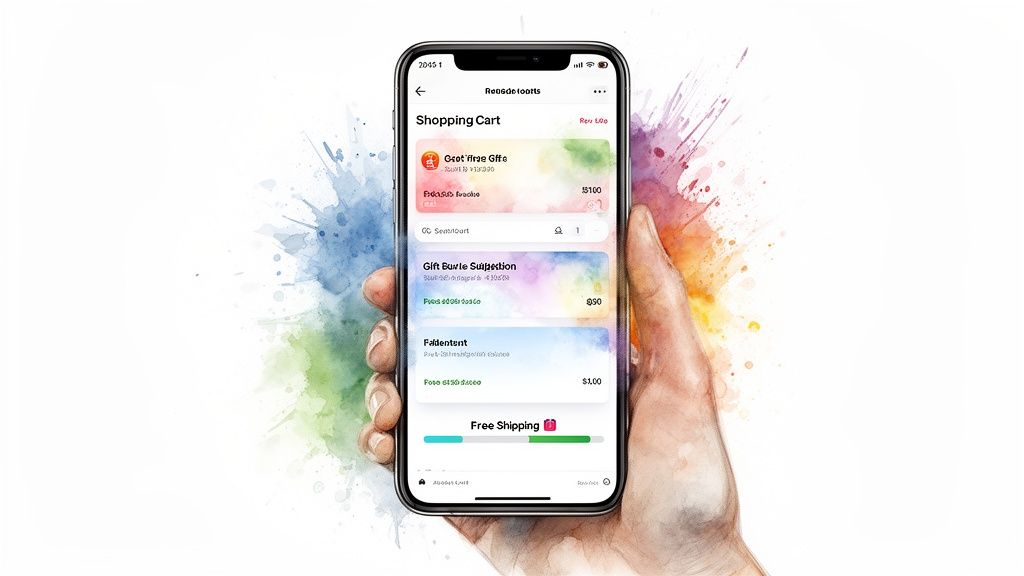
Free Shipping Thresholds: This is the undisputed classic for a reason. Just set a threshold slightly above your current AOV. For example, if your AOV is $62, try setting free shipping at $75. A progress bar in the cart showing "You're only $13 away from free shipping!" is incredibly effective.
Tiered Free Gifts: Gamify the shopping experience by offering better free gifts at different spending levels. A customer might unlock a sample at $50, a travel-size product at $75, and a full-size bestseller at $100.
Smart Product Bundles: Don't just list related items. Create compelling bundles that solve a specific problem or offer a complete solution. You can learn more about creating effective pairings in our guide on frequently bought together strategies.
By integrating these offers directly into a slide-out cart, you keep the customer in the shopping flow. A tool like Monster Cart excels at this, using a visually engaging interface to show shoppers exactly how close they are to unlocking their next reward—a natural way to drive up order value.
Offer Seamless In-Cart Add-Ons
Once a customer is ready to buy, the path to checkout should be as smooth as possible. But this is also a prime opportunity to present small, high-margin add-ons that increase AOV without ever feeling pushy. These are low-cost, high-value items that just make the core purchase better.
Think of them as the impulse buys at the checkout counter, but way more elegant and relevant.
The best in-cart add-ons are convenient "yes" decisions for the customer. They should solve a minor problem or add a touch of luxury with a single click, making the overall purchase feel more complete.
Consider offering options like:
Gift Wrapping: A simple but highly valued service, especially around holidays.
Shipping Protection: For a small fee, you can offer peace of mind against lost or damaged packages.
Priority Processing: Let customers pay a little extra to have their order jump to the front of the line.
Presenting these as one-click options within the cart drawer makes them an easy "yes." This tactic not only nudges up your AOV but also improves the customer experience by offering genuinely helpful services. To really dial this in, leveraging personalized marketing automation can help you present the most relevant offers to each individual customer.
Putting Your AOV Strategy Into Action on Shopify
A brilliant strategy is only as good as its execution. For Shopify merchants, putting your AOV plan into motion is all about creating a seamless, integrated customer experience. The goal is to make increasing order value feel like a natural, helpful part of the shopping journey, not a disruptive sales pitch.
This starts by moving beyond the traditional, clunky cart page that pulls shoppers out of the buying flow. Modern e-commerce runs on speed and simplicity. A clean, fast slide-cart drawer keeps customers engaged, letting them see their rewards progress and add items without ever leaving the page they're on. This simple UX shift can dramatically cut down on friction and abandoned carts.
Boosting your AOV shouldn't mean defaulting to site-wide discounts that kill your margins. Instead, you need to frame your offers as value-added rewards. This approach not only protects your profitability but also gets you thinking about the bigger picture: building a healthier customer lifetime value (LTV) and a more sustainable business.
Testing and Refining Your Offers
There's no such thing as a one-size-fits-all AOV strategy. What works for a skincare brand might completely flop for a store selling pet supplies. This is why continuous A/B testing isn't just a good idea—it's essential for getting the best possible results.
Start by testing your core offers. You can run simple experiments to see which incentive actually drives more revenue. For example:
Offer A: Free shipping on orders over $50.
Offer B: Free shipping on orders over $75.
Don't just look at the AOV; watch the conversion rate for each, too. A $75 threshold might give you a higher AOV, but if your conversion rate drops, you might be losing money. You're looking for that sweet spot with the best balance between both. The same goes for free gifts—test different products and spend tiers to find out what truly motivates your shoppers to add one more item.
The most impactful AOV strategies are discovered, not dictated. Meticulous A/B testing allows your customers to tell you exactly what they value most, turning guesswork into a data-driven growth plan.
In the cutthroat world of e-commerce, AOV is the silent revenue multiplier. After jumping 30% post-2019 to $144 in 2024, AOV is expected to grow another 8.3% by the end of 2025, blowing past the tiny 3% growth seen in physical stores. This trend is directly tied to the power of in-cart upsells like tiered rewards, which can make order values skyrocket. You can dive into more of these global e-commerce statistics and trends to see the full picture.
Tracking the Right KPIs for Success
While AOV is your headline metric, a truly successful strategy needs you to monitor a few other key performance indicators (KPIs) to get the whole story. Relying on a tool with built-in analytics is crucial for making smart, data-driven decisions without spending hours buried in spreadsheets.
Look for a solution like Monster Cart, which gives you a clear dashboard to track performance in real-time. This lets you monitor not just the "what," but the "why" behind your results.
Essential KPIs to keep an eye on include:
Items Per Order: Are customers actually adding more products to their carts to hit your reward thresholds?
Cart Abandonment Rate: Is your slide-cart experience smooth and engaging, or is it causing friction that makes people leave?
Conversion Rate: Are your offers compelling enough to encourage checkout, or are they acting as a barrier?
By tracking these metrics together, you can refine your approach with confidence. You’ll see which product recommendations are most effective and which free gifts drive the most engagement, ensuring your AOV strategy delivers a real, measurable impact on your bottom line.
Common AOV Questions Answered
As you start dialing in your AOV strategy, a few questions always seem to pop up. Getting the little details right is what separates a decent plan from one that actually moves the needle on profit. Here are the answers to the most common questions I hear from Shopify merchants trying to boost their Average Order Value.
What Is the Fastest Way to Increase My Store's AOV?
Hands down, the quickest win is a free shipping threshold set just a little bit above your current AOV. Shipping costs are one of the biggest reasons people abandon carts. Give them a clear path to get rid of that fee, and you give them a powerful reason to add one more thing to their order.
Want to make it even more effective? Use a dynamic, in-cart progress bar. Tools like Monster Cart are brilliant at this because they visually show customers exactly how close they are to unlocking the reward. It gamifies the whole experience, turning a simple purchase into a small, satisfying challenge that bumps up order sizes without you having to run a single discount.
Will Trying to Increase AOV Hurt My Conversion Rate?
Not if you do it the right way. Aggressive, full-screen pop-ups that interrupt the shopping flow? Yeah, those will absolutely kill your conversions. But thoughtful strategies that focus on adding value and feel like a natural part of the shopping experience can actually lift both AOV and your conversion rate.
The key is to make your offers feel like a premium, helpful service, not a pushy sales pitch. Think of tiered free gifts or smart product suggestions that appear in a clean, on-brand slide-out cart. These rewards make customers want to complete their bigger purchase because they feel like they're getting a great deal, not being pressured. This positive experience is crucial for building a high lifetime value.
How Do I Choose the Right Free Gift or Reward Threshold?
Start with your data—don't guess. First, figure out what your current AOV is right now. A solid starting point for any reward threshold, whether it’s for free shipping or a gift, is usually 15-30% above your current AOV. For example, if your store’s AOV is $65, setting a free gift tier at $75 is a perfect first test.
It’s so important to A/B test different thresholds to find that sweet spot that maximizes your AOV without scaring people off. And make sure the free gift is something your customers actually want and that fits your brand. The right reward makes the offer a no-brainer, encouraging bigger carts and building the foundation for a much higher customer lifetime value.
Ready to turn your Shopify cart into a powerful revenue engine? Monster Cart helps you implement seamless, in-cart rewards like free shipping thresholds, tiered gifts, and one-click upsells that boost AOV without hurting your margins. Join over 7,000 Shopify brands and start building a more profitable cart experience today at https://monsterapps.shop.
Join 7000+ brands using our apps