Conversion rate optimization shopify: The Ultimate Guide to Shopify CRO
Jan 12, 2026
|
Published
If you want to move your Shopify store from the average 1.4% conversion rate into the elite 3.2% club, the journey doesn't start with a massive, site-wide overhaul. It starts with your cart.
This playbook is all about showing you how that single touchpoint—the cart—is your most direct path to boosting both conversions and Average Order Value (AOV). We’re going to transform it from a static checklist into a dynamic, rewarding experience that actually closes sales.
Why Your Cart Is The Key To Higher Conversions
So many Shopify merchants pour their energy into driving traffic or tweaking product pages, but they completely miss the most critical moment in the entire customer journey: the cart. A standard, out-of-the-box cart is often a dead end. It’s functional, sure, but it's an uninspiring step that does absolutely nothing to encourage a customer to finish their purchase or, better yet, add more to their order.
This is where sales silently bleed out.
The revenue gap between an average store and a top-performer is massive, and it's usually decided right before the customer hits "checkout." The data tells a pretty compelling story. According to benchmarks from a wide survey of Shopify stores, the global average conversion rate is a modest 1.4%. But the top performers? They smash through 3.2%, and the elite top 10% are hitting 4.7% or higher.
I’ve seen CRO clients get a 14% boost in conversion rates in the first month alone, just from optimizing the cart. The difference is real, and it highlights the massive impact of focusing your CRO efforts right here. You can see more on these benchmarks in this guide to Shopify conversion rates.
The Shift from Static to Strategic
Here's the core insight: stop thinking of your cart as a holding area and start treating it as your final, most persuasive salesperson. A strategic cart doesn't just list items; it actively works to increase the order's value and solidify the customer's decision to buy, right now.
This is where the real opportunity is. Instead of resorting to big, margin-killing discounts to drive sales, you can use the cart to offer value-added rewards that make the customer feel like they're getting a fantastic deal. It's a subtle shift that not only boosts AOV but also cultivates much greater customer lifetime value (LTV).
The goal is to make customers feel like they're winning, not just buying. By gamifying the experience with tiered rewards, you create a positive feedback loop that encourages them to spend more to unlock more value, fostering loyalty that goes beyond a single transaction.
Building a Revenue Engine
Turning your cart into a revenue engine comes down to a few key principles we’ll explore throughout this playbook. These strategies are all designed to work together, creating a seamless and profitable experience for both you and your customer.
Gamified Rewards: Introduce tiered incentives like free gifts, exclusive samples, or free shipping that customers unlock as their cart total grows.
Visual Progress: Use progress bars to show shoppers exactly how close they are to their next reward. It creates a powerful sense of urgency and excitement.
Smart Upsells: Offer relevant add-ons and frequently bought together items directly within the cart, making it effortless for customers to discover more products.
A static cart experience is a major reason for lost sales. If you want to dig deeper into this, you can learn more about how to reduce cart abandonment in our detailed guide.
By adding these interactive elements, you completely shift the dynamic. The cart becomes an engaging part of the shopping journey, guiding customers toward a higher-value checkout. Tools like Monster Cart are built specifically for this, turning the default Shopify slide-out cart into an interactive rewards layer that makes these strategies incredibly easy to implement and test.
Find Your Revenue Leaks And Set Smarter Goals
Before you start tweaking your store, you have to know exactly what’s broken. Optimizing without data is just guesswork—you might be busy, but you’re probably not making the right moves. The first real step is to run a full diagnostic on your Shopify store's conversion funnel to find precisely where customers are dropping off and money is slipping through the cracks.
This data-first approach pulls you out of the vague, "I need to increase sales" mindset and lets you set sharp, meaningful goals that target your store's biggest weaknesses.
Pinpoint Your Funnel Drop-Off Points
Your best friends for this diagnostic phase are your built-in Shopify Analytics and Google Analytics. These are the tools that give you the raw data you need to see where people are abandoning their journey, from the moment they hit a product page to the final thank you screen.
Focus on a few critical metrics to tell the story:
Add-to-Cart Rate: This is the percentage of visitors who actually add a product to their cart from a product page. If this number is low, it’s a huge red flag. It often points to problems with your product descriptions, pricing, images, or a weak call-to-action.
Checkout Initiation Rate: This one measures how many people who added items to their cart bothered to start the checkout process. A big drop-off here usually means there’s friction in the cart itself, like unexpected shipping costs or a clunky, confusing interface.
Cart Abandonment Rate: This classic metric tracks the percentage of users who start checkout but never finish the purchase. High abandonment here is often caused by overly complex forms, not enough payment options, or those dreaded surprise shipping fees that pop up at the last second.
Once you analyze these stages, your biggest revenue leak will become painfully obvious. For example, if your add-to-cart rate is solid but almost no one starts the checkout process, your cart experience is the villain of the story and should be your top priority.
This is all about plugging leaks. Moving from a standard, leaky cart to an optimized one can have a direct and immediate impact on your revenue.
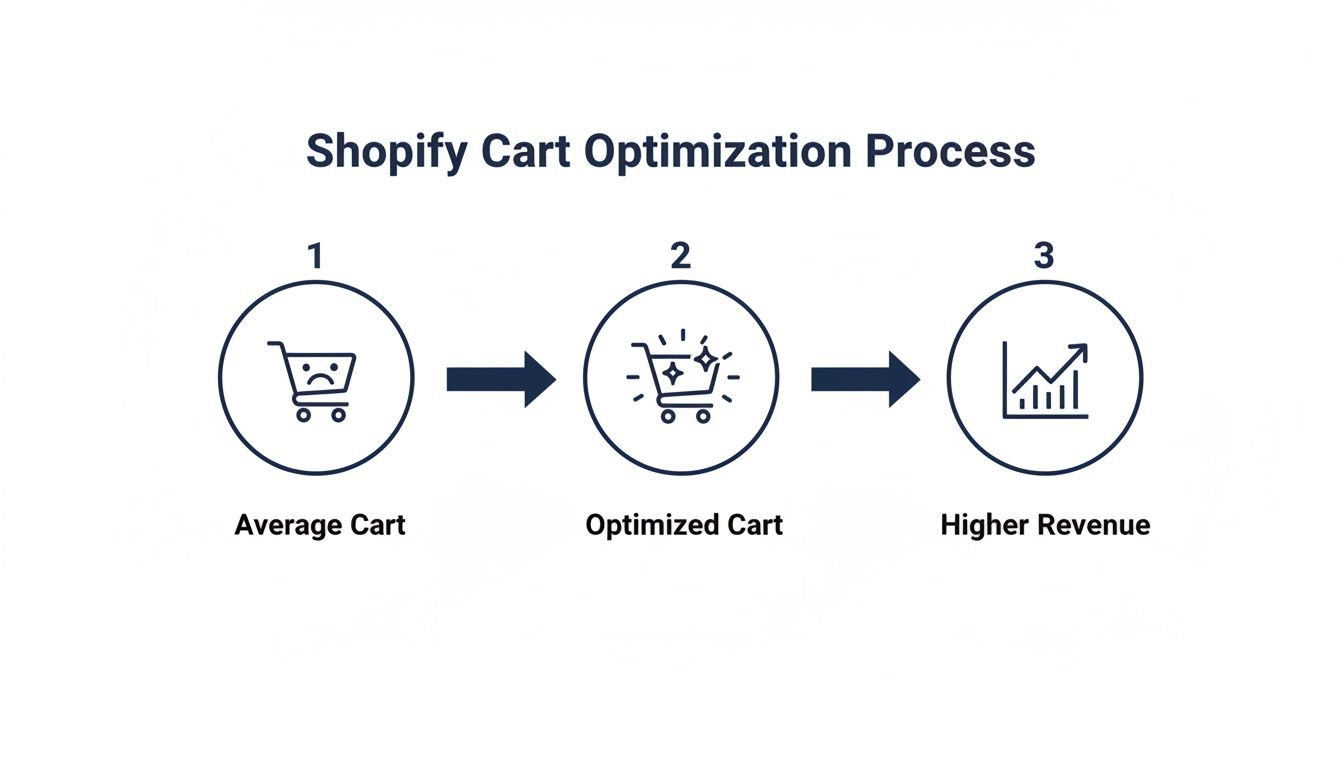
As the diagram shows, a strategic cart experience isn’t just a nice-to-have; it's a powerful lever for growing your store's bottom line.
Shopify Conversion Funnel Diagnostics
Here’s a quick guide to help you spot the most common leaks in your Shopify store and figure out how to patch them up.
Funnel Stage | Key Metric to Watch | Common Leak Reason | Actionable Fix |
|---|---|---|---|
Product Page | Add-to-Cart Rate | Poor product images, weak copy, unclear pricing, or a hidden CTA button. | A/B test your "Add to Cart" button's color and placement. Improve image quality and add lifestyle shots. |
Shopping Cart | Checkout Initiation Rate | Unexpected shipping costs, no trust signals (like security badges), or a confusing layout. | Offer a free shipping threshold or in-cart rewards. Make the checkout button impossible to miss. |
Checkout | Cart Abandonment Rate | Complicated forms, lack of guest checkout, or limited payment options (no PayPal, Apple Pay, etc.). | Simplify the checkout process to as few steps as possible. Add more payment gateways. |
Post-Purchase | Repeat Purchase Rate | A generic "thank you" page with no next steps, or a lack of follow-up communication. | Customize your thank you page with a one-click upsell or a discount code for their next purchase. |
By systematically working through your funnel with this framework, you can turn vague problems into a clear, actionable to-do list.
Set Goals Beyond Simple Discounts
Once you know where the leak is, you can set smarter goals—ones that focus on adding value instead of just slashing your prices. This is a classic trap for merchants. The knee-jerk reaction to a conversion problem is often to throw a discount at it. While a 15% off code might give you a short-term sales bump, it also trains your customers to wait for sales and cheapens your brand over time, hurting your lifetime value.
Instead, frame your goals around making the customer experience better and boosting lifetime value.
A better goal isn't just to 'reduce cart abandonment by 15%.' It's to 'reduce cart abandonment by 15% by introducing a tiered free gift system that also boosts Average Order Value (AOV) by $10.'
This approach hits two birds with one stone. You solve the immediate abandonment issue while also encouraging customers to spend a bit more to unlock a reward. This is how sustainable growth happens—every optimization you make also strengthens customer loyalty. For a deeper dive, you can read our complete guide on how to improve ecommerce conversion rates.
Apps like Monster Cart are built specifically for this. They let you build these value-driven rewards—like free shipping progress bars or unlockable gifts—right into an interactive slide-out cart. This transforms the cart from a point of friction into an engine for increasing AOV and sealing the deal. And while zeroing in on your Shopify cart is key, it's always smart to explore broader general conversion rate improvement strategies for your entire site.
Build A High-Converting Cart Without Discounts
Once you’ve figured out where you’re losing money, it's time to stop plugging leaks and start building a cart that actually sells for you. The knee-jerk reaction for most stores is to throw heavy discounts at cart abandonment, but that's a race to the bottom that eats your margins and devalues your brand.
A much smarter, more sustainable play is to build an in-cart experience that adds value, making customers want to spend more without you ever having to slash prices. This focus on rewards over discounts is key for building long-term customer lifetime value.
This is where you can get creative with gamification and tiered rewards. The goal is to make your customers feel like they're getting an amazing deal, not just clicking "checkout." By making the cart itself interactive and rewarding, you can drive up your Average Order Value (AOV) and build some serious long-term loyalty.
Embrace Rewards Over Price Cuts
Leaning on hefty discounts just trains your customers to wait for the next sale. Instead of constantly cutting prices, focus on adding value through incentives like free gifts or free shipping that make shopping feel more satisfying. This shift is how you build a brand people genuinely love, not just one they buy from when there’s a coupon code.
The trick is to frame your offers as an achievement. When a customer adds an item to their cart, they’re not just closer to buying—they're on their way to unlocking something special. This creates a positive little feedback loop that naturally nudges them to bump up their order size.
Shifting from a discount-first mindset to a rewards-first strategy is fundamental for sustainable growth. It protects your profit margins while building a stronger, more emotional connection with your customers, turning one-time buyers into lifelong fans.
Gamify The Shopping Experience With Tiers
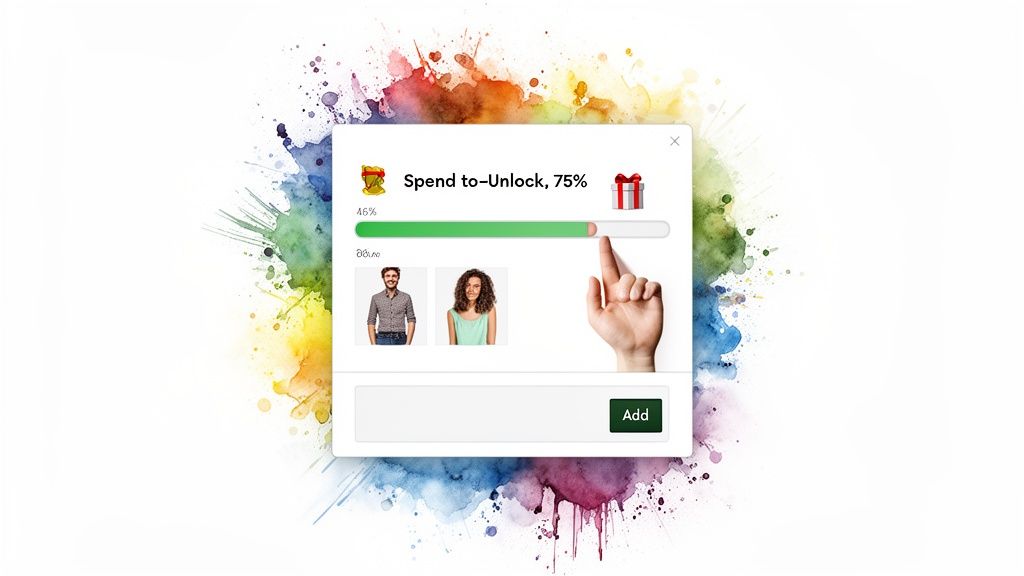
The best way to roll this out is with a tiered rewards structure. This approach gamifies the checkout process by giving customers clear goals to hit, with each tier unlocking a better reward. It's a proven way to get people more engaged and spending more.
Here’s a simple but powerful tiered rewards program you can build right inside your cart:
Tier 1: Spend to Unlock Free Shipping: This is a classic for a reason. Unexpected shipping costs are the #1 killer of conversions. A visual progress bar showing, "You're only $15 away from free shipping!" is an incredibly powerful motivator.
Tier 2: Spend More to Get a Free Gift: Once they've hit the shipping threshold, give them a new target. Offering a free gift with purchase—maybe a sample of a popular product or a low-cost item with high perceived value—is the perfect next step.
Tier 3: Buy More, Get More: For your biggest spenders, a progressive reward like unlocking an exclusive product or a small discount on a future purchase can seal the deal. It's an earned reward for a higher spend, which is much healthier for your margins and customer lifetime value than a sitewide sale.
This tiered system turns shopping into a mini-game where the customer is always trying to level up. This is where a tool like Monster Cart becomes a game-changer. It replaces Shopify’s default cart with an interactive slide-out drawer that visually tracks their progress toward each reward in real-time. As a customer adds items, the progress bar fills up and new rewards are unlocked instantly, creating an energy and urgency that a static cart just can’t match.
The Power of A Dynamic Slide-Out Cart
Globally, cart abandonment rates often creep above 70%, making it the silent killer of conversions for many Shopify stores. But smart CRO right inside the cart drawer can slash that number while boosting AOV by double digits. Industry data shows that while things like guest checkout help, the real wins come from in-cart rewards that feel like a natural part of the experience.
To see how top stores are tackling this, you can discover more insights about Shopify conversion rates.
Instead of a disruptive pop-up, a slide-out cart keeps the customer in the flow. They can see their reward progress, add recommended items, and manage their order without ever leaving the product page. This frictionless journey is absolutely critical for maintaining buying momentum.
With an app like Monster Cart, you can customize this entire experience to perfectly match your brand. You control the rewards, the design, and the copy, ensuring the whole thing feels like an intentional, helpful part of your store—not some bolted-on third-party app. By turning your cart into a rewards engine, you're not just optimizing for a single sale; you're building a system for higher customer lifetime value.
Layer Revenue Drivers Inside Your Cart
Okay, you've got a rewards system in place, which is a fantastic foundation for a higher-converting cart. Now it’s time to get a bit more sophisticated and layer in more revenue streams—without disrupting the customer's flow or just throwing discounts at them.
The real key here is adding value, not friction. This is where you can use smart in-cart upselling and cross-selling to seriously pump up your Average Order Value (AOV) while also improving the customer experience, leading to better lifetime value.
The magic is all about timing and context. An offer that feels like a jarring pop-up on a product page can come across as genuinely helpful when it appears inside the cart, just moments before checkout. It's all about showing the right thing at the perfect moment.
Introduce 'Frequently Bought Together' Bundles
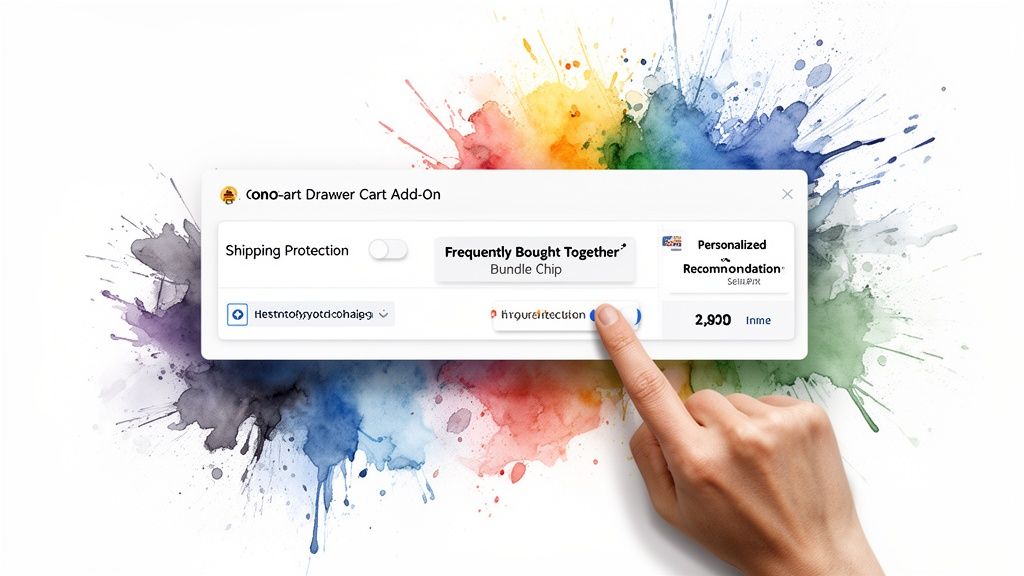
One of the most powerful ways to bump up AOV is by bundling products that just make sense together. Instead of making customers hunt around your site for related items, you can serve them a curated bundle on a silver platter, right in the cart drawer.
Imagine someone adds a high-end espresso machine to their cart. A "Frequently Bought Together" section could instantly pop up with suggestions like:
A bag of premium, single-origin coffee beans.
A sleek set of double-walled espresso cups.
A stainless steel milk frothing pitcher.
See? This isn't some random upsell; it's a thoughtful recommendation that completes the entire experience. When it's executed this smoothly, it feels less like a sales pitch and more like a helpful tip from an expert. The best part is you're boosting the order value while making the customer's life easier. To get this going on your own store, you can read our full guide on how to implement frequently bought together bundles.
Offer One-Click Add-Ons
Small, low-cost add-ons can have a massive impact on your bottom line when you offer them at just the right time. These are the ultimate impulse buys that customers can add with a single click, providing them with value and you with a nice little AOV bump.
The trick is to offer services or products that deliver convenience or peace of mind. Think about it: a customer has already made the big decision to buy their main items. Adding a small, useful extra at this point is an easy "yes."
These one-click offers are pure profit drivers. They require no extra shipping cost and appeal to a customer's desire for security and speed, making them an effortless way to increase the value of nearly every transaction.
Here are a few high-converting examples that work like a charm:
Shipping Protection: For a small fee (like $1.99), offer insurance against lost, stolen, or damaged packages.
Priority Processing: Let customers pay a little extra to jump to the front of your fulfillment queue.
Gift Wrapping: The perfect seasonal add-on that adds a ton of convenience during the holidays.
Personalize Recommendations In-Cart
Going beyond generic bundles, you can tap into customer data to offer highly personalized recommendations. This shows you're paying attention to their needs and curating the experience just for them. It’s an incredibly powerful way to build a real relationship that encourages long-term loyalty and higher lifetime value (LTV).
For example, if a returning customer previously bought a specific brand of skincare, your cart could recommend a new serum from that same brand. It’s a level of personalization that makes the shopping experience feel special. You can even explore more advanced integrations; for example, leveraging AI-powered shopping assistants can take personalization to the next level and streamline the whole process, ultimately boosting revenue.
Flawless Execution with the Right Tools
Look, implementing these strategies effectively requires a tool that can weave them seamlessly into the cart experience. A clunky interface or a disruptive pop-up will do more harm than good, period. This is where an app like Monster Cart provides the perfect blueprint.
It allows you to build these revenue drivers directly into a brand-aligned, customizable cart drawer. The offers feel like a natural part of the shopping journey, not a last-minute cash grab. With its intuitive setup, you can layer bundles, one-click add-ons, and personalized recommendations right alongside your tiered rewards, creating a multi-faceted revenue engine that works tirelessly to maximize the value of every single cart.
How To A/B Test Your Cart Offers For Real Growth
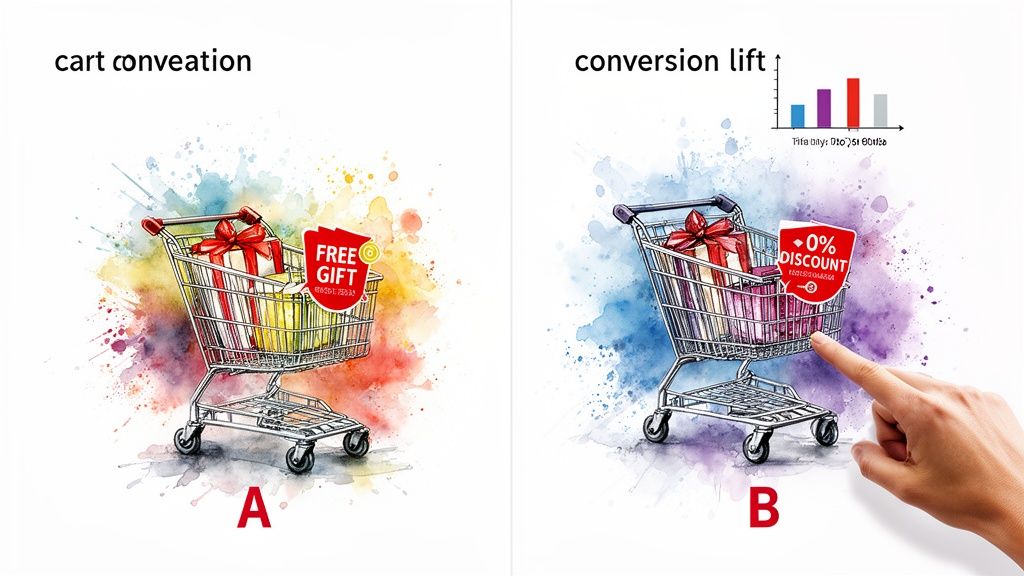
Let's get one thing straight: conversion rate optimization for your Shopify store is never "set it and forget it." It’s an ongoing cycle of testing, learning, and refining your approach. Once you’ve built a rewards system into your cart, you have to validate what actually works. A/B testing is how you stop making educated guesses and start making data-backed decisions that drive real, sustainable growth.
The good news? You don't need a data science degree to run tests that move the needle. The key is to start with simple, clear questions about what motivates your customers. This process makes sure every change is a deliberate step toward higher conversions, better profits, and increased lifetime value, not just a shot in the dark.
Forming A Strong Test Hypothesis
Every great experiment begins with a strong hypothesis. It's really just a simple statement predicting what will happen when you make a change. The goal is to isolate one single variable at a time so you can see exactly how it influences key metrics like Average Order Value (AOV) and conversion rate. Think of it as a scientific experiment for your store's profitability.
Your hypothesis should always follow a simple structure: "If I change [X], then [Y] will happen, because [Z]." This framework forces you to think through the why behind your test.
For example, a classic dilemma for Shopify merchants is choosing between a percentage discount and a free gift. A solid hypothesis for that would look something like this:
"If we replace the '15% off orders over $100' offer with a 'Free Gift on orders over $100' offer, then our AOV will increase, because customers perceive the tangible value of a free product as higher than a percentage discount, encouraging them to spend more to unlock it."
That's a perfect starting point. It’s specific, measurable, and built on a clear assumption about customer psychology. You're not just testing an offer; you're testing an idea about what your customers truly value.
High-Impact Cart Tests You Can Run Now
The beauty of testing in-cart offers is that small changes can produce seriously significant results. You don't have to overhaul your entire site to see a lift. Instead, focus on high-impact offers that directly influence AOV and conversion without relying on hefty discounts.
Here are a few powerful A/B test ideas to get you started:
Free Gift vs. Percentage Discount: The classic showdown. Test which incentive drives a higher AOV at the same exact spend threshold. This tells you if your customers are motivated more by saving money or by getting extra value.
One-Click Shipping Protection: Test the adoption rate of a small, one-click offer like shipping protection or priority processing. Does adding this option actually increase your overall AOV without hurting the conversion rate?
Tiered Rewards Structure: Compare a single reward (e.g., free shipping at $75) against a multi-tiered system (e.g., free shipping at $75, then a free gift at $125). Find out if adding extra tiers really encourages a higher spend.
Interpreting Your Results For Long-Term Gains
Once your test has run long enough to gather a statistically significant sample size, it's time to dig into the results. Tools like Monster Cart have built-in analytics that make this incredibly easy, showing you exactly how each variation performed against your key metrics. But don't just glance at the conversion rate—pay close attention to AOV and, if you can, Customer Lifetime Value (LTV).
A/B testing and in-cart personalization are absolute CRO superpowers for Shopify. While the platform's average conversion rates hover around a modest 1.4%–1.58%, the top-tier stores are hitting 4.7% or higher by layering in dynamic rewards and smart upsells. This is exactly what Monster Cart is built for, with a customizable drawer that shows shoppers their real-time progress toward unlocking free gifts or other milestones. It’s a perfect fit for merchants focused on boosting AOV without just giving away margin. You can check out more detailed Shopify conversion rate statistics to see how these strategies set the best stores apart.
So, what if your "free gift" test resulted in a 12% higher AOV than the discount? That’s a massive win. It proves your customers respond better to value-added incentives. This single insight can shape your entire promotional strategy moving forward, helping you build a more profitable and loyal customer base. Continuous testing is the engine of conversion rate optimization for any Shopify brand serious about joining the elite.
Your Shopify CRO Questions, Answered
As you start digging into conversion rate optimization, questions are bound to pop up. It's totally normal. Moving from diagnosing issues to actually implementing smart, cart-focused strategies can feel like a big leap.
I’ve pulled together the most common questions I hear from merchants to give you some clear, straightforward answers. Think of this as your quick guide to getting started with confidence.
How Long Does It Take to See Shopify CRO Results?
This is the big one, right? While true, sustainable CRO is a long-term game, you can see the impact from high-leverage changes surprisingly fast.
When you focus on optimizing the cart—say, by adding a tiered rewards system with free gifts or free shipping—you can often see a measurable lift in your Average Order Value (AOV) and conversions within the first 30 days.
Many brands see an immediate 10-15% AOV increase right after rolling out a well-planned free gift or free shipping threshold. The secret is to start with changes that tap directly into customer motivation right at the moment they’re about to buy.
But let's be real: the biggest gains come from consistency. Think of it like compound interest for your revenue. Those initial wins are fantastic for building momentum, but the real growth comes from ongoing A/B testing and refinement over several months, which is key for improving lifetime value.
What's a Good Conversion Rate for a Shopify Store?
A "good" conversion rate is always a moving target that depends on your industry, price point, and traffic sources. That said, looking at industry benchmarks is a super useful way to see where you stand and what you should be aiming for.
Here’s a quick breakdown:
The Global Average: Sits around 1.4% across all Shopify stores.
Top 20% of Stores: These merchants are converting at 3.2% or higher.
The Elite 10%: The absolute best-in-class stores are hitting conversion rates above 4.7%.
Instead of getting hung up on a single magic number, your goal should be simple: beat your own numbers, month after month. Optimizing your cart with value-add rewards instead of heavy discounts is the most direct path to climbing from that average bracket into the top tiers, no matter where you're starting from today.
Can I Improve Conversions Without Using Discounts?
Absolutely. In fact, you should. Building a CRO strategy that isn't totally dependent on constant sales is one of the healthiest things you can do for your brand. Leaning too heavily on hefty discounts just eats into your margins, cheapens your brand's perception, and trains customers to never pay full price.
The smartest CRO strategies are all about increasing the perceived value of an order, not just slashing the price.
The goal is to make customers feel like they are getting an amazing deal through value-adds, not just a cheap product. This psychological shift is crucial for building a brand that commands loyalty and protects its pricing integrity, boosting lifetime value.
In-cart rewards, like unlocking free shipping or getting a surprise free gift, make customers feel valued. These incentives build genuine loyalty and have a massive impact on both AOV and lifetime value (LTV)—the kind of sustainable growth that endless discounting just can't deliver.
What's the Best Tool for Shopify Cart Optimization?
The best tools for cart optimization are the ones that feel like a natural part of your store, not a clunky, bolted-on feature. For an all-in-one solution that turns your basic cart into a powerful rewards and upsell engine, Monster Cart is the go-to for serious Shopify merchants.
It swaps out the default cart with a slick, fully customizable slide-out drawer that feels native to your theme. This is where the magic happens. You can build out sophisticated tiered reward programs (like free gifts and free shipping), add one-click upsells like shipping protection, and showcase "Frequently Bought Together" bundles—all without annoying pop-ups.
Its entire focus is on lifting AOV through value-added offers, which is exactly the modern approach to CRO we've been talking about. By making the cart an interactive and rewarding experience, you create a much smoother—and more profitable—path to checkout, which is key for increasing customer lifetime value.
Ready to turn your cart from a simple checkout step into a revenue-driving machine? With Monster Cart, you can build the high-converting, value-driven experiences we've covered. Stop leaving money on the table and start boosting your AOV and conversions today.
Join 7000+ brands using our apps