8 High-Impact Cross Sell Example Strategies to Boost AOV in 2026
Feb 15, 2026
|
Published
Boosting Average Order Value (AOV) is a top priority for any Shopify merchant, but the old playbook of slashing prices with hefty discounts erodes margins and attracts one-time bargain hunters. The real path to sustainable growth lies in elevating the customer experience and increasing lifetime value (LTV), not just lowering the price. This means focusing on value-driven rewards—like free gifts, shipping thresholds, and exclusive perks—that encourage customers to spend more while feeling appreciated. Smart cross-selling is less about pushing products and more about presenting relevant, valuable additions at the perfect moment.
In this guide, we'll explore 8 powerful cross sell example strategies that accomplish just that. We'll break down tactics that integrate seamlessly into the shopping journey, making your customers feel rewarded rather than sold to. Forget disruptive pop-ups; we’ll focus on seamless, in-cart rewards that make shopping more engaging and profitable.
We will analyze why each cross sell example works and provide actionable implementation tips. You will learn how to replicate these high-impact offers, with a special focus on how tools like Monster Cart can transform your Shopify cart into a powerful rewards engine, helping you boost AOV and foster long-term customer loyalty without sacrificing your brand's value.
1. Frequently Bought Together (FBT) Recommendations
The "Frequently Bought Together" (FBT) approach is a classic cross sell example, popularized by giants like Amazon. It works by analyzing historical sales data to identify and suggest products that are commonly purchased in the same transaction. This tactic feels less like a sales pitch and more like a helpful suggestion, guiding customers to items they might have forgotten or didn't know they needed.
For instance, if a customer adds a high-end serum to their cart, an FBT recommendation might display a complementary moisturizer and a popular facial cleanser. The psychology behind its success is simple: it leverages social proof and product synergy, suggesting a "complete solution" that enhances the value of the primary purchase and boosts customer lifetime value.
Strategic Breakdown & Implementation
The key to a successful FBT strategy is relevance and placement. The recommendations must be genuinely complementary and presented at the right moment. Placing these suggestions directly within the cart drawer or on the product page just before checkout captures the customer when their purchase intent is highest.
Key Insight: FBT isn't about pushing random products; it's about curating a more complete and satisfying customer experience. By showing how products work together, you build trust and increase the perceived value of the entire order, encouraging repeat business.
Actionable Takeaways & Shopify Tips
To implement this effectively, focus on increasing Average Order Value (AOV) through value-driven rewards, not discounts. Use FBT to build a more valuable cart that solves a customer's complete need.
Limit Choices: Present only 2-3 highly relevant items to avoid overwhelming the customer.
Use Data: Analyze your store's order data to find authentic product pairings, rather than just guessing.
Optimize Placement: Tools like Monster Cart integrate FBT recommendations seamlessly into the slide-out cart, allowing for one-click additions without navigating away from the checkout process.
Combine with Bundles: For products that are almost always bought together, consider creating a product bundle. You can discover more about this strategy by exploring these examples of price bundling for inspiration.
2. Spend-to-Unlock Reward Tiers
The "Spend-to-Unlock" model is a powerful, gamified cross sell example that encourages customers to increase their cart size without resorting to discounts. It works by establishing spending thresholds that, when reached, unlock escalating rewards like free shipping, exclusive samples, or premium gifts. This strategy shifts the focus from simple transactions to an engaging and rewarding shopping journey that fosters long-term loyalty.
Instead of just buying a product, customers are motivated to reach the next tier. A skincare brand might offer a free sample at $50, unlock free shipping at $75, and reward shoppers with a full-size luxury gift at $100. This visual progression, often shown as a progress bar, makes the incentive clear and compelling, turning the checkout process into a mini-game.
Strategic Breakdown & Implementation
The success of this strategy hinges on creating desirable, yet achievable, reward tiers. The thresholds should feel like a natural next step for the customer, positioned slightly above your current Average Order Value (AOV). This encourages a small, justifiable cart addition to unlock a tangible benefit, making the cross-sell feel like the customer's own smart decision.
Key Insight: This tactic transforms the cross-sell from a pushy sales tactic into a customer-led pursuit of value. It frames additional spending not as an expense, but as an investment toward earning a reward, boosting AOV while enhancing customer satisfaction and lifetime value.
Actionable Takeaways & Shopify Tips
Use tiered rewards to build higher-value carts without resorting to site-wide discounts that can devalue your brand. The goal is to make customers feel rewarded for their loyalty and spending, which in turn fosters a stronger connection and increases lifetime value.
Set Smart Thresholds: Analyze your sales data and set the first tier just above your current AOV to provide an achievable incentive for most customers.
Offer Valuable Rewards: Use exclusive items, high-value samples, or free shipping as rewards. The perceived value of the gift should outweigh the cost of the extra item added to the cart.
Visualize Progress: A dynamic progress bar is crucial. Tools like Monster Cart build this feature directly into the cart, showing customers exactly how close they are to the next reward and what they will receive.
Create Urgency: Test limited-time rewards or use scarcity messaging like "Only 10 free gifts left at the $100 tier!" to motivate immediate action and drive conversions.
3. One-Click Add-Ons (Protection Plans & Warranties)
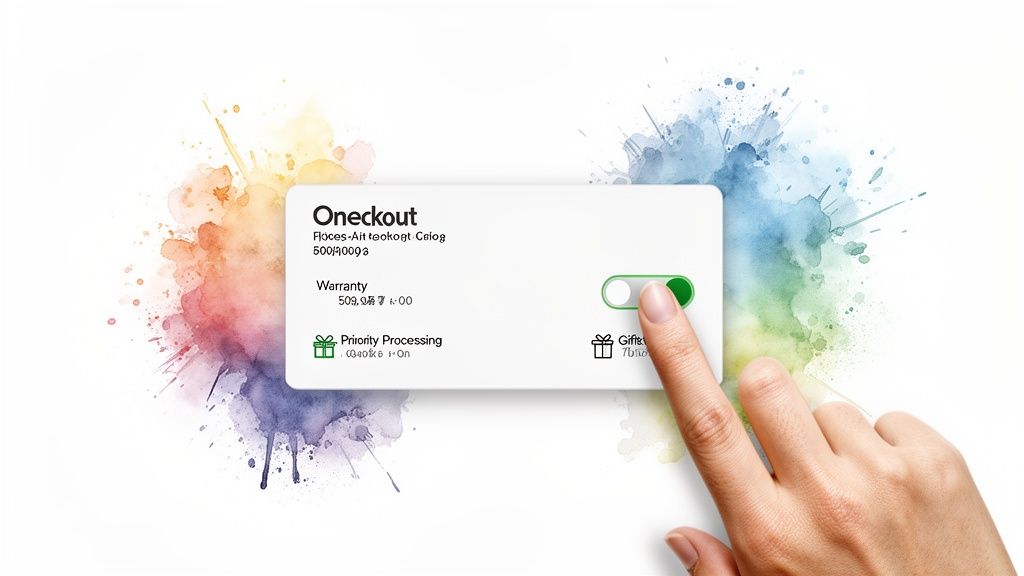
One-click add-ons are a powerful and low-friction cross sell example that offers ancillary services or protection as simple toggles within the cart or checkout. Instead of presenting another physical product, this tactic provides value-added services like shipping protection, extended warranties, gift wrapping, or priority processing. It seamlessly integrates these offers into the purchase flow, allowing customers to enhance their order with a single click.
This approach capitalizes on the customer's high-intent mindset just before they complete their purchase. For example, a customer buying an expensive electronic device is naturally thinking about its longevity. Offering an optional extended warranty addresses a real-time concern, making it a helpful suggestion rather than an aggressive upsell. This method is all about adding peace of mind and convenience, which contributes to a positive long-term customer relationship.
Strategic Breakdown & Implementation
The success of one-click add-ons hinges on relevance and effortless user experience. These offers should feel like an organic part of the transaction, solving potential post-purchase problems before they arise. Electronics retailers can offer shipping damage protection, while fashion brands might offer gift wrapping during the holidays. The key is to frame them as customer-centric solutions, not just revenue drivers.
Key Insight: This strategy boosts Average Order Value by selling reassurance and convenience, not just products. By addressing potential anxieties like damage or product failure, you build deeper trust and improve the overall customer experience, encouraging long-term loyalty and repeat purchases.
Actionable Takeaways & Shopify Tips
Use one-click add-ons to increase cart value without devaluing your brand with discounts. Focus on services that provide genuine utility and peace of mind to your specific customer base.
Frame as a Benefit: Position offers like "Shipping Protection" or "Priority Handling" to highlight the value to the customer, not just the cost.
Keep it Simple: Use a simple toggle or checkbox. The decision to add the service should be instant and require no extra navigation.
Tiered Options: For warranties or protection plans, consider offering tiered packages (e.g., Basic, Standard, Premium) to give customers a sense of control and choice.
Effortless Integration: Tools like Monster Cart can add these one-click options directly into the slide-out cart, making it incredibly easy for customers to add services like gift wrapping or extended protection without disrupting their checkout flow.
4. Free Shipping Thresholds
The free shipping threshold is a powerful psychological cross sell example that frames shipping costs not as a fee, but as an obstacle the customer can overcome by adding more value to their cart. This strategy nudges customers to add just one more item to meet a specific order value, effectively transforming a potential point of friction—the shipping fee—into a rewarding incentive.
For instance, when a customer's cart total is $42 and the free shipping threshold is $50, they are more likely to find an $8+ item than to pay a $5 shipping fee. This tactic works because it leverages loss aversion; customers would rather gain an additional product than "lose" money on shipping. It’s a classic tool used by top brands to increase order value while building customer goodwill.
Strategic Breakdown & Implementation
The success of this strategy hinges on setting the right threshold and communicating it clearly. The goal is to make the target feel achievable, encouraging an impulse add-on rather than cart abandonment. This is why you'll often see a progress bar in the cart or a persistent banner that updates in real-time, showing "You're only $X away from free shipping!"
Key Insight: This cross sell example shifts the customer’s focus from the cost of shipping to the value of adding more products. It’s not just about saving money; it’s about making a smarter, more valuable purchase that fosters loyalty over time.
Actionable Takeaways & Shopify Tips
Instead of offering store-wide discounts that can devalue your brand, use free shipping to increase your Average Order Value (AOV) and customer lifetime value. It rewards customers for spending more, which is a healthier growth model than simply cutting prices.
Set a Smart Threshold: Calculate your current AOV and set your threshold 20-30% higher. This makes it an attainable stretch for most customers.
Visualize Progress: Use a dynamic progress bar that shows customers exactly how close they are to the goal. This visual cue is a strong motivator.
Suggest Perfect Add-Ons: Combine your threshold offer with product recommendations that are priced perfectly to help customers cross the finish line.
Use Clear Messaging: Tools like Monster Cart can display a clear, motivating message within the cart drawer, such as "Add $8.50 more to unlock free shipping!" and suggest relevant low-cost items to add with one click.
5. Gift with Purchase (GWP) Campaigns
A Gift with Purchase (GWP) campaign is a powerful promotional cross sell example that incentivizes customers to increase their cart size to receive a free item. This tactic shifts the focus from price-cutting to value-adding, making customers feel rewarded for their purchase rather than just getting a discount. It creates a sense of exclusivity and immediate gratification, which builds positive brand sentiment and encourages future purchases.
For instance, a skincare brand might offer a free travel-size sample set on orders over $75, or a fashion retailer could include an exclusive branded tote bag with any purchase. The success of GWP lies in its ability to create urgency and a perception of high value, encouraging customers to add one more item to their cart to meet the threshold and unlock the reward.
Strategic Breakdown & Implementation
The effectiveness of a GWP campaign hinges on the desirability of the gift and the clarity of the offer. The gift should be perceived as a genuine bonus, not just a way to offload unwanted inventory. Presenting the offer with a visual progress bar in the cart creates a gamified experience, showing customers exactly how close they are to earning their free item.
Key Insight: GWP is a strategic tool for boosting Average Order Value (AOV) without eroding brand value through discounts. It replaces the "how much can I save?" mindset with "what more can I get?", fostering brand loyalty and a more positive shopping experience that increases lifetime value.
Actionable Takeaways & Shopify tips
Use GWP campaigns to encourage full-price purchases and move customers beyond a reliance on sales. A well-chosen gift can significantly outperform a simple percentage-off discount in terms of both AOV and customer lifetime value.
Offer Choice: Let customers choose between 2-3 gift options to increase their sense of control and the perceived value of the reward.
Create Exclusivity: Frame the gift as a limited-edition or exclusive item available only through the promotion to drive immediate action.
Visualize Progress: Use tools like Monster Cart to add a dynamic progress bar to the cart, visually motivating customers to reach the GWP threshold. This feature turns shopping into an engaging and rewarding game.
Plan Your Promotion: A successful GWP requires careful planning, from selecting the right gift to crafting compelling messaging. Explore these gift promotion ideas to build a high-impact campaign for your store.
6. Personalized Product Recommendations
Personalized product recommendations represent a sophisticated, data-driven cross sell example that moves beyond general suggestions. This tactic analyzes individual customer behavior, including browsing patterns, purchase history, and even demographic data, to present highly relevant products. Instead of a one-size-fits-all approach, it delivers a uniquely tailored shopping experience, making customers feel understood and valued.
This strategy is famously employed by giants like Amazon with its "Recommended for you" section. For an e-commerce store, this could mean showing a customer who previously bought a specific skincare line the brand's new eye cream, or suggesting accessories that match a dress currently in their cart. The power of this method lies in its precision, which significantly boosts conversion probability and enhances customer lifetime value.
Strategic Breakdown & Implementation
Effective personalization hinges on data quality and timely delivery. The goal is to make the customer's journey feel intuitive and guided. By leveraging their unique data footprint, you can surface products they are statistically likely to desire, presenting these offers directly within the cart or at key decision-making points. This proactive assistance improves the shopping experience and builds long-term customer relationships.
Key Insight: Personalization transforms cross-selling from a broad marketing tactic into a one-on-one conversation. It's about showing the right customer the right product at the right time, thereby maximizing relevance and increasing Average Order Value (AOV) organically.
Actionable Takeaways & Shopify Tips
Use personalization to build more valuable orders by focusing on relevance rather than discounts. A well-placed, highly relevant product suggestion is often more compelling than a generic percentage-off coupon and is far better for your margins and long-term brand health.
Combine Data Sources: For the most accurate recommendations, integrate multiple data points like browsing history, past purchases, and even items on a wishlist.
Allow Customer Feedback: Incorporate a "thumbs up/down" or rating system on recommendations to continuously refine your algorithm and improve suggestion quality.
Optimize In-Cart: A powerful tool like Monster Cart can leverage customer data to display personalized recommendations directly within the slide-out cart, creating a seamless path to add items without disrupting the checkout flow.
Start Simple: You don't need a complex AI model from day one. Begin with rules-based personalization (e.g., "if customer bought X, show them Y") and evolve your strategy as you gather more data and insights.
7. Tiered Loyalty & Membership Rewards Acceleration
This long-term cross sell example shifts the focus from a single transaction to maximizing customer lifetime value. Tiered loyalty programs incentivize customers to spend more over time by offering escalating rewards and exclusive perks as they reach new spending thresholds. This strategy transforms a one-time buyer into a loyal brand advocate, encouraging repeat purchases to unlock the next level of benefits.
Companies like Sephora with its VIB/Rouge tiers have perfected this model. The core principle is making customers feel valued and recognized. As a customer invests more into the brand, the brand invests more back into them through exclusive access, better rewards, and premium services, creating a powerful, self-perpetuating cycle of loyalty and higher spending.
Strategic Breakdown & Implementation
The success of a tiered loyalty program lies in its perceived value and a clear path to progression. Customers need to see what they can achieve and feel that the next tier is within reach. This creates a powerful motivation to add one more item to their cart or make an extra purchase to level up, effectively cross-selling them on the idea of deeper brand engagement.
Key Insight: This strategy frames increased spending not as a cost, but as an investment in a better experience. It gamifies shopping, turning each purchase into progress towards a tangible, aspirational reward, which is a far more sustainable growth driver than temporary discounts.
Actionable Takeaways & Shopify Tips
Use tiered rewards to build a community and boost Average Order Value (AOV) by encouraging customers to consolidate their spending with your brand. The goal is to make them feel like a VIP, not just a transaction, thereby maximizing their lifetime value.
Visualize Progress: Clearly show customers how close they are to the next tier. Visual progress bars are highly effective.
Offer Exclusive Perks: Differentiate tiers with non-monetary benefits like early access to sales, exclusive products, or priority customer service.
Celebrate Achievements: Send congratulatory emails or notifications when a customer reaches a new tier to reinforce positive behavior.
In-Cart Communication: Use a tool like Monster Cart to display a customer's current loyalty status or how many points they need to reach the next reward directly in the slide-out cart. This contextual reminder can be the final nudge needed to add another item to their order.
8. Cart Abandonment Recovery with Contextual Upsells
Turning an abandoned cart into a sale is a win, but turning it into a bigger sale is a masterstroke. This strategic cross sell example re-engages shoppers who have left your site by combining a recovery incentive with a personalized, contextual product offer. Instead of just reminding them what they left behind, you entice them back with a relevant add-on or a value-driven reward like a free gift that enhances their original selection.
For example, a fashion retailer might send an email for an abandoned cart containing a dress, not just with a free shipping offer, but also suggesting the perfect pair of earrings to complete the look or offering a free accessory if they complete the purchase now. This transforms a simple reminder into a valuable suggestion, reframing the cart from a forgotten task to an incomplete solution waiting to be finalized.
Strategic Breakdown & Implementation
The effectiveness of this tactic lies in its timing and relevance. By triggering an automated email or SMS sequence shortly after abandonment, you catch the customer while the product is still top-of-mind. The key is to add value beyond a simple discount. You are not just recovering a sale; you are using the abandoned items as a data point to make a smarter, more compelling offer that increases both AOV and customer satisfaction.
Key Insight: Cart recovery isn't just about winning back a lost sale; it's a second chance to increase Average Order Value (AOV). By presenting a contextual cross-sell or a compelling reward, you address potential hesitation and sweeten the deal, making the return to checkout irresistible.
Actionable Takeaways & Shopify Tips
Focus on making the return journey seamless and more valuable. The goal is to reignite purchase intent with a compelling reason to complete the order, moving beyond just a simple reminder and thinking about the long-term customer relationship.
Create a Multi-Step Flow: Use a 3-part email sequence. The first is a gentle reminder, the second adds an incentive like free shipping, and the third introduces a compelling cross-sell or exclusive gift with purchase.
Segment Your Triggers: Treat high-value carts differently. For carts over $150, consider a higher-urgency SMS message with a more attractive offer to recover significant revenue.
Integrate Upsells Directly: Use tools like Monster Cart to embed product recommendations or "spend-to-unlock" reward tiers directly within your recovery emails. This allows a customer to click back to a pre-populated, enhanced cart.
Analyze Abandonment Data: Understand why customers leave. By digging into your data, you can learn more about how to reduce cart abandonment and tailor your recovery offers more effectively.
8 Cross-Sell Strategy Comparison
Strategy | Implementation Complexity 🔄 | Resource Requirements 💡 | Expected Outcomes 📊 | Ideal Use Cases ⚡ | Key Advantages ⭐ |
|---|---|---|---|---|---|
Frequently Bought Together (FBT) Recommendations | Medium — analytics + cart integration (Monster Cart automates) | Historical sales data, product metadata, UI cards, basic analytics | AOV ↑15–25%; improves average order relevance | Complementary SKUs; beauty, fashion, accessories | Relevant pairings; native cart one‑click add; data-driven |
Spend-to-Unlock Reward Tiers | Low — configurable thresholds & progress UI | Progress bar UI, marketing assets, analytics, margin planning | AOV ↑20–35%; reduces abandonment via gamification | DTC brands with clear price bands; seasonal promos | Transparent incentives; strong gamification; clear motivator |
One-Click Add-Ons (Protection Plans & Warranties) | Low–Medium — toggle UI + pricing/legal checks | Clear pricing, provider partnerships, checkout UX, mobile optimization | AOV ↑8–15%; attachment rates 30–50% on offered items | Electronics, furniture, high-ticket items, gift options | High-margin, low friction revenue; immediate uplift |
Free Shipping Thresholds | Low–Medium — shipping rules + progress display | Shipping cost analysis, geo rules, progress UI, integration | AOV ↑20–40%; large reduction in abandonment | Broad ecommerce; variable-margin catalogs | Powerful psychological motivator; simple to understand |
Gift with Purchase (GWP) Campaigns | Medium — inventory coordination & automation | Gift inventory, packaging, creative assets, fulfillment ops | AOV ↑25–40% during campaigns; increases perceived value | Beauty, fashion, lifestyle; launches & seasonal pushes | High perceived value; urgency & loyalty builder |
Personalized Product Recommendations | High — data infra & ML models | Significant data, ML expertise, privacy compliance, testing | AOV ↑10–20%; highest conversion vs generic recommendations | Large catalogs, repeat customers, subscription brands | Highly relevant suggestions; scalable personalization |
Tiered Loyalty & Membership Rewards Acceleration | High — loyalty platform & cross‑channel integration | Loyalty platform, CRM, dedicated comms, analytics, ops | LTV/AOV ↑30–50% (lifetime); retention ↑40–60% | Brands focused on repeat purchase and retention | Drives lifetime value; creates brand stickiness & status |
Cart Abandonment Recovery with Contextual Upsells | Medium — automation + dynamic content | Email/SMS platform, dynamic product insertion, segmentation | Recovers 10–20% of abandoned carts; recovered AOV ↑5–15% | Stores with high abandonment; mid‑to‑high ticket carts | Cost-effective recovery; automated second‑chance upsells |
Transform Your Cart Into a High-Performance AOV Engine
Throughout this guide, we've explored a diverse collection of high-impact cross-sell examples, moving far beyond generic "you might also like" suggestions. The common thread weaving through each successful strategy is a deep commitment to enhancing the customer's journey and lifetime value, not just increasing the cart total. These tactics prove that boosting AOV isn't about aggressive sales pitches; it's about providing genuine, contextual rewards at the most crucial moment of the shopping experience.
The most powerful takeaways from each cross sell example center on a strategic shift away from margin-eroding discounts. Instead of simply slashing prices, the smartest brands are building excitement and fostering loyalty by offering tangible rewards.
Key Insights for Immediate Implementation
Rewards Over Discounts: The most sustainable AOV growth comes from adding value. A well-timed Gift with Purchase (GWP) or the satisfaction of unlocking a free shipping tier feels like a win for the customer, creating positive brand associations that a simple 10% off coupon can't replicate. This focus on rewards directly contributes to higher customer lifetime value.
Context is King: A generic recommendation falls flat. As we saw with personalized product suggestions and "Frequently Bought Together" bundles, relevance is what drives conversions. The offer must feel like a helpful, intuitive next step, not a random interruption.
Seamless Integration is Non-Negotiable: The best cross-sells feel like a natural part of the shopping flow. One-click add-ons, tiered progress bars, and in-cart recommendations reduce friction and make it easy for customers to say "yes." For these strategies to truly shine, a solid foundation of robust e-commerce web development is essential, ensuring your platform can support these advanced, dynamic functionalities without slowing down the user experience.
Your Actionable Next Steps
Armed with these examples, it's time to transform your own checkout process. Start by auditing your current cart experience. Does it actively encourage customers to add more by offering compelling rewards, or is it a passive, purely transactional step? Begin by implementing one or two of the strategies detailed in this article.
Consider starting with a tiered rewards system that combines free shipping and a free gift. This approach gamifies the shopping cart, motivating customers to reach the next spending threshold. The goal is to make your cart an interactive and rewarding space where customers are excited to discover more. By focusing on building value and enhancing the experience, you'll not only see a direct lift in your AOV but also cultivate a more loyal customer base that returns for the experience, not just for the next sale.
Ready to turn these examples into reality? Monster Cart is the all-in-one Shopify cart solution designed to implement these advanced cross-sell and reward strategies in minutes. Stop letting a basic cart limit your AOV and start building a high-performance, fully branded experience that boosts lifetime value and converts browsers into loyal customers. Install Monster Cart from the Shopify App Store and start building your first tiered offer today!
Join 7000+ brands using our apps