Difference Between Cross Selling and Up Selling: Unlock Higher AOV on Shopify
Feb 7, 2026
|
Published
The line between cross-selling and upselling can feel a bit blurry, but the core difference is actually pretty straightforward. It all comes down to the kind of offer you’re making.
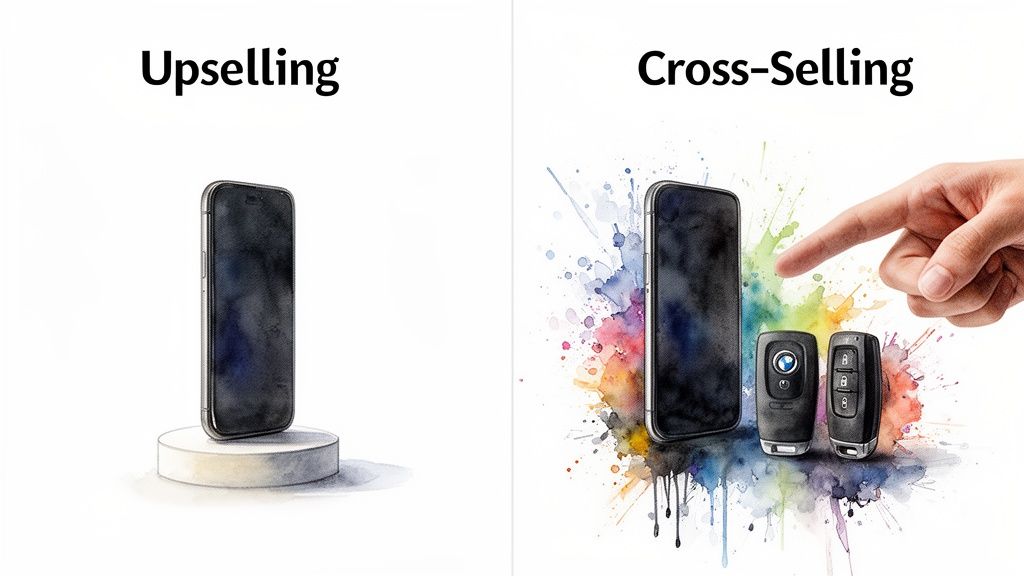
Upselling is about persuading a customer to buy a better, more expensive version of the product they’re already considering. Think bigger, faster, or more features. On the other hand, cross-selling is about recommending related items that complement their main purchase.
Your choice between the two really depends on a simple question: Do you want to upgrade a single purchase, or add more items to the cart?
Defining the Core Difference in Sales Strategy
For anyone running a Shopify store, getting both of these techniques right is a game-changer for your Average Order Value (AOV). But it’s not just about a quick cash grab. When done well, these strategies genuinely improve the shopping experience, which is what builds long-term customer relationships and boosts Customer Lifetime Value (LTV).
Instead of constantly falling back on margin-killing discounts, smart merchants use these tactics to add real value. The goal is to boost AOV by rewarding customers, not just by offering hefty discounts. Offering a free gift when a customer upgrades to a premium product (an upsell) or suggesting a matching accessory (a cross-sell) feels helpful and personal, not pushy, and protects your profit margins while building long-term loyalty.
This subtle shift in approach has driven huge results for e-commerce brands, with many seeing 10-30% of their AOV come directly from these methods. If you want to see the full impact, it's worth checking out more insights on e-commerce sales strategies. This is exactly where a tool like Monster Cart shines, letting you build these value-driven rewards—like free shipping or a free gift—right into the cart so they feel less like a sales pitch and more like a helpful service.
To make it even clearer, here’s a quick breakdown of how the two strategies stack up against each other.
Cross Selling vs Up Selling at a Glance
This table cuts right to the chase, highlighting the fundamental differences in goals, timing, and customer benefits for e-commerce merchants.
Attribute | Upselling | Cross-Selling |
|---|---|---|
Primary Goal | Increase the value of a single item purchase. | Increase the total number of items in an order. |
Offer Type | A more expensive, upgraded, or premium version. | A different, complementary, or related product. |
Customer Benefit | Gains enhanced features, better quality, or more volume. | Acquires a more complete solution or enhances the original item. |
Example | Suggesting a 256GB phone instead of the 128GB version. | Offering a phone case and screen protector with a new phone. |
Best Timing | On the product page, when the customer is evaluating options. | In the cart or at checkout, after the main purchase decision is made. |
Once you get a feel for these core differences, you can start strategically planning which approach makes the most sense for your products and your customers' journey. This isn't just about a one-off sales bump; it's about building a foundation for sustainable, long-term revenue growth and customer lifetime value.
The Psychology Driving Customer Spending Habits
Knowing the difference between cross-selling and upselling is only half the battle. The real money is made when you understand why these tactics actually work. They’re effective because they tap into powerful, predictable psychological triggers that shape how customers see value and make buying decisions.
Upselling is a masterclass in value anchoring. When a customer sees the price of a standard product, that number becomes their mental baseline. A premium upgrade, presented as only slightly more expensive, feels like a small leap for a huge gain in quality or features. This strategy also plays on the Fear of Missing Out (FOMO), making customers wonder if they’ll regret not getting the "best" version they could have.
Cross-selling, on the other hand, hooks into our natural desire for convenience and completeness. Once a customer has made a primary purchase decision, their buying momentum is high. Offering a complementary item at this moment doesn't feel like a new sales pitch; it feels like a genuinely helpful suggestion that completes the puzzle.
Tapping Into Buying Momentum
The key is making these offers feel like a service, not a sales tactic. A jarring pop-up shatters the customer's focus and feels intrusive. But an offer presented seamlessly inside the cart feels like a natural, helpful part of the journey.
This is where user experience becomes everything. Imagine a shopper adds a camera to their cart. Instead of getting hit with an aggressive pop-up, the slide-cart gently reveals a one-click option to add a memory card. This approach meets their needs at the exact moment of relevance.
By aligning your offers with the customer's existing intent, you transform a sales strategy into a helpful service. The goal is to make their life easier, which naturally leads to a higher Average Order Value (AOV) and strengthens their perception of your brand.
Making Offers Feel Like Rewards
Ultimately, both strategies work best when they feel less like a transaction and more like a reward. Instead of just pushing more products, focus on enhancing the overall value of the purchase. The goal is to encourage customers to hit a spending threshold to unlock a valuable reward like a free gift or free shipping. This gamified approach boosts AOV without leaning on margin-killing discounts.
An intelligent cart system like Monster Cart weaves these offers directly into the shopping flow. It allows you to frame cross-sells as “frequently bought together” suggestions or display progress bars that motivate customers to unlock value-added rewards. This thoughtful implementation respects the customer's journey, making them feel smart for spending more—the real secret to building lasting lifetime value.
For a deeper dive, check out our guide on implementing frequently bought together strategies.
A Strategic Breakdown of When to Upsell or Cross-Sell
Knowing the difference between an upsell and a cross-sell is just step one. The real art is deploying the right strategy at the right moment. The timing and placement of your offer are just as critical as the offer itself—get it wrong, and you can come off as pushy and kill the conversion. But get it right, and you’ll actually improve the customer experience while boosting your bottom line and lifetime value.
Generally, upselling hits hardest on product pages, where customers are actively comparing features and weighing the value of their options. This is their moment of peak consideration. They're still deciding, and a well-placed upsell can guide them to a better solution that perfectly fits their needs before they even add an item to their cart.
On the other hand, cross-selling really shines in the cart. By this point, the customer has already made their primary purchase decision. Their buying momentum is high, making them far more open to complementary suggestions that round out their order and make the whole experience better.
Upselling on the Product Page
Think of the product page as your stage for demonstrating superior value. When a shopper is looking at a standard product, their mind is wide open to considering an upgrade. The key is to make the benefits of the premium version so obvious and compelling that it feels like a no-brainer.
Imagine a customer lands on a product page for a 12oz bag of your best-selling coffee. This is the perfect time to present a smart upsell:
The Upgrade: Offer an 18oz bag.
The Value Proposition: Make it crystal clear that the larger bag has a lower price per ounce, saving them money in the long run.
The Psychology: This taps directly into their desire for a good deal and long-term value. Suddenly, the higher price point feels like a smart investment, not just an extra expense.
This approach works because it aligns perfectly with the customer's goal: finding the best possible option for their needs. It feels helpful, not aggressive.
By presenting an upsell before the cart, you frame the decision as a choice between "good" and "great," not as a last-minute cash grab. This simple shift in timing can dramatically increase the perceived value of your premium offerings and boost your Average Order Value (AOV).
Cross-Selling in the Cart
Once a customer adds that coffee bag to their cart, their mindset shifts from evaluation to completion. The big decision is made. Now is the perfect time for a non-disruptive, highly relevant cross-sell that improves their purchase without making them second-guess their original choice.
This is where a tool like Monster Cart becomes so powerful. Instead of a jarring pop-up that breaks the checkout flow, you can slide in relevant offers directly within a sleek, on-brand cart drawer.
The Complement: Suggest a coffee grinder, a set of premium filters, or a stylish mug.
The Placement: These items appear as "Frequently Bought Together" or one-click add-ons right inside the cart.
The Benefit: The customer can easily add these items without ever leaving the cart, keeping their path to checkout smooth and uninterrupted.
This method avoids friction by making the cross-sell feel like a helpful service. You’re not just selling more products; you’re building a complete solution for your customer. That thoughtfulness fosters loyalty and increases their lifetime value. Even better, you can tie these add-ons to in-cart rewards, like unlocking free shipping or a free gift, turning a simple transaction into a rewarding experience.
How to Boost AOV Without Giving Away Your Margins
It’s tempting to just slash prices when sales are slow, but constantly offering discounts is a race to the bottom that eats away at your margins. The real difference between a store that thrives and one that just gets by is the ability to grow its Average Order Value (AOV) by adding value—not by cutting costs.
This is all about changing the shopping experience from a simple transaction into a rewarding journey where customers feel like they're earning something extra. This builds a much deeper connection to your brand, encourages people to spend more, and boosts lifetime value, all without hurting your profitability. You want customers to feel smart for spending more with you.
Shift from Discounts to Tiered Rewards
The best way to protect your margins is to structure your incentives as a series of tiered rewards that customers unlock as they spend. This gamified approach nudges shoppers to add just one more item to their cart to hit that next goal, which naturally drives up your AOV.
These rewards feel earned, which creates a positive emotional kick that customers associate with your brand. Think about building a system where different spending levels unlock better and better perks.
Free Shipping Thresholds: This is the most common reward for a reason—it works. Make it painfully obvious how close they are, like with a message that says, "You're only $15 away from free shipping!"
Exclusive Free Gifts: Offer a genuinely enticing free product once a customer's cart hits a certain value. This adds real value and is a great way to introduce them to other products you sell.
Tiered Discounts or Future Credit: Instead of a blanket discount, offer a small discount or store credit after a certain spend threshold is met. This rewards bigger orders and encourages a future purchase.
Gamify the Cart Experience
For these rewards to really hit home, customers need to see their progress in real-time. This is where a dynamic in-cart system like Monster Cart makes a huge difference. It swaps out the boring, static cart with an interactive slide-out cart that visually shows a customer’s progress toward their next reward.
A simple progress bar that fills up as they shop creates a powerful feedback loop. Customers can see exactly how close they are to unlocking free shipping or a gift, turning the path to checkout into a fun little game. This one small tweak to the user experience can have a massive impact on both AOV and customer lifetime value.
This flowchart breaks down the decision of when to use an upsell versus a cross-sell during the customer's journey.
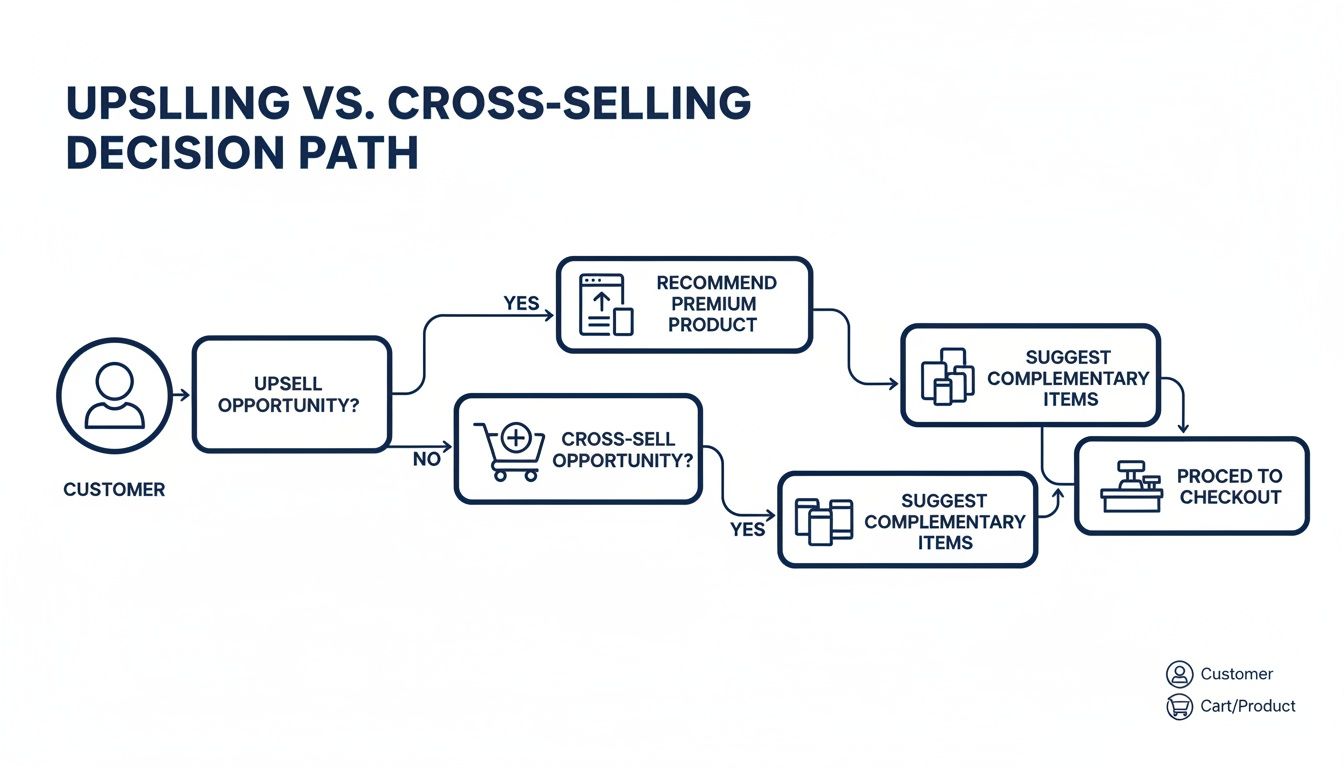
As you can see, upselling fits best on the product page itself, while cross-selling is most effective once the primary item is already in the cart.
The most powerful sales strategies focus on increasing customer lifetime value, not just the immediate transaction. By rewarding customers with tangible value like a free gift or free shipping instead of hefty discounts, you build a loyal following that returns again and again.
While knowing when to cross-sell or upsell is key, it’s just one piece of the puzzle. There are tons of other great resources that outline 10 proven strategies to increase average order value that can work alongside your in-cart efforts. Ultimately, combining these tactics creates a much stronger system for sustainable growth. For more ideas, you can also check out our own guide on how to increase average order value.
Implementing Smart In-Cart Offers That Convert
Knowing the difference between cross-selling and upselling is one thing. Turning that knowledge into a revenue-generating machine inside your Shopify store is another. The real secret is to put these strategies to work where they’re most effective and least annoying: right inside the shopping cart.
A smooth in-cart experience means no more obnoxious pop-ups that kill your conversion rates. Instead, the offers should feel like a genuinely helpful part of the shopping journey. This is where a tool like Monster Cart really shines, replacing the basic Shopify cart with an interactive slide-out that engages customers without creating friction.
Configure High-Converting Campaigns
With the right setup, you can launch targeted campaigns that naturally encourage customers to spend a little more. These aren't just random product suggestions; they are smart offers designed to boost your AOV and customer lifetime value by rewarding customers for spending more, not by slashing your prices.
Here are three powerful campaigns you can build directly in your cart:
One-Click Cross-Sells: Offer those perfect impulse buys, like gift wrap, product warranties, or priority processing. These are low-cost, high-value add-ons that a customer can grab with a single click for a quick AOV bump.
'Frequently Bought Together' Bundles: Once a customer adds a key product, you can present a curated bundle right in the cart. This kind of contextual cross-sell feels like a smart recommendation, not an aggressive sales pitch.
Gamified Progress Bars: Get customers excited about hitting a spending goal to unlock a reward. As they shop, a visual bar fills up, showing them exactly how close they are to nabbing free shipping or a free gift.
This screenshot shows exactly how Monster Cart uses a visual progress bar to guide customers toward unlocking their rewards.
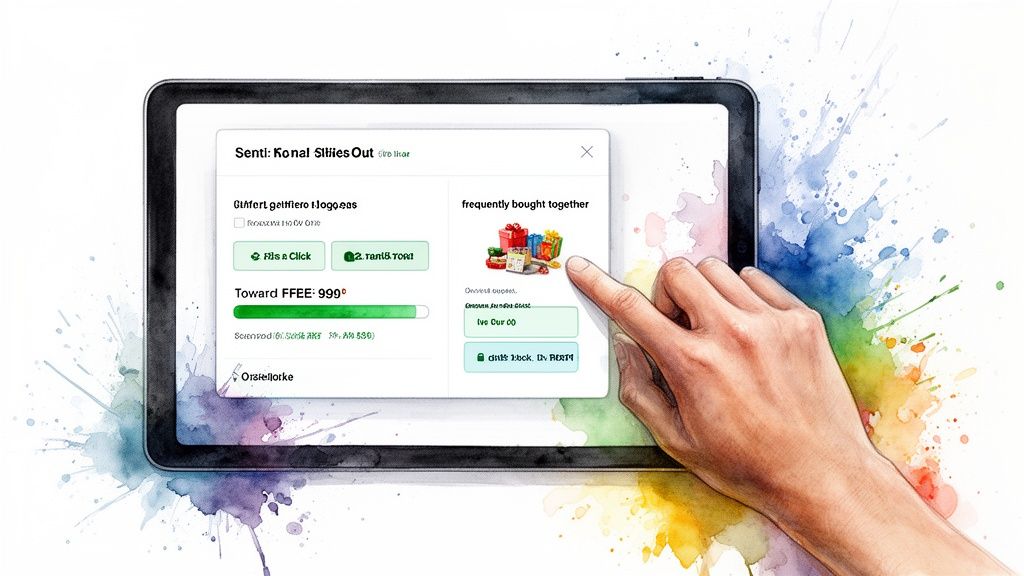
This gamified approach makes spending more feel fun and rewarding, nudging shoppers to add just one more item to reach their goal. It shifts the entire focus from discounting products to rewarding loyalty and boosting lifetime value.
Driving Demand for Your Offers
Executing these in-cart strategies is half the battle, but you also need to get the word out. To really maximize the impact of your smart in-cart offers, consider how your marketing can build excitement. For instance, leveraging AI UGC ads can effectively promote these extra perks and rewards to a wider audience, creating a cohesive journey from ad to checkout.
By integrating your offers directly into a seamless cart experience, you transform the final step of the customer journey into your most powerful conversion tool. It’s about making the path to purchase both frictionless and rewarding.
At the end of the day, the goal is to boost AOV without having to rely on steep discounts that eat away at your margins. By using intelligent in-cart rewards, you not only increase the immediate transaction value but also build a stronger, more profitable relationship with your customers. That long-term focus on lifetime value is what separates a good sales tactic from a great business strategy.
Measuring the True Impact of Your Sales Strategy
It’s one thing to launch a new sales strategy, but it’s another to know if it's actually working. A successful approach is one you can measure. While knowing the difference between cross selling and up selling is a great start, the real insights come from tracking the right Key Performance Indicators (KPIs).
It's time to look beyond the quick win of a single sale and focus on what really drives sustainable, long-term growth for your brand.
The most obvious number everyone watches is Average Order Value (AOV). But if that’s the only metric you’re tracking, you’re missing a huge part of the picture. To get a clear view, you need to monitor a few other critical numbers.
Key Metrics Beyond AOV
These KPIs give you a more balanced look at your strategy's health. They ensure you’re not just inflating order sizes at the expense of other crucial business drivers.
Units Per Transaction (UPT): This tells you exactly how many items customers are buying in a single order. If your UPT is climbing, that’s a rock-solid sign your cross-selling efforts are paying off.
Conversion Rate (CVR): This is the percentage of visitors who actually follow through and make a purchase. Don’t panic if you see a tiny dip here—if your AOV is jumping up significantly, a slightly lower conversion rate can still result in much higher overall revenue.
Customer Lifetime Value (LTV): This is the ultimate report card for your brand. LTV tracks the total amount of money a customer brings in over their entire relationship with you. It’s the true measure of success.
When you focus on LTV, you naturally start building strategies that encourage repeat business. Instead of defaulting to margin-killing discounts, you start thinking about rewards like a free gift or a free shipping threshold. These build genuine loyalty and give customers a reason to come back, maximizing their lifetime value. For a deeper dive, check out our guide on how to calculate and improve average order value.
Finding Your Sweet Spot with A/B Testing
Your gut feelings are great, but data is better. The only way to truly optimize your offers is through constant A/B testing to find that perfect balance between a tempting customer incentive and a profitable business move.
Don’t just set an offer and forget it. Test different reward thresholds to see what motivates your customers most. You might be surprised by what drives the biggest increase in both AOV and LTV.
For example, you could pit a free gift unlocked at a $75 spend against a free shipping offer at $100. A tool like Monster Cart makes it simple to run these experiments head-to-head. You can then analyze the hard data to see which offer delivers a better return. This data-driven approach is what allows you to stop guessing and start building a strategy for profitable, long-term growth.
Common Questions About Upselling and Cross Selling
Even with a clear strategy, it’s normal to have a few lingering questions. Let's tackle some of the most common concerns I hear from merchants so you can move forward with confidence.
Can Upselling and Cross Selling Annoy My Customers?
Honestly, yes—if they're done poorly. Aggressive, disruptive pop-ups are a guaranteed way to frustrate shoppers and send your cart abandonment rate through the roof. The trick is to be helpful, not pushy.
When your offers are relevant and pop up at just the right moment, they actually make the shopping experience better. Think about a sleek slide-cart suggesting a complementary item or showing progress toward a free gift; that feels valuable, not annoying. Tools like Monster Cart are designed to make these offers feel like a natural part of your store, which goes a long way toward improving customer satisfaction and lifetime value.
Which Strategy Is Better for My Shopify Store?
This is a classic question, but there’s no single "better" option. They serve completely different strategic goals, and the right choice boils down to your specific product catalog and business model.
Upselling is ideal when your products have clear tiers of value. Think offering a larger size, a more durable material, or a premium model with extra features.
Cross-selling shines when you have a variety of complementary products that work together. A camera and a memory card is the perfect example.
But here’s the thing: the most effective brands don't choose. They use both. You might show an upsell on the product page and then offer a smart cross-sell once the item is in the cart, ideally tied to a reward like free shipping.
Instead of picking one over the other, dig into your products and customer data. The real growth comes from understanding the difference between cross selling and up selling and deploying each tactic where it will have the most impact on AOV and lifetime value.
What Kind of AOV Increase Should I Expect?
Results will always vary by industry and how good your offers are, but many Shopify stores see a 10-30% lift in Average Order Value with a well-planned strategy. That said, don't get fixated on a magic number.
Focus on sustainable growth instead. Start by getting a clear baseline of your current AOV, then start A/B testing your offers. The real prize isn't just a one-time AOV bump; it's long-term, profitable growth in both AOV and Customer Lifetime Value (LTV). By prioritizing value-added rewards like a free gift or free shipping over margin-killing discounts, you build a much healthier and more resilient business.
Ready to boost your AOV without annoying pop-ups? Monster Cart turns your Shopify cart into a powerful revenue engine with gamified rewards, one-click cross-sells, and a fully branded experience. See how it works at monsterapps.shop.
Join 7000+ brands using our apps