Mastering order management shopify: From Cart to Customer
Mar 7, 2026
|
Published
When you think of order management in Shopify, what comes to mind? For most merchants, it’s the nitty-gritty of getting an order from point A to point B. It’s the packing, the shipping, and maybe handling the occasional return. But that’s a dangerously narrow view.
Effective order management is the entire system that kicks in the second a customer pays, covering the journey all the way to their doorstep—and back again if needed. It’s the hidden operational engine of your store, and getting it right is what builds the trust that turns one-time buyers into loyal fans with high lifetime value.
Your Hidden Growth Engine: The Power of Smart Order Management
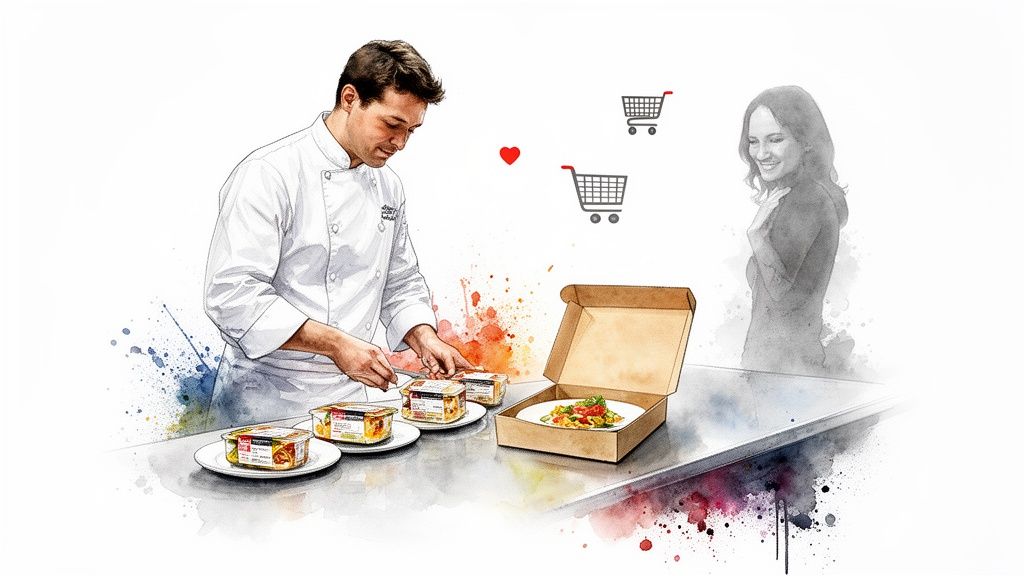
Most Shopify merchants treat order management like a chore—pack, ship, repeat. But seeing it this way means you're leaving a massive growth opportunity on the table. It’s so much more than logistics; it’s the complete backstage experience that an order goes through, from the initial click to the final unboxing.
Think of it like a world-class restaurant. When the kitchen operates with precision, every dish comes out perfectly, customers are wowed, and they can’t wait to come back. But a chaotic kitchen leads to mixed-up orders, long waits, and unhappy patrons who probably won't return. Your store's order fulfillment process works exactly the same way.
The Shift from Chore to Strategy
A smooth, efficient process has a direct line to your bottom line. When customers get their orders quickly and correctly, their confidence in your brand skyrockets. That satisfaction is the bedrock of customer retention, glowing reviews, and powerful word-of-mouth marketing.
The real magic happens when you stop seeing order management as a cost center and start treating it as a strategic part of the customer experience. This is where you build the loyalty that fuels long-term growth and increases lifetime value.
The best part? This strategic thinking doesn't have to wait until after checkout. In fact, it should start inside the cart.
Starting in the Cart to Maximize Value
Instead of defaulting to margin-killing discounts to drive every sale, smart merchants are boosting Average Order Value (AOV) with rewarding incentives. This approach builds excitement and increases perceived value without cheapening your brand, focusing on long-term customer lifetime value.
Consider these powerful in-cart strategies:
Tiered Free Gifts: Encourage customers to add more items to unlock progressively better free products. This is a fantastic way to increase order size without offering a discount.
Free Shipping Thresholds: A simple progress bar showing how close a customer is to earning free shipping can be an incredible motivator to add one more item.
"Spend More, Get More" Rewards: Provide escalating rewards like a free gift or a gift card for future use as the cart total grows, making larger purchases feel like a smarter buy.
By weaving these rewards directly into the shopping cart, you create a gamified journey that feels helpful, not pushy. This is a core idea behind tools like Monster Cart, which transforms the standard cart into a dynamic rewards engine. It helps you increase AOV from the very beginning, setting the stage for a profitable and seamless post-purchase experience. And to truly unlock your store’s potential, pairing these in-cart strategies with efficient Shopify order fulfillment services can be your secret weapon.
Mastering Shopify order management isn't just about shipping boxes faster. It's about architecting a superior end-to-end experience that begins in the cart, delights the customer at their door, and ultimately turns first-time buyers into lifelong fans. This is how you build a scalable, profitable brand.
Mapping Your Core Order Lifecycle Step by Step
Feeling like you're constantly putting out fires with your order process? It's time to step back and map out your order's entire journey, from click to unboxing. This isn't just some boring checklist—it's your operational blueprint for finding the hidden bottlenecks that are quietly costing you time and money.
By really understanding each stage, you can turn your order management shopify process from a reactive chore into a proactive system. This is how you build an operation that scales smoothly, keeps customers happy, and earns their repeat business.
Let's walk through the five core stages of an order, starting from the second a customer hits "buy" all the way through the post-purchase experience that shapes their loyalty.
Stage 1: Order Capture
This is ground zero. The instant a customer completes their purchase, Shopify captures the transaction. The order pops up in your Shopify Admin, the payment gets authorized, and your inventory count automatically drops. It’s the official handoff from shopper to your ops team.
But even this first step can get a little clumsy. What if a customer wants to change a size, add an item, or fix a typo in their address? Too much friction here creates a terrible first impression and can easily lead to a frustrating experience or even an order cancellation.
Stage 2: Processing and Routing
Once an order is captured, it hits the processing stage. Think of this like the prep station in a busy restaurant kitchen where the ticket comes in and the chefs decide who’s cooking what. Inside Shopify, this means tackling a few key tasks:
Order Tagging: You can manually or automatically apply tags like ‘VIP’, ‘Pre-order’, or ‘Fragile’ to help your fulfillment team organize and prioritize their work.
Fraud Analysis: Shopify’s built-in analysis is your first line of defense, flagging potentially fraudulent orders so you can review them before you ship a product and lose money.
Routing: If you have multiple warehouses or use dropshipping partners, this is where you decide which location will fulfill the order, usually based on inventory levels and the customer's address.
The biggest mistake brands make here is trying to do it all by hand. As your order volume grows, manually tagging and routing every single order becomes a massive time-suck and a perfect recipe for human error.
Stage 3: Fulfillment
Fulfillment is where the digital order becomes a physical reality. It's the hands-on process of picking the right items from your warehouse shelves, packing them securely, and getting the box ready to go. The goals here are simple: accuracy and speed.
Sending the wrong item or shipping an order late can do serious damage to a customer's trust in your brand.
An efficient fulfillment process is non-negotiable for scalable growth. Each delay or mistake at this stage directly impacts your brand's reputation and the customer's willingness to shop with you again.
This is where having a hyper-organized warehouse pays off. A chaotic pick-and-pack process leads to slow fulfillment times and high error rates, which directly eats into your profit margins and chips away at customer lifetime value.
Stage 4: Shipping and Delivery
With the package taped up and ready, the next step is getting it out the door. This involves generating a shipping label, sticking it on the box, and handing it off to your chosen carrier. As soon as you do, Shopify can automatically trigger a shipping confirmation email with a tracking number—a critical touchpoint for managing customer expectations.
This stage is a huge opportunity to build trust. Clear, proactive communication about shipping status keeps customers in the loop and dramatically cuts down on the "Where is my order?" emails that can overwhelm your support team.
Stage 5: Post-Purchase Experience
The order lifecycle doesn’t stop once the package is on the truck. The post-purchase phase covers everything that happens after, including the final delivery, collecting customer feedback, and—most importantly—handling any returns or exchanges.
A smooth, hassle-free returns process, for instance, can turn a potentially negative experience into one that actually reinforces a customer's loyalty. You can also see how this connects to the pre-purchase journey by exploring ways to reduce cart abandonment, since many of the same principles of a frictionless experience apply.
Getting this entire lifecycle right is only becoming more important. By 2026, Shopify stores worldwide are projected to process over 200 million orders per month. For merchants using tools like Monster Cart to drive that volume with in-cart rewards, having a flawless backend process is essential to capitalize on high traffic without system slowdowns. You can explore more of these impressive Shopify growth trends at Red Stag Fulfillment.
Boost AOV Before Checkout with In-Cart Rewards
Smart order management doesn't start when an order is packed. It starts the second a customer adds an item to their cart. It's time to stop letting constant sitewide discounts eat away at your margins and, instead, turn your shopping cart into your most powerful revenue driver.
The old playbook relied on disruptive pop-ups and blanket percentage-off sales to secure a purchase. The modern, more profitable approach is to build a rewarding, gamified experience right inside the cart, encouraging customers to happily spend more to unlock real value.
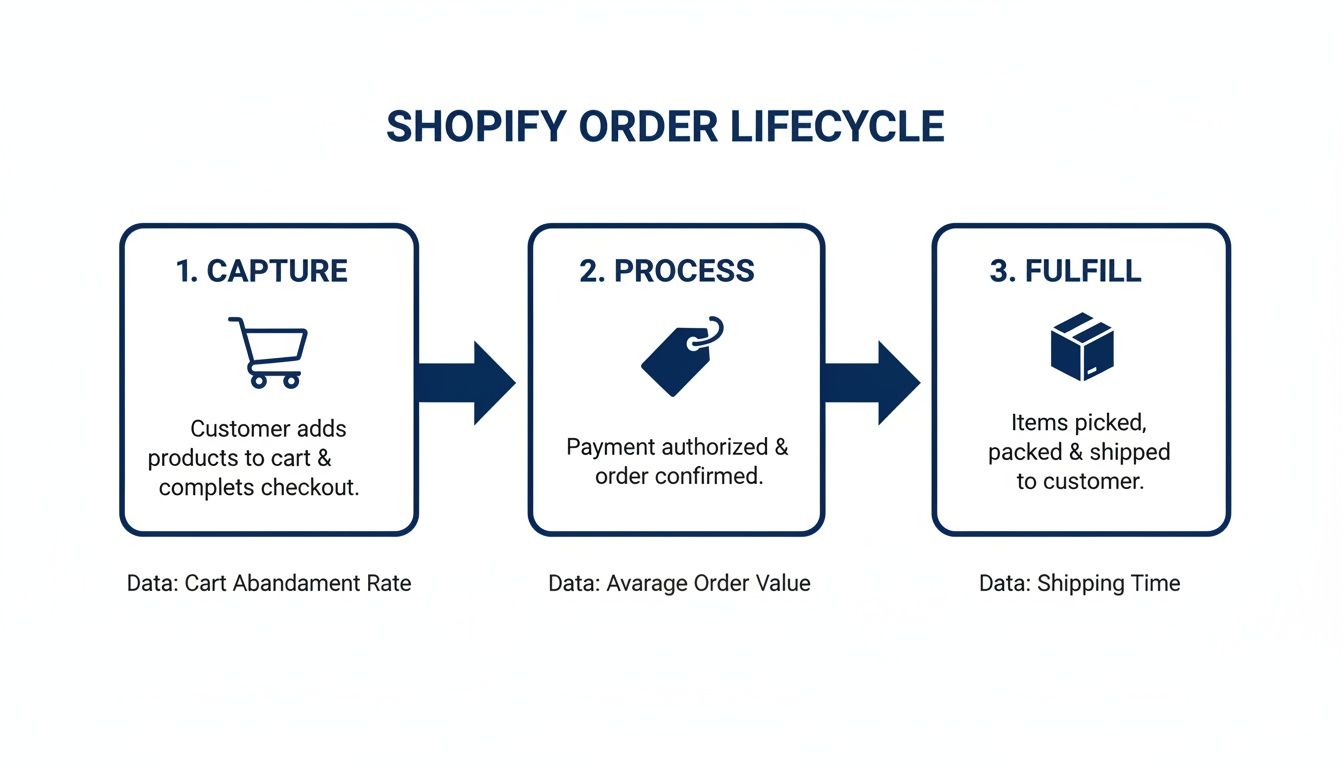
When you boost Average Order Value (AOV) in the cart, you’re not just making a bigger sale. You’re sending a more profitable order into this entire lifecycle, improving the health of your entire operation from the very first click.
Shifting from Discounts to Rewards
Deep discounts can be a race to the bottom. They train customers to wait for a sale and can cheapen your brand over time. A reward-based system, on the other hand, builds genuine excitement and strengthens how customers see your brand, focusing on customer lifetime value.
It completely reframes the conversation from, "How can I pay less?" to "What cool stuff can I earn by spending a little more?"
This psychological shift is massive. It increases your AOV while protecting your profit margins and building brand loyalty. Customers feel like they're winning a game instead of being pushed into a sale—a much stronger foundation for long-term customer relationships.
Powerful In-Cart Strategies to Drive AOV
To pull these strategies off, you need a seamless in-cart experience. You can't depend on clunky notifications or annoying pop-ups that kill the shopping flow. This is where a customizable slide-out cart becomes your secret weapon.
Here are a few proven tactics that work like a charm:
Tiered Free Gifts: This one’s a classic for a reason. Offer a good gift at one spending level, and an even better one at a higher tier. A visual progress bar showing, "You're just $15 away from a free gift!" is incredibly persuasive.
Spend More, Get More: Create clear thresholds where customers unlock escalating rewards, like "Spend $100, get a $10 gift card" or "Buy 2, Get 1 as a Free Gift." This makes larger purchases feel like a smart move.
Free Shipping Thresholds: With shipping costs being a top reason for cart abandonment, a progress bar tracking how close a customer is to free shipping is one of the most effective AOV boosters you can have. Find out how a free gift app for Shopify can manage these offers effortlessly.
The goal is to make the upsell feel like a helpful guide, not a forceful sales pitch. The rewards should update in real-time within the cart as customers add items, creating a frictionless and engaging experience that leads to a higher cart value.
The table below contrasts the long-term effects of these two different approaches on your brand and customer relationships.
AOV Growth Strategies Comparison
Strategy | Traditional Method (e.g., 20% Off Coupon) | Modern Method (e.g., In-Cart Rewards) | Impact on Brand Value | Impact on Customer LTV |
|---|---|---|---|---|
AOV Growth | Chasing sales with deep, margin-killing discounts. | Gamifying the cart with spend-based free gifts or free shipping. | Decreases. Trains customers to expect and wait for sales. | Increases. Creates a premium, value-added experience. |
Customer Engagement | Passive. Relies on coupon codes and disruptive pop-ups. | Active. Uses progress bars and real-time updates to motivate. | Neutral. The focus is transactional and price-based. | Strengthens. The experience feels rewarding and fun. |
Profitability | Lower. Discounts apply across the entire cart, eroding margins. | Higher. The cost of a reward is fixed, protecting overall profit. | Erodes. Constant sales devalue your products. | Protects. Focuses on adding value, not cutting prices. |
As you can see, shifting to a rewards-based model is an investment in both immediate AOV and the long-term health of your business.
The data absolutely backs this up. While the average Shopify order value (AOV) hovers around $92, top-performing brands consistently hit $109 or more. That gap is often closed by superior in-cart strategies. In fact, checkout customizations using upsell apps can boost order value by 10-15%. This is clear proof that visual rewards—like free gift tiers managed by tools like Monster Cart—are a primary driver for increasing AOV without resorting to constant sales. You can explore these crucial Shopify benchmarks at Enrich Labs to see how you stack up.
Automating Your Order Workflow for Flawless Scaling

As your store scales, manual tasks are the first things to break. Copying order details, manually tagging VIPs, and double-checking fulfillment sheets—these aren't just tedious. They’re a recipe for costly mistakes that can damage your brand's reputation.
This is where automation stops being a "nice-to-have" and becomes the engine for real growth. It’s how you get out of the weeds of day-to-day tasks and start building a business that can handle ten thousand orders as smoothly as it handles ten. It’s about building a consistent, professional operation that inspires customer trust.
Creating Your Automation Blueprints
For anyone on the Shopify plan or higher, Shopify Flow is your command center for this. Think of it as creating simple "if-then" rules for your store that run 24/7, no coding required.
Here are a few powerful automation blueprints you can set up today:
Segment High-Value Customers: Automatically tag orders from customers who have spent over $500 in your store with a 'VIP' tag. This lets your team instantly spot high-value orders, maybe even toss in a handwritten thank-you note or a free gift.
Flag High-Risk Orders: Set up a rule to automatically flag and pause any order Shopify’s fraud analysis marks as medium or high-risk. You can have it instantly notify your team for a manual review before a single product leaves the warehouse.
Organize Special Order Types: If you sell pre-orders or custom items, have Flow tag them with 'Pre-order' or 'Custom'. This makes it dead simple to filter them out of your main fulfillment queue so they don't get shipped out by mistake.
Automation is your secret weapon for delivering a flawless experience at scale. It ensures that the increased order volume from your AOV-boosting cart strategies doesn't lead to chaos, but to predictable, profitable growth.
Smart Fulfillment and Team Management
Automation goes way beyond just tagging orders. You can build smart rules to manage your entire fulfillment process. For instance, a workflow could route an order to a specific warehouse based on the customer’s zip code, guaranteeing faster shipping and lower costs.
If your store relies on dropshipping, a well-built automation can ensure order details are sent to the right supplier instantly, without any manual intervention. For a deeper dive on this, our guide to the best Shopify apps for dropshipping is a great resource.
It’s also a game-changer for your team. You can set up flows that assign specific tasks, like creating a support ticket for an order with fragile items or pinging your packing team when an order needs special gift wrapping.
Believe it or not, these backend efficiencies directly improve your front-end conversions. Cart abandonment on Shopify still hovers around a staggering 70%, a problem often tied to a slow or clunky checkout. When your order management is on autopilot, you free up critical bandwidth to focus on optimizing that pre-purchase journey with tools like Monster Cart. A fast slide-cart that integrates upsells and rewards can dramatically improve the user experience, boosting AOV and customer lifetime value.
By tightening up both ends of the process, you create a powerful cycle where smooth fulfillment supports a frictionless cart, leading to more sales and happier, repeat customers. You can learn more about how to fight Shopify abandonment rates at Chargebacks911.
Measuring the Metrics That Truly Matter for Growth
It’s an old saying, but it’s true: you can't improve what you don't measure. While big, flashy numbers like total sales are fun to watch, they don’t tell you the whole story about the health of your order management.
To build a brand that lasts, you need to dig deeper. It's about tracking the numbers that connect your behind-the-scenes efficiency directly to your customer’s happiness and, ultimately, your profitability. These aren’t just spreadsheet fillers; they’re the vital signs of your business. They tell you exactly where your process is a well-oiled machine and where it’s leaking money and loyalty.
The KPIs That Actually Drive Growth
Let's look past the vanity metrics and focus on the numbers that genuinely impact your bottom line. These Key Performance Indicators (KPIs) reveal how smoothly your backend runs and how that performance feels to the person who matters most—your customer.
Here are the critical metrics every Shopify merchant should have on their dashboard:
Order Fulfillment Cycle Time: This is the stopwatch for your entire process, measuring the time from when a customer clicks "buy" to the moment their order is on the truck. A shorter cycle is a huge driver of customer satisfaction.
Order Accuracy Rate: Calculated as
(Total Orders - Orders with Errors) / Total Orders, this metric shows how often you get it right the first time. Aiming for 99% or higher is non-negotiable for building trust and avoiding the high cost of returns.Rate of Return: This is the percentage of orders customers send back. While you'll always have some returns, a high rate is a red flag. It could point to anything from vague product descriptions to damage during shipping.
Tracking these numbers gives you a brutally honest look at your operations. A slow cycle time or a dip in accuracy is a direct signal that you’ve got a bottleneck that needs fixing—fast.
Connecting Your Operations to Customer Lifetime Value
These operational metrics aren’t just for internal scorekeeping. They have a massive, direct impact on your store's financial health, especially your Customer Lifetime Value (LTV). A happy customer who gets their correct order quickly is practically guaranteed to buy from you again.
The most profitable merchants know that a seamless post-purchase experience is really a marketing investment. It’s how you turn the money you spent acquiring a customer into a long-term, profitable relationship.
Think about it. Every single order you ship perfectly reinforces a customer’s decision to trust you. That positive feeling is what leads to repeat purchases, glowing reviews, and word-of-mouth marketing. On the flip side, one bad shipping experience can wipe out all the goodwill you’ve worked so hard to build.
This is exactly why boosting Average Order Value (AOV) with rewards is so powerful. When you use an in-cart rewards tool like Monster Cart to offer free shipping or a free gift, you’re not just making a bigger sale in the moment. You're increasing the value of a customer who is more likely to stick around because your operational excellence guarantees a great experience every single time. That higher AOV makes each perfectly fulfilled order even more profitable, creating a powerful cycle of growth.
Feeling inspired? Good. Now, let’s channel that energy into action. Theory is great, but real growth happens when you start making tangible changes. This is your step-by-step roadmap to start transforming your order management process today.
We're going to break down everything we've talked about into a practical plan. The idea is to build momentum with small, smart wins that add up to a huge impact over time. Let's get started.
1. Conduct a Simple Workflow Audit
First things first, you need to know exactly where you stand. Grab a notepad or open a new spreadsheet and map out your current order process, from the moment an order comes in to the moment it lands on a customer's doorstep. Be brutally honest here.
How long does it really take you to process a new order?
Where are the manual bottlenecks? (e.g., manually copying addresses, tagging VIP customers)
What are the top three reasons customers email you about their orders?
This quick audit will shine a spotlight on your biggest friction points. Those are your starting blocks for improvement.
2. Implement One High-Impact AOV Strategy
Don't try to boil the ocean. Instead of launching five different offers at once, pick one powerful in-cart strategy and execute it perfectly. The goal isn't just to boost your AOV, but to do it in a way that protects your margins and actually makes your brand stronger.
Forget deep, sitewide discounts for a minute. Focus on rewarding customers for spending more with you. A tiered free gift offer is a fantastic starting point. This is where a tool like Monster Cart becomes a game-changer. It lets you build a sleek progress bar right into your slide cart, visually showing customers how close they are to unlocking a valuable reward.
The most successful merchants understand that lifetime value is the real prize, not a one-time sale. By using rewards instead of discounts, you train customers to see more value in your brand, not just a lower price.
This one change can shift the entire shopping dynamic. It moves from simple bargain-hunting to a fun, goal-oriented experience, setting a new standard for how customers interact with your store.
3. Set Up a Foundational Automation
Next, let's claw back some of your time by automating a repetitive task. Dive into Shopify Flow and set up one simple but effective workflow. A perfect first automation is tagging orders automatically based on customer value or the type of order.
Your First Automation: Create a flow that adds a 'VIP' tag to any order from a customer whose lifetime spend crosses a certain threshold (say, $500). This simple rule instantly flags high-value orders for your fulfillment team, empowering them to add a personal touch like a handwritten note that builds incredible loyalty.
4. Optimize One Metric This Quarter
Finally, choose one key metric from the previous section to fixate on for the next 90 days. Is it your Order Fulfillment Cycle Time? Or maybe your Order Accuracy Rate?
Pick one and set a realistic target. For example, if your average cycle time is currently 48 hours, aim to get it down to 36. This focused approach is what ensures you make meaningful, measurable progress. As part of this, you should also investigate and optimize any complex shipping routes, like the logistics involved with shipping from China to the United States.
This action plan isn't about a painful, overnight overhaul. It’s about building a modern, profitable order management system piece by piece. When you pair smart in-cart revenue strategies from a tool like Monster Cart with slick backend automation, you create a powerful system that’s built for long-term customer loyalty and scalable growth.
Shopify Order Management FAQ
Let's tackle some of the most common questions I hear from merchants trying to get their order management running like a well-oiled machine. Here are some quick answers to get you started.
What Is the Best Way to Handle Pre-Orders in Shopify?
The cleanest way to handle pre-orders is with a dedicated app from the Shopify App Store, combined with a smart tagging system like ‘PREORDER-JUNE’. This combo is your best defense against accidentally shipping a pre-order item before it’s even landed in your warehouse.
Using tags lets you easily filter these orders out of your main fulfillment queue. It also gives you a specific list of customers you can send targeted email updates to, which is absolutely essential for keeping everyone happy and informed. Whatever you do, don't use draft orders for this—they don't take payment upfront and will create a massive inventory headache.
How Can I Reduce Shipping Errors and Costs?
To kill shipping errors, bring in a simple barcode scanner to verify every item as it’s packed. It’s a small step that makes a huge difference. To cut costs, make sure you're using Shopify Shipping for its discounted carrier rates and double-check that every product weight and package dimension in your admin is spot-on accurate.
A smarter play for both costs and revenue is to offer a free shipping threshold. You can make this offer impossible to miss by using an in-cart tool like Monster Cart, which shows a progress bar telling customers exactly how close they are to earning it. This nudges them to add more to their cart, boosting your AOV and shifting your focus to customer lifetime value instead of a one-off sale. You can still keep paid expedited options for shoppers in a hurry.
Thinking about lifetime value is key. A free shipping reward not only increases the immediate order size but also builds the kind of brand loyalty that leads to repeat purchases, far outpacing the short-term gains from a hefty discount.
Can I Manage Orders from Multiple Sales Channels in Shopify?
Yes, this is exactly what Shopify is built for—to be your central command center. When you connect other sales channels like Instagram, TikTok Shop, or even a brick-and-mortar POS, every single order flows right into one unified dashboard in your Shopify Admin.
The secret to making this work without a hitch is keeping your inventory synced perfectly across all channels to prevent overselling. It's also a great idea to use unique order tags (think ‘POS-Sale’ or ‘TikTok-Sale’) to track where your sales are coming from. This helps you see what's performing best and keeps your entire order management Shopify process clean and organized.
Ready to turn your cart into a revenue engine? With Monster Cart, you can build powerful in-cart rewards like free gifts, free shipping thresholds, and more to boost AOV without sacrificing your margins. Join over 7,000 top Shopify brands and see why it’s the ultimate tool for creating a rewarding, high-converting shopping experience. Start your free trial today at MonsterApps.shop.
Join 7000+ brands using our apps