Shopify Product Recommendations to Boost AOV and LTV
Feb 23, 2026
|
Published
Effective Shopify product recommendations aren't just a website feature; they're a core part of a sustainable growth strategy. The goal is to show customers other relevant items they might love, which naturally increases order sizes and makes their shopping experience feel genuinely personal and helpful.
This is the secret to boosting sales without feeling pushy and, more importantly, without sacrificing your profit margins on unnecessary discounts.
Why Smart Recommendations Are Your Growth Engine
In a crowded ecommerce space, generic suggestions that shoppers just scroll past are a massive wasted opportunity. Today's customers don't just want to buy things; they expect a shopping journey that feels like it understands them, guiding them to products they'll actually get excited about.
This is where you move beyond random upsells and start building a system that intelligently boosts both Average Order Value (AOV) and customer Lifetime Value (LTV). Instead of leaning on a quick, margin-killing discount to get a sale, the focus shifts to creating a more valuable cart.
When you offer smart rewards like a free gift or free shipping for spending a little more, you give customers a compelling reason to add more items. It turns a simple transaction into a rewarding win, building the kind of loyalty that pays off for years, not just on a single order.
Boosting AOV Without Sacrificing Margins
Too many merchants get stuck in the discount trap, thinking that slashing prices is the only way to get customers to buy more. But this just erodes your profits and trains your regulars to wait for the next sale.
A much smarter, long-term strategy is to use product recommendations to help shoppers unlock rewards. Picture this: a customer is just a few dollars away from hitting your free shipping threshold. Suggesting a small, perfectly matched accessory feels less like a pushy upsell and more like a helpful tip to improve their order's value.
This works brilliantly when it’s built right into the customer's path to purchase, skipping the annoying pop-ups that most people close instantly. For example, an in-cart recommendation system like the one inside Monster Cart can show a real-time progress bar. As customers add items, they see themselves getting closer to their next reward, which gently nudges them to keep shopping and increases both AOV and lifetime value.
The Power of Data-Driven Suggestions
The best recommendation engines dig into your data to surface hidden gems from your catalog, creating shopping journeys that just feel right. And the results speak for themselves.
Shopify merchants using AI-powered recommendations have seen incredible lifts in their key metrics. Let's look at some real-world data to see just how impactful this can be.
Impact of Recommendation Strategies on Key Shopify Metrics
The table below shows how different AI-driven recommendation types have directly impacted crucial ecommerce KPIs, proving their power to drive serious revenue and keep customers engaged.
Industry Example | Revenue Attributed to Recommendations | Revenue Per Visitor (RPV) Lift |
|---|---|---|
International Furniture Brand | 55.6% | 1,136% |
Global Fashion Retailer | 28.3% | 452% |
Health & Wellness Store | 19.8% | 315% |
These numbers aren't just incremental gains; they're game-changers. An international furniture brand, for example, attributed a massive 55.6% of its revenue directly to smart suggestions, leading to a mind-blowing 1,136% lift in revenue per visitor (RPV). You can see how these features work and what they can do for your store.
The key takeaway is this: by focusing on the customer’s entire journey and their lifetime value, merchants can turn the shopping cart from a simple checkout page into a powerful conversion tool. The best recommendations feel less like a sales pitch and more like a personal shopper guiding customers to a purchase they’ll be thrilled with.
Choosing the Right Recommendation Types for Your Store
Not all Shopify product recommendations are created equal. The real key is matching the right kind of offer to the right customer at exactly the right time. A well-placed suggestion feels like genuinely helpful advice, while a generic, lazy one just feels like noise.
The ultimate goal here isn't just a quick sale; it's about pushing up your Average Order Value (AOV) and building a real, long-term relationship with your customers. Instead of constantly leaning on discounts that eat away at your margins, you should be focusing on creating more value.
Frame your recommendations as a way for shoppers to unlock rewards, like a free gift, free shipping, or a future discount. When you do that, the upsell suddenly becomes a benefit for them. That simple shift is what fosters loyalty and improves lifetime value, turning one-time buyers into repeat customers.
Matching Recommendations to Your Goals
Your product catalog and your business goals should be the two things guiding your strategy. A fashion brand, for instance, might lean heavily on a "Complete the Look" bundle. A tech store, on the other hand, would probably see more success offering a protective case as a simple, complementary cross-sell.
Let's break down the most effective types you can use.
Frequently Bought Together: This is a classic for a reason. It uses your own sales data to bundle items that people are genuinely buying together, like a camera and a memory card. It’s a powerful, data-backed way to increase the number of items per order. For a deeper dive, you can learn more about implementing "frequently bought together" strategies.
Complementary Cross-Sells: This approach takes a bit more manual thought, but it can be wildly effective. You're basically anticipating the customer's needs by suggesting items that make their main purchase even better—think a shoe cleaning kit sold with a pair of nice leather boots or coffee filters offered with a new coffee machine.
Personalized Picks: This is where things get really smart. Using AI to analyze a shopper's browsing history, past purchases, and what similar customers have bought lets you create truly one-to-one recommendations. It’s the perfect way to surface those hidden gems from your catalog that a customer might otherwise completely miss.
Finding the Right Mix for Your Store
The most successful stores almost always blend these approaches. You might feature a static "Frequently Bought Together" bundle right on a product page but then use AI-powered personalized picks inside the cart to seal the deal.
This decision tree gives you a simple starting point for figuring out which recommendation strategy to prioritize based on your store's AOV.
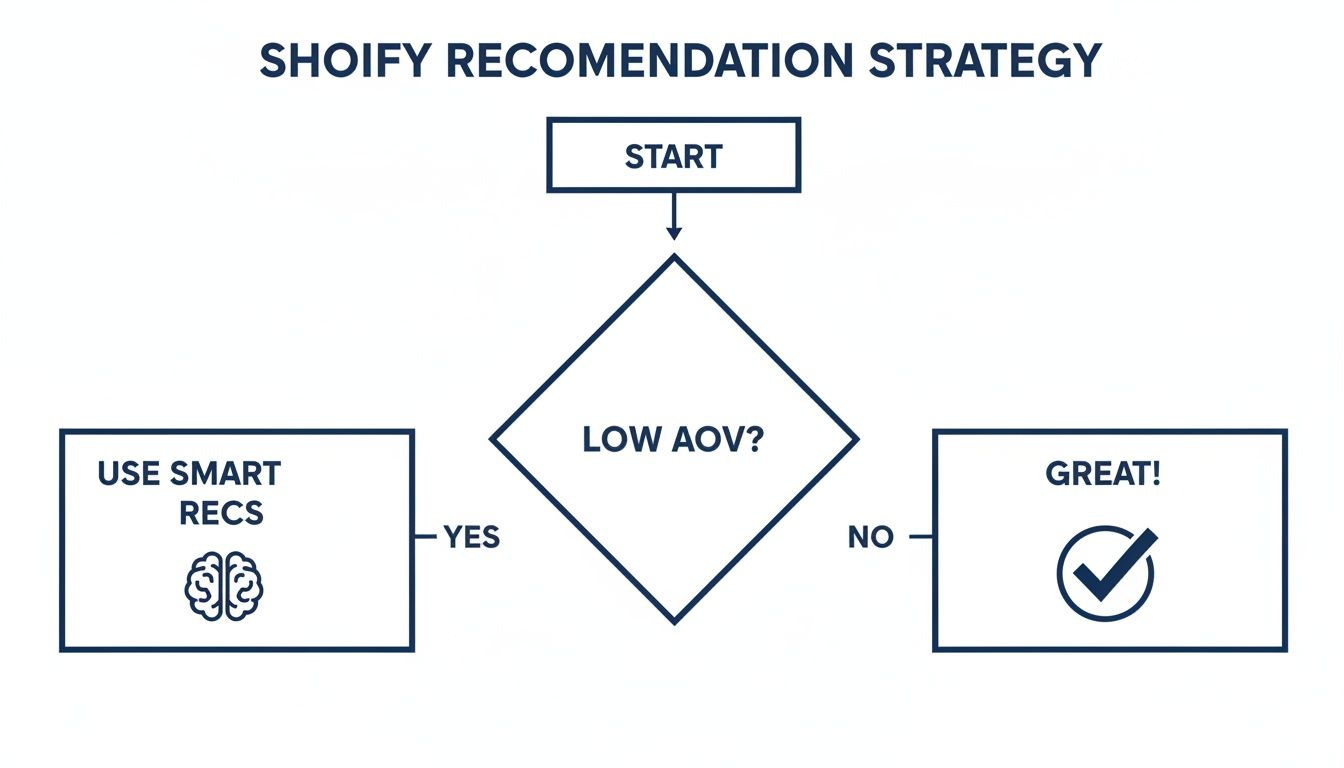
The key insight here is pretty clear: if your store is struggling with a low AOV, smart, automated recommendations are your most direct path to improvement.
The real magic happens when you move these offers from the product page into the cart itself. An intelligent slide-cart like Monster Cart can dynamically present these offers at the exact moment purchase intent is highest. You can set up specific rules to offer a complementary product that helps a customer hit a free shipping threshold, turning a simple suggestion into a tangible reward they actually want and increasing customer lifetime value.
The goal isn't just to sell more products; it's to create a more valuable cart. By focusing on reward-driven offers instead of discounts, you train customers to see the value in adding more, which is the key to sustainable AOV growth and better customer lifetime value.
Mastering Placement for High-Impact Recommendations
Where you put your Shopify product recommendations is just as important as what you recommend. You could have the most brilliant, data-driven suggestions in the world, but if they pop up at the wrong time or in the wrong place, they’ll just be ignored. The goal is to make your offer right when a shopper's intent to buy is at its absolute peak.
Sure, the product detail page (PDP) and the homepage are common spots to stick these widgets. But the single most powerful moment in the entire customer journey is when they're in the cart. This is it. They've shifted from just browsing to actively buying.
Disrupting that flow with a clunky full-page redirect or an annoying pop-up is one of the cardinal sins of e-commerce. Instead, a modern slide-out cart can turn this final step into a seamless, high-impact opportunity to increase the order. It keeps the customer in the moment, presenting relevant offers as a natural part of their checkout, not a jarring interruption.
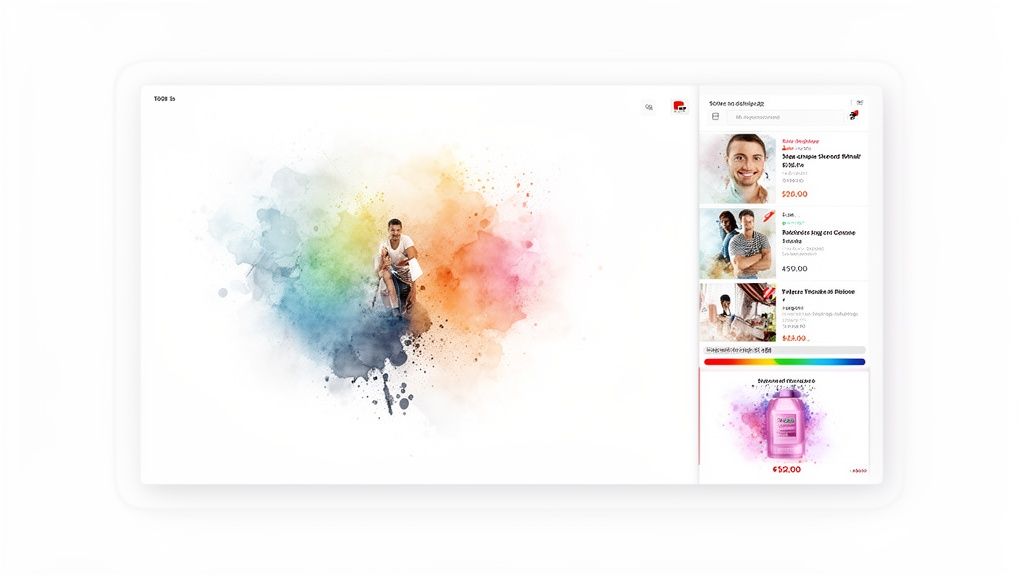
Why the Cart Is Your Conversion King
Think about the customer’s mindset for a second. On a PDP, they’re still weighing their options. On the homepage, they’re just exploring. But the second they add an item to their cart, their intent is crystal clear. This is your prime time to increase that order's value.
An intelligent slide-cart, like the one from Monster Cart, is built to capture this exact moment. It transforms the cart from a boring, static summary into an interactive, rewarding experience that actually helps you sell more while improving the customer experience.
The most effective recommendations don't just sell another product; they help the customer achieve a goal. This subtle shift in framing is what separates a pushy upsell from a valued piece of advice, directly impacting customer lifetime value.
Instead of just showing a list of other products, you can introduce gamified progress bars. These little visuals show customers exactly how close they are to unlocking a reward, like free shipping or a free gift. This strategy naturally encourages a bigger spend without you having to resort to margin-killing discounts. This is how you build a long-term relationship with customers.
Unlocking Value with Strategic In-Cart Offers
This is where you connect your product recommendations to tangible rewards, creating a win-win for you and your customer. Imagine a shopper sees they are only $10 away from free shipping. Right below that message, you suggest a perfectly paired $15 accessory. Suddenly, the upsell doesn't feel like an upsell at all—it feels like a smart tip that enhances their original purchase and saves them money on shipping.
This approach is also fantastic for surfacing high-performing items that don't get a ton of traffic on their own. Product recommendations shine brightest when they put a spotlight on the hidden gems in your Shopify catalog—those low-traffic items that convert way above your store's average. Highlighting these in the cart can dramatically lift your overall performance. If you want to dig deeper, you can learn more about identifying these high-converting products to see what's hiding in your own store data.
By integrating these offers directly into a slide-out cart, you create a frictionless path to a larger, more valuable order. It’s all about adding value rather than just discounting prices—and that's the key to building a healthier, more profitable business with customers who feel rewarded, not sold to.
Practical In-Cart Strategies to Boost AOV
Alright, let's move from theory to what actually works in the real world. Setting up powerful in-cart Shopify product recommendations isn't about being pushy; it’s about creating a seamless experience that guides customers to a better, more valuable order. This is exactly where tools built for this moment, like Monster Cart, really shine.
The trick is to shift your mindset from "upselling" to "rewarding." Constantly throwing discounts at people can seriously hurt your margins and train customers to expect sales. A much smarter play is to encourage a bigger spend by offering perks that build real loyalty and boost customer lifetime value.
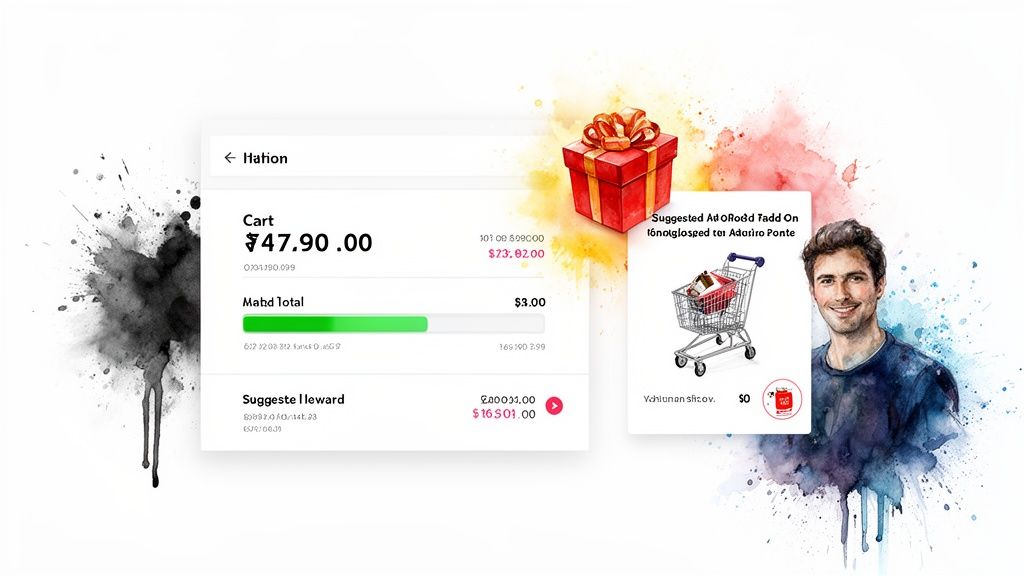
The interface above is a perfect example of turning the cart into a rewarding moment. It shows the customer exactly what they need to do to earn a bonus. This kind of visual feedback is a gentle nudge that feels helpful, not aggressive—and that's a huge win for building a positive brand vibe and lifting your AOV.
Crafting Your First Reward-Driven Upsell
Let's walk through a couple of actionable "recipes" you can set up right now. These are designed to feel like a natural part of the shopping journey, which is what makes your recommendations so much more effective.
The "Free Gift Unlock" is a classic for a reason. It just works.
Imagine a customer has $85 worth of products in their cart, and you've set up a free gift on orders over $100. Instead of just saying that somewhere on your site, you bring it right into the cart.
The Message: "You're only $15 away from unlocking a free gift!" The Recommendation: Show them a relevant, popular product that costs around $15-$20.
All of a sudden, adding that extra item feels like a brilliant move. The customer gets more value, and you lock in a higher AOV. You can take this even further by integrating strategies like effective coupon management to layer on more incentives for those in-cart upsells.
The Tiered Shipping Goal Recipe
Another killer strategy is the "Tiered Shipping Goal." We all know shipping costs are one of the biggest reasons people abandon their carts. So, turning that pain point into a motivation is a seriously powerful move.
This works beautifully when you have a clear spending goal for customers to hit.
Scenario: A customer's cart total is $42.
Threshold: Free shipping kicks in at $50.
Offer: Display a message like, "Add just $8 more to get free shipping!"
Recommendation: Showcase a "Frequently Bought Together" item that costs just over $8.
This simple tweak transforms a random product suggestion into a helpful solution. An app like Monster Cart provides that critical real-time feedback with a progress bar, gamifying the experience and encouraging shoppers to hit that next milestone, boosting their lifetime value.
By focusing on these value-driven rewards, you completely change the customer's mindset. They aren't just spending more; they're earning something. This builds a much stronger connection to your brand, driving repeat business and a healthier lifetime value.
If you're looking to explore different tools for the job, it’s worth checking out our guide on the best upsell apps for Shopify to find the perfect fit for your store.
Measuring and Optimizing Your Recommendation Strategy
Putting a set of Shopify product recommendations in place is a great start, but it's only half the battle. The real growth comes from paying close attention to what's working and what's not, then tweaking your approach based on real data.
If you can’t see what’s working, you’re just guessing. The trick is to tune out the noise and focus on the handful of metrics that actually move the needle for your business.
Forget getting bogged down in vanity metrics. We need to zero in on the Key Performance Indicators (KPIs) that have a direct line to your profitability. This means looking beyond simple click-through rates and seeing the bigger picture.
Your main goal here should always be to bump up your Average Order Value (AOV) and customer lifetime value. You get there by building more valuable shopping carts, not just by pushing more products at people. A winning strategy nudges customers to add items that unlock a reward—like a free gift or free shipping—rather than just another discounted product that eats into your margins.
The KPIs That Truly Matter
To really understand how your recommendations are performing, you need a crystal-clear view of your data. This is where a solid analytics dashboard becomes your best friend.
Here are the primary metrics you should be living and breathing:
Average Order Value (AOV): This is the big one. It’s the most direct signal of success. Are your recommendations actually encouraging customers to add more to their carts before checking out?
Upsell Take Rate: What percentage of shoppers who see a recommendation actually add it to their order? A high take rate is a clear sign that your offers are relevant and hitting the mark.
Conversion Rate: Are your in-cart offers helping or hurting your checkout process? A smooth, reward-focused approach should actually increase your overall store conversion rate, not create friction and cause people to abandon their carts.
A clean analytics dashboard, like the one built into Monster Cart, gives you a real-time pulse on your ROI. It cuts through the fluff and shows you exactly how much extra revenue your in-cart campaigns are bringing in, letting you make smart, data-driven decisions on the fly.
Using Data to Refine Your Offers
Once you start tracking these KPIs, you can begin to make much smarter moves. You're no longer operating on gut feelings.
For instance, you could A/B test a “Frequently Bought Together” bundle against a single personalized recommendation. Which one drives more revenue per session? Your data will give you the answer.
Does a free gift offer convert better than a free shipping threshold? Test it. Maybe you find out that suggesting add-on items priced between $10-$15 has the highest take rate for unlocking rewards. That’s a powerful insight you can use to fine-tune your entire strategy for maximum profit.
This constant loop of testing and optimizing is what separates the good stores from the truly great ones. And remember, this is just one piece of the puzzle. Understanding the wider principles of conversion rate optimization can give you a more complete toolkit for improving your store's performance. For more ideas, it's worth exploring broader conversion rate optimization strategies to sharpen your overall approach.
At the end of the day, your data tells a story about what your customers really want. By listening to it and continuously refining your offers, you can build a recommendation engine that not only boosts AOV but also builds stronger customer loyalty and lifetime value.
For more hands-on tips, check out our detailed guide on Shopify conversion rate optimization.
Your Product Recommendation Questions, Answered
Jumping into product recommendations can bring up a few questions. That's a good thing—it means you're thinking strategically. I've pulled together some of the most common questions I hear from merchants to help you get started on the right foot.
Let's clear up a few things.
Will Adding Recommendations Slow Down My Store?
This is probably the number one concern, and it's a valid one. Nobody wants to trade a higher AOV for a sluggish site.
The good news is that modern, well-built apps are designed specifically for performance. Tools like Monster Cart use what’s called asynchronous loading. In plain English, this means the recommendation engine loads separately from the rest of your page, so it won’t hold up your core content or slow down that critical initial load time.
In-cart recommendations are especially lightweight. Since they only load inside the slide-cart drawer after a customer interacts with it, they have zero impact on the initial speed of your product or collection pages. Just make sure you choose a solution that has a solid reputation for speed.
How Do I Know Which Products to Recommend?
Start with what your customers are already telling you. Your own sales data is a goldmine. The best tools automatically analyze your order history to generate "Frequently Bought Together" bundles based on real purchasing patterns.
If you're setting up manual cross-sells, think logically. What makes sense? A cleaning kit for a new pair of leather boots, or batteries for an electronic toy. It’s about making the primary purchase even better.
For the biggest impact, look for AI-powered tools that go a step further. They analyze individual browsing and buying behavior to serve up truly personalized suggestions. But no matter what, always A/B test your offers. Data will always beat guesswork when it comes to figuring out what really resonates.
Do I Have to Offer Discounts with Recommendations?
Absolutely not—and you really shouldn't! The most profitable way to boost your AOV is by framing recommendations as a way to add value, not as another discount.
The goal is to move away from constant sales and focus on building a more valuable cart. This strategy not only increases AOV but also cultivates stronger customer loyalty and improves lifetime value.
Instead of cutting prices, use Shopify product recommendations to help shoppers unlock a reward, like free shipping or a gift with purchase.
For example, a simple message like, "You're just $10 away from a free gift! Add this popular accessory to claim it," completely reframes the interaction. It turns a salesy upsell into a helpful tip, encouraging a bigger cart while keeping the focus on the value of the reward. It’s a smarter approach that strengthens your brand and your bottom line.
Ready to turn your cart into a high-converting rewards engine? Monster Cart makes it easy to implement powerful in-cart upsells and recommendations that boost AOV without annoying pop-ups. Start your free trial and see the difference it makes.
Join 7000+ brands using our apps