Up Selling and Cross Selling Difference A Guide to Higher AOV
Feb 14, 2026
|
Published
Let’s get one thing straight: upselling and cross-selling aren't the same thing, but people mix them up all the time. The difference is actually pretty simple. Upselling is about persuading a customer to buy a more expensive, upgraded version of the same product. Think bigger, better, faster.
Cross-selling, on the other hand, is about suggesting related items that make the original purchase even better. It’s the classic, "You bought the laptop, now you need the mouse and keyboard."
Defining Your AOV Growth Strategy
For any Shopify merchant, figuring out which of these two strategies to use—and when—is the first real step toward pumping up your Average Order Value (AOV). While they both lead to a bigger cart, they tap into completely different customer mindsets.
Upselling appeals to a customer’s desire for higher quality or more features, directly beefing up the value of a single item. Cross-selling is all about convenience and creating a complete solution, stacking more relevant items into the cart to round out the purchase. For a deeper dive into how these tactics fuel revenue, you can check out some great insights on FastSimon.com.
Too many merchants fall into the trap of using heavy discounts to drive sales, but that's a race to the bottom that kills your margins and cheapens your brand over time. A much smarter play is to use upselling and cross-selling to add genuine value. Instead of just slashing prices, think about rewarding customers with a free gift or free shipping for spending more. This boosts AOV while strengthening the customer relationship and building long-term lifetime value.
The goal is to shift the customer's mindset from "How can I save money?" to "What extra value can I get?" This is where strategic, non-disruptive offers like those in Monster Cart become your most powerful tool for sustainable growth.
Let's break down the fundamental differences side-by-side.
Upselling vs Cross-Selling At a Glance
To make it crystal clear, here’s a quick table that lays out the core distinctions between the two approaches. It’s a handy reference for thinking about which strategy fits a specific goal or customer touchpoint.
Criteria | Upselling | Cross-Selling |
|---|---|---|
Main Goal | Increase the value of a single item. | Increase the total number of items per order. |
Customer Action | Purchases a premium or upgraded version. | Purchases additional, complementary products. |
Product Focus | A better version of the same product. | Different but related products. |
Core Benefit | Provides enhanced quality, features, or performance. | Adds convenience or a more complete solution. |
Example | Upgrading from a 13" laptop to a 15" model. | Buying a laptop bag and mouse with the laptop. |
This table shows how each tactic serves a different purpose. One is about depth (a better single item), while the other is about breadth (more related items).
Instead of relying on annoying pop-ups that interrupt the shopping flow, modern tools like Monster Cart weave these offers seamlessly right into the shopping cart. This lets you present relevant rewards—like a free gift for hitting a spending tier or one-click add-ons—creating a frictionless experience that feels genuinely helpful, not pushy. This method encourages bigger carts naturally, building loyalty and driving profitable growth without hefty discounts.
Choosing Your Strategy: When to Upsell vs. Cross-Sell
Okay, so you get the difference between an upsell and a cross-sell. That’s step one. The real money is made in knowing exactly when to use each tactic. This isn't about picking the "better" strategy; it's about picking the right one for a specific customer at a specific moment in their journey. It all comes down to timing, context, and delivering genuine value.
Upselling hits the mark when a customer has already zeroed in on a product. They’ve done their homework, they're ready to pull the trigger, and that makes them open to a better version—something with more features, higher quality, or just plain better long-term value. You’re simply enhancing a decision they’ve already made.
Cross-selling, on the other hand, is your go-to when a customer’s cart is missing its natural companions. Your job here is to complete the picture for them, suggesting items that make their main purchase even better or more useful. It's a way of helping them discover products they probably would have wanted anyway, but might not have found on their own.
The Right Offer at the Right Time
Deciding between an upsell and a cross-sell often boils down to a simple question: Is your customer trying to get the best possible version of one thing, or are they trying to build a complete solution?
This decision tree gives you a clear visual for making that strategic choice right after a customer adds an item to their cart.
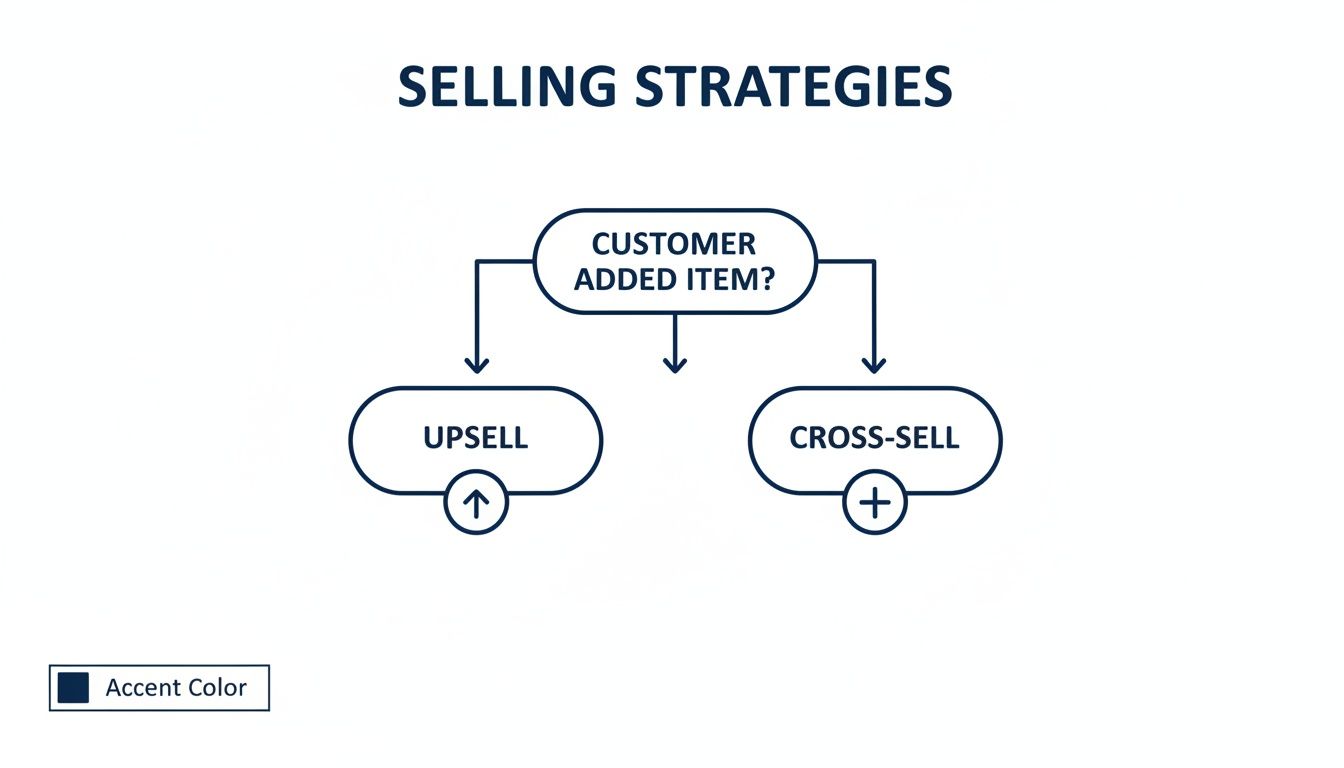
As you can see, it’s a fork in the road. One path enhances the value of a single product (the upsell), while the other adds related items to build a more complete purchase (the cross-sell).
The key is to avoid overwhelming your customer. A well-timed offer feels like helpful advice; a poorly timed one feels like a pushy sales pitch. Focus on improving their experience and lifetime value, not just inflating the order size with discounts.
This customer-first mindset is what drives customer lifetime value (LTV). Instead of just trying for a quick win, you're guiding them to a better overall solution. For example, you can strategically introduce Frequently Bought Together recommendations—a proven method for effective cross-selling. To get the full playbook on this, check out our guide on how to use Frequently Bought Together tactics to level up the customer experience.
Real-World Shopify Scenarios
Let's break it down with a couple of concrete examples:
Upsell Scenario: A customer adds a standard blender to their cart. An in-cart offer could pop up suggesting an upgrade to the pro model, pointing out its more powerful motor and longer warranty for a small price bump.
Cross-Sell Scenario: A customer is buying a new camera. Inside the cart, you can suggest a compatible memory card and a protective case as simple, one-click add-ons.
In both cases, the offer is relevant, helpful, and adds real value. This is exactly where a tool like Monster Cart shines, letting you build these offers directly into the cart experience itself. You can set up progress bars that motivate customers to spend just a little more to unlock a free gift or free shipping, turning a simple purchase into a more rewarding interaction. You get a higher AOV without ever resorting to margin-killing discounts.
Measuring the True Impact of Your Offers
Launching upsell and cross-sell campaigns is only half the job. Knowing if they actually work is what separates brands that grow from those that just guess. To get a real sense of your strategy's impact, you need to track the right Key Performance Indicators (KPIs) for each type of offer. This is how you move from wishful thinking to data-driven decisions.
When it comes to upselling, your goal is simple: increase the value of a single transaction. Success isn't just about a bigger top-line number; it's about making each sale more profitable.
Upsell Take Rate: This is the big one. It’s the percentage of customers who actually accept your upsell offer. A high take rate is a clear sign that your premium version or upgrade offers genuine, compelling value.
Profit Margin Impact: Don't just look at revenue. Track how much the average profit per transaction increases. A great upsell should directly pad your margins, not just inflate the AOV.
For cross-selling, the objective is a little different. You're trying to increase the number of items in the cart by creating a more complete solution for the customer.
Attachment Rate: This metric tracks how often a complementary product is sold alongside a primary item. It's a direct signal of how well you're bundling related products and making relevant suggestions.
Average Items Per Order: If this number is climbing, your cross-sell recommendations are hitting the mark. It means shoppers are seeing the value in adding more to their carts before checking out.
Looking Beyond a Single Transaction
While boosting your Average Order Value (AOV) is a fantastic short-term win, the real endgame is building long-term customer relationships. This is where Customer Lifetime Value (LTV) becomes your most important metric. Smart, value-driven offers—like using a free gift to reward a certain spend threshold instead of offering a hefty discount—do more than just juice up one order. They create positive experiences that turn one-time buyers into repeat customers.
Sustainable growth isn't built on one-time sales spikes. It's built by consistently adding value through rewards, which turns first-time buyers into loyal, repeat customers who trust your recommendations and increase lifetime value.
Tracking these metrics tells you which offers are genuinely resonating with your audience and which ones are falling flat. This is where having the right analytics is non-negotiable. For instance, a tool like Monster Cart gives you a dashboard to monitor your in-cart campaigns in real time. You can see precisely how many customers are engaging with your free gift tiers or clicking on one-click add-ons, giving you the hard data you need to refine your strategy.
By focusing on LTV, you shift your mindset from simply making a sale to building a profitable, long-lasting customer base.
Implementing High-Converting Offers Without Annoying Customers
Successful upselling and cross-selling all come down to one thing: the customer experience. For years, merchants relied on those disruptive, full-screen pop-ups that hijacked the entire shopping journey. While they definitely grab attention, they mostly just create friction, leading to frustrated clicks and abandoned carts. Shoppers today expect something much smoother.
This is where you see the huge difference between an intrusive interruption and a genuinely helpful suggestion. The goal is to make your offers feel like a natural part of the shopping flow, not a roadblock. Instead of a jarring pop-up, imagine presenting relevant add-ons or cool rewards directly inside a sleek, slide-out cart.
This in-cart approach respects the customer's momentum. It lets them see and interact with offers without ever leaving the page, creating a seamless path to checkout that boosts both your conversion rate and your customer's happiness.
Driving AOV with In-Cart Rewards
The most effective offers make customers feel like they're unlocking value, not just being sold to. This is where a rewards-based system really shines, encouraging bigger carts without having to lean on deep discounts that just eat away at your margins.
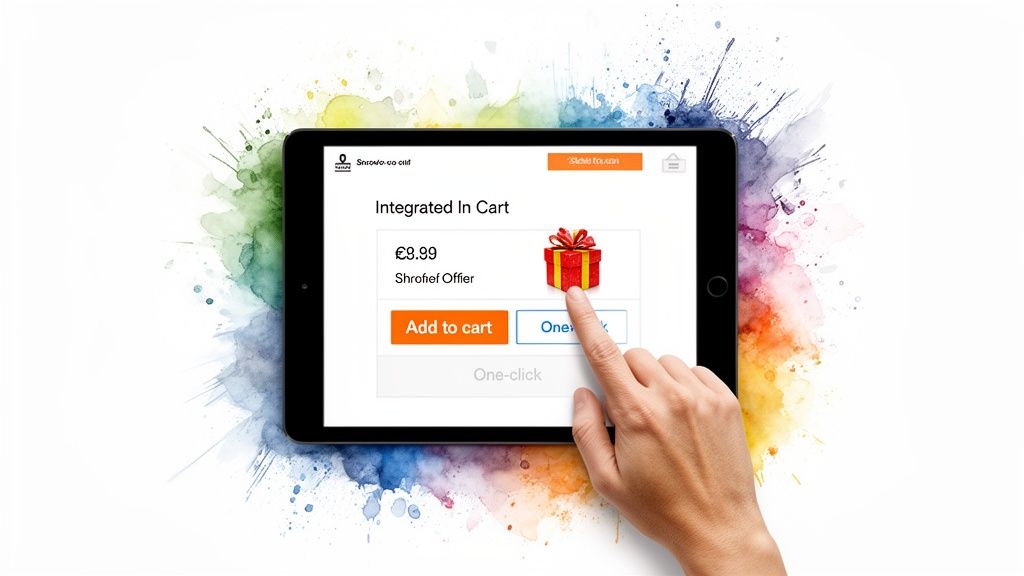
A modern cart solution like Monster Cart can transform the standard Shopify cart into an interactive rewards engine. You can build a gamified experience where customers are actually motivated to increase their order size to earn real, tangible benefits.
Consider these powerful, non-disruptive tactics you can run right in the cart:
Tiered Free Gifts: Set up a progress bar that visually shows shoppers how close they are to unlocking a free gift. A simple "Spend $15 more to get a free travel-size moisturizer!" gamifies the experience and frames a bigger spend as a fun achievement.
Spend-to-Unlock Milestones: Offer rewards that get better as the cart grows, like free shipping at $50 and a free gift at $75. As customers add items, the cart updates in real-time, showing them the next value tier they can hit.
One-Click Add-Ons: Suggest valuable, low-cost items like shipping protection or priority processing. These are simple, convenient cross-sells that can incrementally boost AOV with just a single click.
The key is to shift the customer’s focus from "How can I save money?" to "What extra value can I earn?" This reward-based approach builds a much healthier, more profitable relationship centered on lifetime value, not discounts.
Seamlessly Integrating Upsell and Cross-Sell Offers
Beyond just rewards, the in-cart experience is the perfect spot for strategic product recommendations. By presenting offers inside the cart drawer, you catch the customer when their purchase intent is at its absolute peak, making them far more receptive to relevant suggestions.
It’s no surprise that this model helps fuel 35% of Amazon's revenue through persistent recommendations. Data confirms this across the board: 72% of sales professionals call upselling and cross-selling their top revenue driver, contributing 10-30% of AOV on average.
This method allows you to execute both upselling and cross-selling flawlessly:
For Cross-Selling: Use a "Frequently Bought Together" section to recommend complementary items. If a customer adds a coffee maker, the cart can instantly suggest a bag of your best-selling beans and a set of filters.
For Upselling: While less common in-cart, you can offer product upgrades as a simple one-click switch right before checkout, highlighting the enhanced value of the premium version.
By building these offers into a dynamic slide cart, you create a sophisticated and frictionless experience. You can find more ideas by exploring our list of the best upsell apps for Shopify that help merchants achieve these goals. This ensures your efforts feel helpful, not pushy, driving higher AOV while strengthening customer loyalty and lifetime value.
Crafting Irresistible Messages That Convert
The difference between a killer offer and a missed opportunity often boils down to the words you use. Crafting the right message is everything when you’re trying to frame an upsell or cross-sell so it feels helpful, not just pushy. Your language has to connect with what the customer is feeling in that exact moment.
For an upsell, your messaging needs to scream superior value and long-term benefits. You’re asking the customer to spend a little more, so the return on that investment has to be crystal clear. Vague promises won’t get you anywhere; you have to be specific about what the upgrade actually delivers.
Upsell Messaging: It's All About Value and Benefits
Focus your copy on the tangible improvements that justify the higher price. This helps customers instantly visualize the better experience they’re about to get, which makes saying "yes" to the upgrade a total no-brainer.
Before: "Buy the Premium Blender"
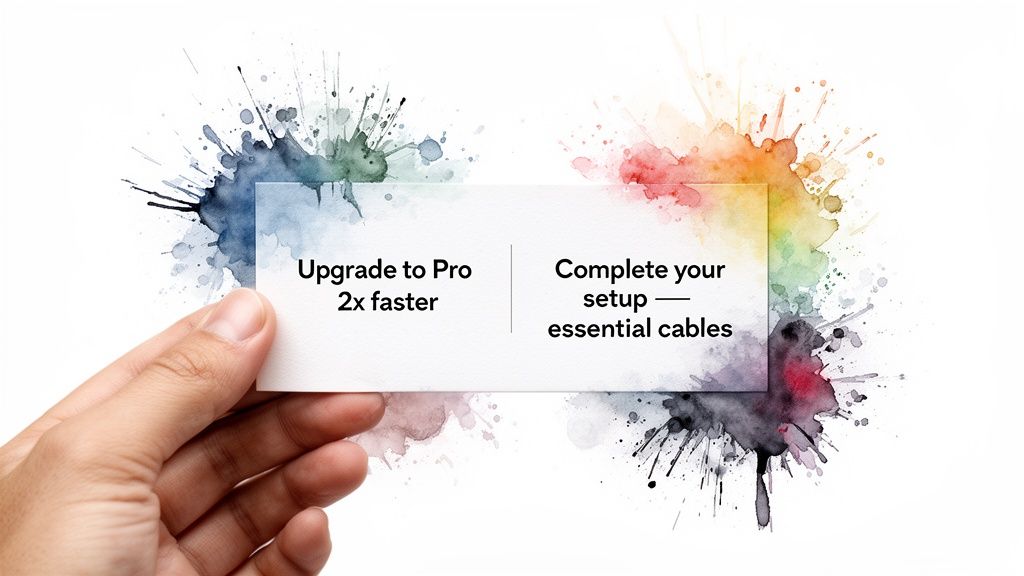
After: "Upgrade to the Pro Blender for 2x the power and a 5-year warranty"
The "After" example just works. It quantifies the benefit (2x the power) and throws in a layer of security (5-year warranty), hitting on potential worries and cementing the long-term value.
Cross-Sell Messaging: Sell Convenience and Completion
Cross-selling language should feel like a helpful tip, emphasizing convenience and making the original purchase even better. Your goal is to show the customer you get them by offering the perfect companion piece.
Before: "Add these cables"
After: "Complete your setup with these essential cables"
See the difference? The new version frames the cross-sell as a smart suggestion to create a full solution. It’s not just some random add-on; it's the missing piece. That simple shift in wording turns a sales pitch into a genuinely useful recommendation.
The most effective messages are always customer-centric. They solve a problem, add real value, or make an experience better—which is infinitely more powerful than just trying to push another product or offer a discount.
Having a fully customizable in-cart experience, like the one Monster Cart offers, is essential for nailing this. It lets you A/B test different headlines, calls-to-action, and reward descriptions to figure out what actually clicks with your audience. You can then tweak your copy based on real data, making sure your offers are always dialed in for maximum impact.
This approach is a core part of a bigger focus on the entire customer journey. For a deeper look at maximizing customer value and driving overall growth, it's worth exploring advanced website conversion rate optimization strategies.
Ultimately, testing your messaging is how you boost AOV and customer lifetime value without falling back on steep discounts. By framing offers around value—whether that’s a free gift, free shipping, or a powerful upgrade—you protect your profit margins and build a brand that customers actually trust.
Growing Your AOV Beyond Discounts
Let's be honest, the endless cycle of sales can feel like a race to the bottom. So many merchants get caught in the trap of using heavy discounts to pump up their Average Order Value (AOV), but it's a short-sighted strategy. You end up chipping away at your profit margins and, even worse, training customers to only buy when you're on sale.
There’s a much smarter way to grow. It’s about building a rewards system that adds real value to the shopping experience, encouraging customers to spend more because they want to, not because you’ve slashed prices.
This is the real up selling and cross selling difference in action: you’re not making things cheaper, you’re making the entire purchase more rewarding. The goal is to shift your customer’s focus from hunting for a bargain to unlocking genuine benefits.
From Discounts to Rewards
A well-designed rewards system can turn your shopping cart into a powerful growth engine. It creates a dynamic where customers are motivated to add just one more item to their cart—not to save a few bucks, but to earn something tangible in return. This builds a much healthier, more profitable relationship centered on lifetime value, not just transactions.
Here’s how this value-first approach looks in practice:
Free Shipping Tiers: That little progress bar saying, "You're just $10 away from free shipping!" is one of the most powerful motivators in ecommerce.
Free Gift with Purchase: Offering a cool, exclusive gift for orders over $75 makes a bigger purchase feel like a victory.
Progressive Rewards: Give customers a clear path and a solid reason to increase their cart size, perhaps with tiered discounts or better free gifts at higher spend levels.
The strategy here is all about elevating the customer experience. You’re not just moving products; you're creating an engaging journey where shoppers are rewarded for their loyalty, which is the cornerstone of great lifetime value.
The best part is, you can manage this entire experience with a tool like Monster Cart. It lets you build these interactive reward tiers right into a slide-out cart, creating a frictionless and genuinely fun path to checkout. By focusing on earned value like free gifts instead of steep discounts, you protect your margins and build a brand that customers actually love.
To get the most out of these offers, it helps to understand the broader strategies that increase website conversions, since upselling and cross-selling are, at their core, powerful conversion tactics.
Your Questions, Answered
For a New Shopify Store, Should I Focus on Upselling or Cross-Selling First?
For a brand-new store, cross-selling is almost always the smarter first move. It’s a much simpler strategy to get off the ground—all you have to do is suggest related, often lower-priced, items to help pad out the cart.
This approach gives you an immediate AOV boost while you start gathering the crucial customer data you'll need to build more targeted and effective upsell offers down the road. It's a great way to increase lifetime value from the very beginning by providing a better, more complete customer solution.
Can I Use Upselling and Cross-Selling at the Same Time?
You absolutely can, but it’s a delicate balance. The key is to avoid bombarding your customers with a wall of offers, which can feel overwhelming and a little desperate.
A great strategy is to present a compelling upsell on a product page, and then, once they've added an item to their cart, introduce a few complementary cross-sells. Using an in-cart offer system like Monster Cart keeps the experience smooth and prevents annoying pop-ups from disrupting the checkout flow.
The goal is to add genuine value at every single step. Instead of just throwing discounts at them, think about rewarding customers with a free gift or free shipping for a higher spend. That feels like a win for them and builds much more customer lifetime value for you.
How Do I Figure Out Which Products to Recommend for Cross-Selling?
Start by digging into your own order data. Look for patterns and see which products your customers are already buying together. That’s your gold mine.
If you’re just starting out and don't have a ton of data yet, a good app like Monster Cart can provide "Frequently Bought Together" recommendations based on store-wide sales data from shops like yours. This data-driven approach takes the guesswork out of the equation and makes sure your offers are always on point, helping you boost AOV without relying on discounts.
Ready to boost your AOV and build customer loyalty without constantly running sales? Monster Cart transforms your cart into a rewards engine with free gifts, shipping progress bars, and one-click add-ons.
Join 7000+ brands using our apps