Boost AOV with upsell apps on shopify: no annoying pop-ups
Feb 22, 2026
|
Published
Let's be real: with ad costs constantly climbing, just getting new customers in the door is getting more expensive by the day. That’s why smart Shopify store owners are turning their focus inward, and upsell apps on Shopify have become their secret weapon for boosting profitability.
This isn't about being pushy or using aggressive sales tactics. It's a fundamental shift in strategy. The goal is to make every sale a great one by encouraging the customers you already have to add a little more to their cart, boosting both your Average Order Value (AOV) and their lifetime value.
Why Smart Upselling Is Your Best Growth Strategy
Relying on a constant stream of new customers to grow your business just isn't a sustainable model anymore. The real path to a healthy bottom line is by maximizing the value of every single person who lands on your site.
This is where upselling evolves from a simple sales trick into a core part of the customer experience. The main goal is to lift your Average Order Value (AOV)—the average amount each customer spends. But how you get there is what separates the pros from the amateurs.
Moving Beyond Discounts
Forget slashing prices and training your customers to wait for the next big sale. That's a race to the bottom that eats away at your margins. A much smarter approach is to focus on adding more value to their cart through rewards.
Imagine offering a fantastic free gift once a customer's cart hits a certain amount. This simple gesture does more than just bump up a single sale; it creates a positive, rewarding feeling that builds genuine brand loyalty and increases their lifetime value. The customer feels like they've earned a special bonus, not just taken advantage of a discount.
Smart upselling should feel like a helpful suggestion from a friend. It enhances the shopping journey, makes the customer's purchase even better, and leads to higher satisfaction and increased Customer Lifetime Value (LTV).
This shift in mindset is everything. You're not just trying to make a quick buck; you're building a real relationship that keeps people coming back. And the numbers don't lie. In the hyper-competitive world of Shopify, one report found that stores adding just two strategic upsells saw their revenue jump by a staggering $93,000. It's proof that these small adjustments can have a massive impact.
Building a Healthier Business Model
By focusing on value-adds like free gifts, complimentary shipping, or exclusive product bundles, you build a much more resilient and profitable business. This approach sets the stage for powerful tools, like an in-cart rewards engine, that can turn a standard shopping cart into a dynamic part of your store that actively drives growth. An app like Monster Cart excels at this, turning your cart into a rewards-driven powerhouse.
For a wider look at how to get the most out of every visitor, you should check out these proven ecommerce conversion rate optimization tips.
Not all upsell strategies are created equal. When you're sifting through the dozens of upsell apps on Shopify, it’s easy to get lost. But here’s the most important thing to remember: the way you upsell has a massive impact on the customer experience.
Some methods are pushy, feel disruptive, and can actually kill your conversions. Others integrate so smoothly they feel like a genuinely helpful part of the shopping journey. Let's break down the common approaches so you can move away from aggressive tactics and towards a strategy that boosts your average order value and makes customers feel good about their purchase.
Product Page and Pop-Up Offers
One of the first places merchants try to upsell is right on the product page. You've seen this a million times—a "frequently bought together" section or a bundle offer sitting right below the "Add to Cart" button. While it can work, it often happens too early. The customer hasn't even decided to buy the first item yet, and you're already asking for more.
Then you have pop-up offers. These are the attention-grabbers, usually triggered when someone adds an item to their cart. An overlay window suddenly appears with a special deal. They definitely get noticed, but they're also a huge source of friction. Pop-ups interrupt the customer's flow, can be a pain to close on mobile, and often come across as a high-pressure sales tactic. This interruption can easily backfire, leading to a slammed laptop and an abandoned cart.
Post-Purchase Upsells
Another popular play is the post-purchase upsell. This one waits until after the customer has already paid and completed their checkout. Just before they hit the final "thank you" page, you present them with a one-time offer.
This strategy is clever because it hits the customer when their buyer intent is at its absolute peak. They've already trusted you with their payment details, so adding another item is often just a single click away. It’s incredibly low-friction, and studies show these one-click offers can have an impressive take rate, sometimes as high as 15%.
While it's a powerful way to capture a second sale, this method completely misses the chance to increase the value of the initial order. It’s great for a quick win, but it doesn't help build that first cart, which is crucial for long-term profitability and customer lifetime value.
In-Cart Offers and Rewards
This brings us to what is easily the most seamless and customer-friendly approach: the in-cart upsell. Instead of a jarring pop-up or a last-ditch offer after the sale, these promotions happen directly within the shopping cart or a slide-out cart drawer.
This method completely transforms the cart from a boring summary of items into an interactive, motivating space. Here’s where it really shines:
Progress Bars: Nothing works better than a visual cue showing customers how close they are to a reward. Think: "You're only $15 away from free shipping!"
Tiered Rewards: You can set up a ladder of incentives. Maybe at $50 they unlock free shipping, and at $100 they get a full-size free gift. It gamifies the experience.
One-Click Add-Ons: Suggesting small, relevant items like gift wrapping or shipping protection right in the cart is an easy, helpful way to bump up the total.
This integrated approach makes upselling feel like a natural part of the shopping experience. You're rewarding the customer for spending more, not interrupting them. That's the fundamental difference between a simple transaction and building a loyal customer relationship. This is the exact philosophy that an app like Monster Cart is built on.
To get the most out of this, it's worth understanding the key differences between upselling and cross-selling and how to apply each. By focusing on adding value inside the cart, you're paving the way for a better, more profitable customer journey.
Let's quickly compare these methods side-by-side to see how they stack up.
Comparing Common Shopify Upsell Methods
This table breaks down the most popular upsell strategies, looking at how they typically perform and where they fit best.
Upsell Method | Typical Conversion Rate | User Experience Impact | Best For |
|---|---|---|---|
Product Page Offers | 1-5% | Medium - Can be distracting before the buy-in. | Product discovery and showcasing bundles. |
Pop-Up Offers | 3-8% | High (Negative) - Often disruptive and annoying. | Grabbing attention for aggressive, can't-miss deals. |
Post-Purchase Upsells | 8-15% | Low - Frictionless since payment is complete. | Capturing a second, impulse-driven sale. |
In-Cart Rewards | 10-30%+ | Low (Positive) - Feels helpful and rewarding. | Organically increasing AOV and customer lifetime value. |
As you can see, the methods that feel the most integrated and helpful tend to have the biggest positive impact on both your conversion rates and the customer's overall experience. Disruptive tactics might work in the short term, but a rewards-based, in-cart approach is what builds a more profitable business for the long haul.
The Power of In-Cart Rewards Over Pop-Ups
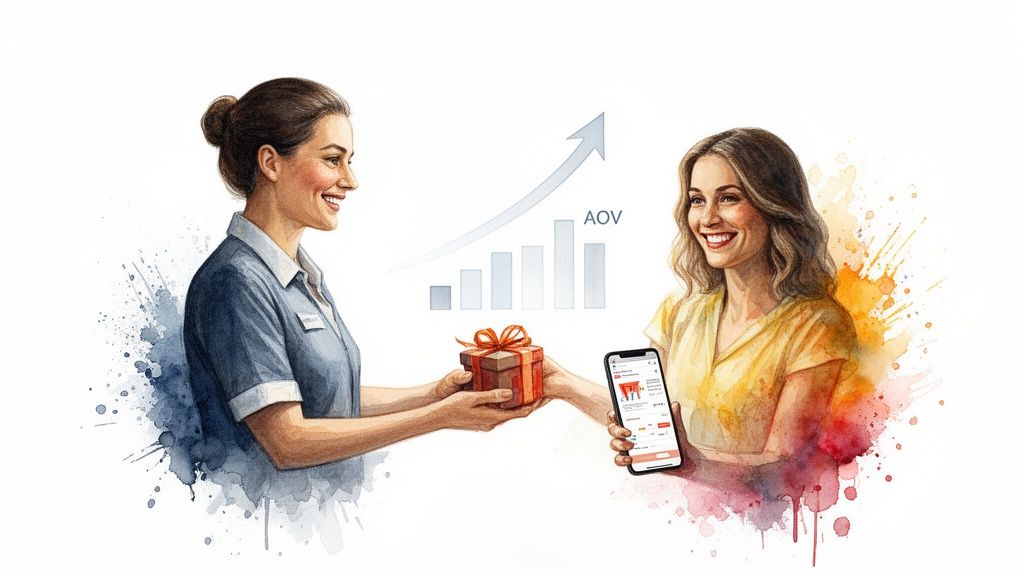
Imagine you're in a store, about to head to the checkout. Suddenly, a salesperson jumps in front of you, blocking your path to pitch another product. Annoying, right? That’s what a disruptive pop-up does online. Now, picture a friendly store assistant pointing out a special offer right at the counter—a free gift if you grab one more small item. That’s the difference between an aggressive upsell and a smart, in-cart reward.
Many upsell apps on Shopify still rely on those jarring pop-ups that hijack the screen, creating friction at the worst possible moment. A much better way is to turn your shopping cart from a simple list of items into an interactive rewards engine. Instead of interrupting the customer, you weave rewards right into the shopping flow, making it feel less like a hard sell and more like a fun game. This builds excitement and encourages people to add more to their cart because they want to.
From Static Cart to Dynamic Rewards Engine
Think about the standard cart experience—it's pretty boring. It's just a static list of products waiting for a credit card. But what if your cart could do more? What if it updated in real-time as customers shopped, showing them exactly how close they were to unlocking their next reward?
This is where the magic happens. You’re not just showing them a total; you’re showing them a goal.
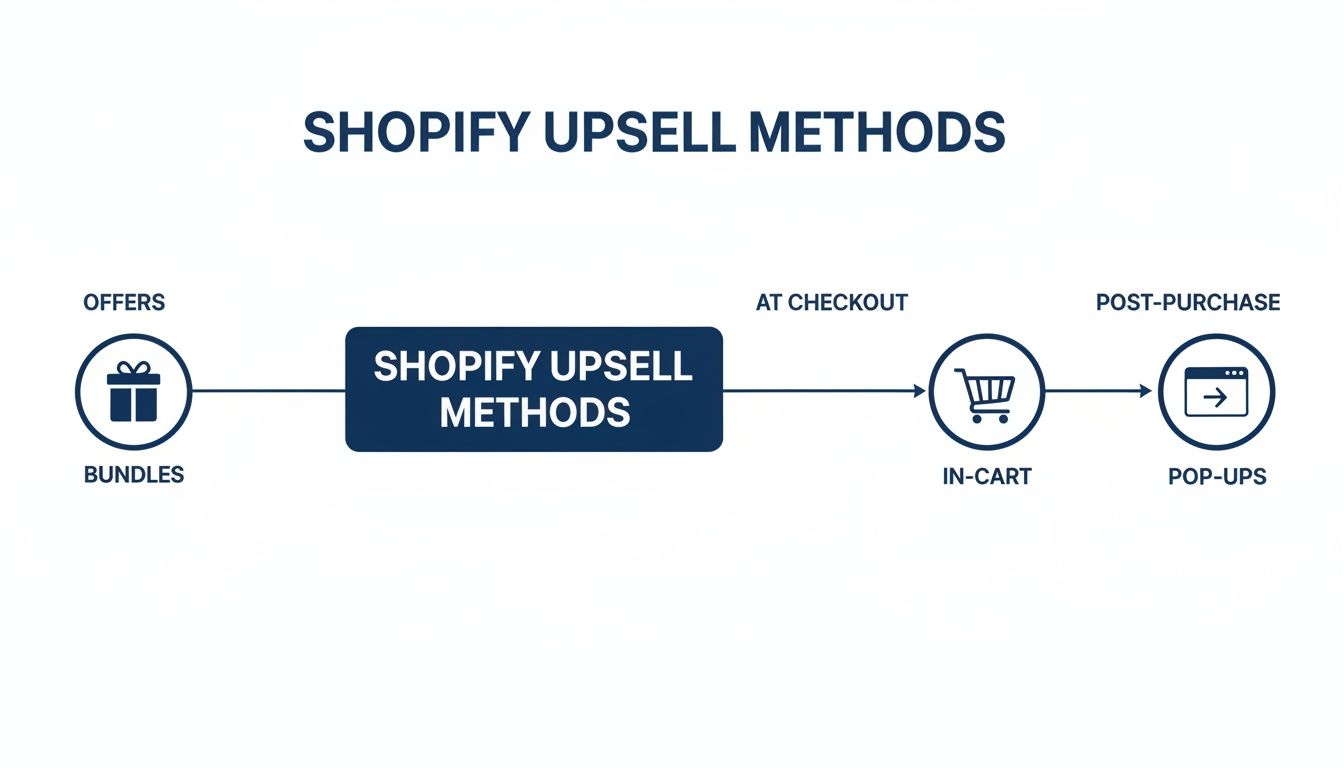
As you can see, in-cart offers sit perfectly in the middle of the shopping journey. They act as a natural bridge between browsing and buying, unlike pop-ups that feel like a roadblock. This is exactly where apps like Monster Cart shine. They transform the slide-out cart into a dynamic space that boosts AOV by adding value, not friction.
Gamifying the Shopping Experience
The real genius of an in-cart rewards engine is how it "gamifies" spending. By using visual cues and clear goals, you make customers feel smart and accomplished for spending a little more.
Here are a few ways this works in practice:
Progress Bars: A progress bar that fills up as a customer's cart value increases is a powerful motivator. Seeing a message like, "You're just $10 away from free shipping!" creates a clear, achievable goal they can act on immediately.
Tiered Free Gifts: Don’t stop at one reward. Create tiers like, "Spend $50, get free shipping; spend $100, get a full-size product." This encourages shoppers to aim for the next level, bumping up their total spend.
One-Click Add-Ons: Suggesting small, relevant items like shipping protection or gift wrap directly in the cart feels like a genuinely helpful tip, not a desperate upsell.
This whole approach is about boosting your Average Order Value (AOV) without resorting to margin-killing discounts. By offering value-driven rewards like a free gift, you protect your profits and create a far more memorable brand experience—a key driver of customer lifetime value.
When you focus on rewards instead of interruptions, you're not just closing a sale; you're building a relationship. Customers feel appreciated and rewarded, which makes them far more likely to come back. And if you're looking for compelling offers to build, learning how to bundle products as a "frequently bought together" deal is a fantastic place to start.
What to Look for in a Shopify Upsell App
Choosing from the sea of upsell apps on Shopify can feel like a chore, but picking the right tool is about more than just showing a few extra offers. The best apps protect your store's performance while genuinely boosting its bottom line. It's easy to get lost in feature lists, but what truly matters is how an app performs in the real world.
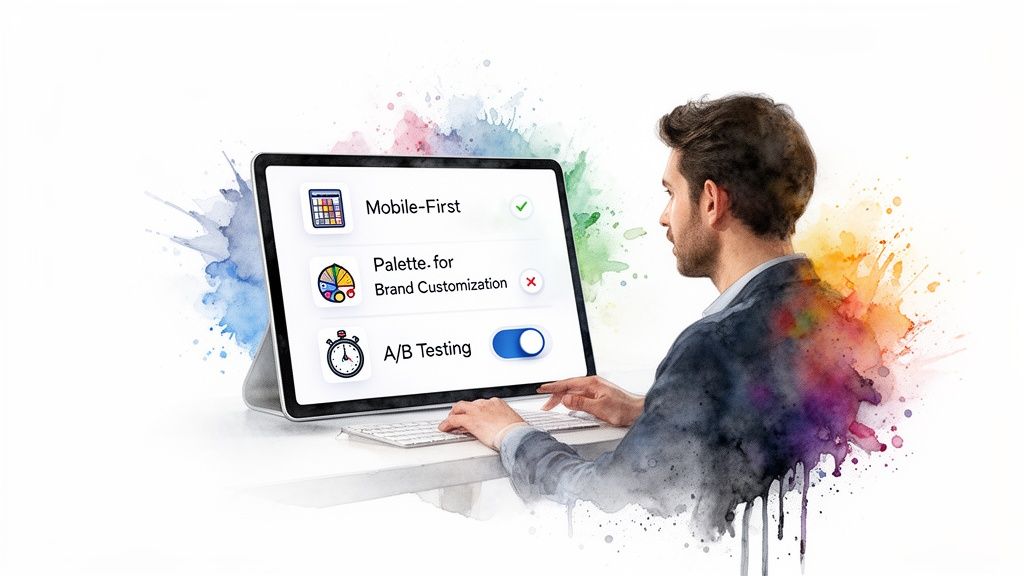
Your number one priority has to be a mobile-first design. With more than half of all online sales happening on a phone, any upsell experience that feels clunky or broken on a small screen is just leaving money on the table. The offers need to be crystal clear and easy to tap, never getting in the way of that final checkout button.
Core Features That Actually Drive Revenue
Beyond just working well on mobile, there are a few non-negotiable features that separate the basic apps from the ones that will become a core part of your growth strategy.
Deep Brand Customization: Your upsell offers should look and feel like they belong in your store, not like a third-party advertisement. An app that lets you dial in your brand's exact colors, fonts, and layouts is a must.
Performance and Speed: Nothing kills conversions faster than a slow website. You need a solution built to be lightweight, one that won't bog down your store with clunky code and ruin the customer experience.
A/B Testing Capabilities: You can't improve what you don't measure. The ability to test different offers, headlines, and even products against each other is how you stop guessing and start knowing what really moves the needle with your audience.
When you're comparing apps, it’s also smart to see how they handle common Shopify Limitations and Solutions to make sure the tool you choose can actually grow with you.
The Advantage of an All-in-One Solution
Juggling a separate app for your slide cart, another for upsells, and a third for bundles is a classic recipe for a slow site and a choppy user experience. This is where an all-in-one system gives you a massive edge.
Choosing an app that combines a customizable slide-cart, in-cart rewards, and one-click add-ons into a single, optimized system is the smartest move for long-term growth. This approach ensures a seamless experience for the customer and less technical headache for you.
The top-tier apps make it easy to trigger one-click upsells at every key moment, from the initial add-to-cart to the thank-you page. This consistent exposure is proven to increase AOV by 20-30% or more.
A great example is Monster Cart, which bundles a branded slide-cart with stacked rewards like 'Buy More, Save More' offers and one-click add-ons for things like shipping protection—all without a single annoying pop-up. It's a strategy trusted by over 7,000 brands to drive revenue while also boosting lifetime value.
How to Know if Your Upsell Strategy Is Working
Launching an upsell strategy is one thing; knowing if it’s actually making you money is another. The best upsell apps on Shopify don't just show you vanity metrics. They give you clear, actionable data that tells you what's really going on under the hood.
Instead of just glancing at your total sales, you need to zoom in on the numbers that signal real, profitable growth.
The single most important metric is your Average Order Value (AOV) lift. Is it actually going up? A great app will show you exactly how much extra revenue your offers are generating. This is the ultimate test, as it directly reflects whether customers are responding to your incentives. If your AOV is flat, it’s a clear sign your offers aren't hitting the mark.
Beyond AOV, you have to track your offer acceptance rate. This percentage tells you how many shoppers who see an offer actually take it. A low rate doesn't mean your strategy has failed; it often just means the offer itself is wrong. Maybe you're suggesting a product that isn't relevant, or the reward just isn't compelling enough.
Interpreting Your Data to Make Smarter Decisions
Think of your analytics dashboard as a roadmap. A low acceptance rate on a free gift offer might mean the gift isn't that desirable. On the other hand, a high acceptance rate but a tiny AOV lift could signal that your offer is good, but the spending threshold is too low. You might be giving away value without encouraging a big enough increase in spending.
The goal is to move beyond just offering discounts. Focus on value-driven rewards like free gifts or free shipping to build excitement and protect your profit margins. This approach is key to improving not just AOV, but long-term customer lifetime value.
Tracking your return on investment (ROI) is also critical. Modern analytics tools have evolved to give merchants incredibly granular insights. For example, upsell conversion rates can range from 3-8% for in-cart offers all the way up to 10-25% via SMS.
A simple ROI calculation can be eye-opening. Earning $5,000 in monthly upsell revenue from a $50 app subscription reveals a profit of $4,950—a massive 9,900% ROI. This shows just how profitable a well-tuned strategy can be, and you can see how top apps calculate these returns.
Optimizing Your Offers Continuously
The key is to use this data to constantly refine your approach. Apps with robust, built-in dashboards, like Monster Cart, give you the power to A/B test different offers and see what truly resonates with your audience.
Maybe a tiered free gift system works better than a simple free shipping bar. Only the data will tell you for sure. By regularly checking your numbers and making small adjustments, you can turn your upsell engine into a reliable, predictable source of profit.
If you need a refresher, check out our guide on how to calculate average order value to make sure you're tracking this core metric correctly.
Your Cart Is Your Most Powerful Growth Engine
The smartest brands I've worked with get one thing right: a great upsell isn't about hijacking the customer's journey—it's about making it better. After seeing countless upsell apps on Shopify in action, a simple truth always shines through. The real goal is to create more value for the customer, not just offer bigger discounts that slowly bleed your margins dry.
This mindset shifts the entire focus to your most valuable, and often most overlooked, piece of real estate: the shopping cart. For far too long, merchants have treated the cart as a boring summary page. It’s time to see it for what it really is—your final, and most critical, chance to delight a customer and lock in a great brand experience.
The best upsell strategy turns your static cart into an interactive rewards engine. This boosts your Average Order Value by making customers feel genuinely rewarded for spending more, which is the secret to increasing their lifetime value.
From Static Page to Dynamic Revenue Driver
The real opportunity here is turning that passive space into an active growth tool. Instead of ambushing shoppers with disruptive pop-ups, you can build offers directly into the cart to guide them toward a better purchase.
Reward Milestones: Offer a free gift when a cart hits $75.
Shipping Thresholds: Show a progress bar for free shipping.
Helpful Add-Ons: Suggest one-click additions like shipping protection.
This approach builds a healthier, more profitable business from the inside out. A smart slide-out cart, like the one from Monster Cart, gives you the tools to weave these value-driven strategies seamlessly into the shopping flow, turning every checkout into a chance to earn a customer for life.
Frequently Asked Questions
When you start digging into the world of upsell apps on Shopify, a few questions always pop up. Let's get them answered so you can move forward with confidence.
Will an Upsell App Slow Down My Shopify Store?
This is a totally valid concern. We’ve all seen poorly coded apps that drag a site’s speed to a halt and kill conversions. The key is to steer clear of the clunky, outdated stuff and stick with modern, lightweight solutions built for performance.
The best apps are designed to load asynchronously (meaning, they don't block the rest of your page from loading) or smartly replace Shopify's default elements. This way, they add to the experience without creating any lag. Always look for apps that shout about speed in their feature list and have glowing reviews that mention performance. A fast, smooth experience is non-negotiable.
How Can I Upsell Without Annoying My Customers?
The secret is to make your offers feel helpful, not pushy. The quickest way to frustrate a shopper is with a disruptive, full-screen pop-up that completely breaks their flow. Instead, you want to weave your suggestions right into their journey so it feels natural.
The best upsells add real value and feel like a seamless part of shopping. An in-cart progress bar showing a customer is "$10 away from a free gift" comes across as a helpful tip, not a hard sell. It’s all about context and delivery.
Focus on in-cart rewards that gently guide customers toward a better purchase. This strategy actually builds excitement and boosts your AOV without creating any of that annoying friction. This is exactly what Monster Cart was designed to do.
Are Free Gifts Better Than Discounts for Upselling?
In most cases, absolutely. Offering a free gift with a purchase is a powerful way to lift your AOV without cheapening your brand or training your customers to hold out for the next sale. It feels like a genuine reward, which is fantastic for building customer lifetime value.
You can even create exciting, tiered reward systems to encourage bigger spends while introducing customers to more of your product line.
Tier 1: Spend $75 and unlock a free sample.
Tier 2: Spend $125 and unlock a full-size product.
This gamified approach makes shopping more engaging and protects your profit margins, making it a win-win. Apps like Monster Cart are built specifically to handle these value-driven reward funnels right inside the cart.
Ready to turn your static cart into a dynamic revenue driver? With Monster Cart, you can build a fully branded slide-cart with tiered rewards, one-click add-ons, and progress bars that boost AOV without annoying pop-ups. Learn more and start your free trial.
Join 7000+ brands using our apps