Boost AOV With Free Shipping Free Gifts on Shopify
Jan 22, 2026
|
Published
Offering free shipping and free gifts together is a powerful strategy for boosting your Average Order Value (AOV) and building long-term customer value. You’re not just giving something away; you’re encouraging customers to spend a little more to unlock tangible, exciting rewards. This approach is almost always more profitable than a hefty discount because it’s all about adding value and fostering loyalty, not just cutting your price to make a single sale.
Moving Beyond Discounts to Increase Profitability
Let's be honest, the constant cycle of sales and discounts can train your customers to wait for a price drop, slowly eating away at your profit margins and devaluing your brand. While a quick 10% off might lock in a single sale, it rarely builds a lasting connection or motivates shoppers to add more to their cart. It’s time for a smarter, more sustainable approach that focuses on lifetime value.
The goal is to shift from offering profit-killing price cuts to providing real, value-added incentives. This is where the one-two punch of free shipping and free gifts comes into play. It taps into powerful customer psychology, making shoppers feel like they're earning a reward rather than just getting a cheaper price, which is key to building a healthier, more profitable business.
Before we go further, it's helpful to see just how different these two approaches are when it comes to long-term brand health.
Traditional Discounts vs. Value-Added Rewards
Metric | Hefty Discounts | Free Shipping & Free Gifts |
|---|---|---|
Brand Perception | Can devalue products and train customers to expect sales. | Strengthens brand image by appearing generous and customer-focused. |
Profit Margins | Directly reduces margin on every item in the cart. | Has a fixed, predictable cost, often offset by a higher AOV. |
Average Order Value | Can actually decrease if customers only buy discounted items. | Directly motivates customers to spend more to meet thresholds. |
Customer Loyalty | Creates transactional, price-focused relationships. | Builds emotional connection and memorable, positive experiences, increasing lifetime value. |
Inventory Management | Does not help clear specific slow-moving stock. | Can be used strategically to move excess inventory or introduce new products. |
As you can see, focusing on rewards is a fundamentally different way of thinking about promotions—one that's built for sustainable growth and long-term customer relationships.
The Psychology of Tangible Rewards
A physical item, like a free gift, often feels way more valuable and memorable than an equivalent discount. It creates a positive, lasting impression of your brand. A customer might forget the 15% they saved, but they’ll remember that cool bonus product they got with their order every time they use it.
And then there's free shipping. It has gone from a nice perk to a powerful expectation. In fact, a whopping 90% of shoppers say free shipping is their number one reason for shopping online. The impact is huge: 58% of consumers will actively add more items to their cart just to hit a free shipping threshold. This changes their buying behavior from passive browsing to active goal-seeking. You can find more of these eye-opening free shipping statistics over on Clickpost.ai.
By combining these two incentives, you're not just attracting customers; you're creating a compelling, almost irresistible reason for them to willingly increase their basket size. This strategy protects your brand's integrity while directly boosting AOV and lifetime value.
Turning the Cart Into a Rewarding Journey
Executing this strategy seamlessly is the key. You need an integrated in-cart experience that removes friction and keeps the customer motivated. A powerful in-cart upsell app like Monster Cart can transform your cart into a revenue-generating machine by clearly communicating these value-added rewards.
This visual shows a customer exactly how close they are to unlocking their next reward, turning the checkout process into an engaging and interactive journey. Instead of a boring, static summary, the cart becomes a dynamic tool that encourages a bigger spend, moving you away from the need for site-wide discounts.
To get the most out of your free gifts, check out these trade show giveaway ideas that drive ROI for inspiration on choosing items that truly pay off. When you thoughtfully select gifts that align with your brand, you enhance the customer experience and reinforce your value. Tools like Monster Cart make it easy to manage and present these rewards, transforming a simple transaction into a memorable—and more profitable—interaction.
Designing a Tiered Reward Strategy That Works
Building a reward system that actually moves the needle isn't about picking numbers out of thin air. An effective strategy layers a free gift with free shipping, creating a one-two punch that nudges customers to spend more without you having to sacrifice your margins with discounts. This isn't just about a one-time sale; it's about boosting your Average Order Value (AOV) and building long-term customer lifetime value.
The whole thing hinges on setting smart, data-driven spending thresholds. The first step? Figure out your current AOV. That number is your starting line—the key to crafting an offer that feels like an exciting win for your customers, not a huge stretch.
Calculating Your Thresholds
Your first reward tier, which is usually the free gift, should be set just a bit above your current AOV. Let’s say your AOV is $65. A great threshold for the free gift would be $75. That $10 gap feels small and totally manageable, making it an easy "yes" for a shopper to toss one more item in their cart to snag their reward.
Then, you place the free shipping threshold a little higher—maybe at $100. This creates a second, even more valuable goal. A customer who just stretched their cart to get the free gift will see free shipping as another prize they can easily grab. This simple progression turns a standard purchase into a fun little in-cart game.
This is all about shifting from profit-eating discounts to value-adding rewards that encourage higher spending.
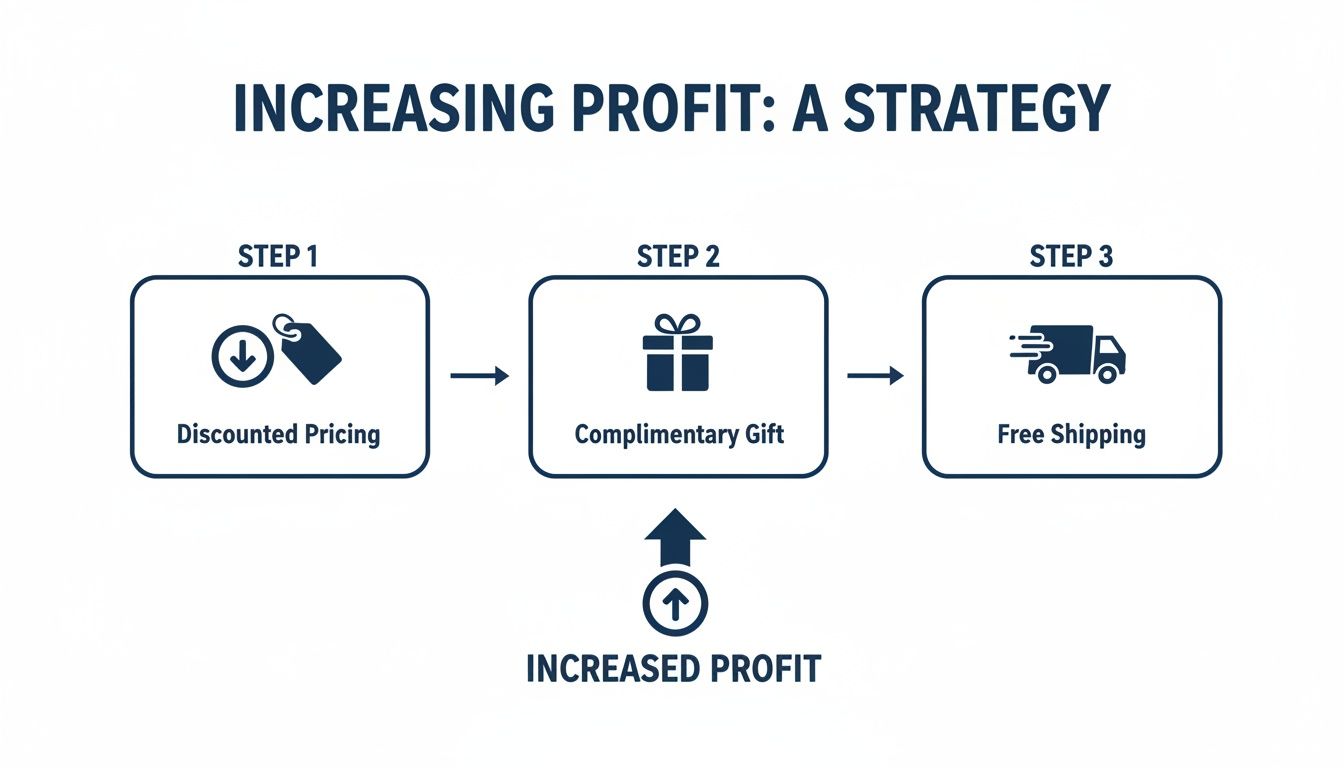
As you can see, swapping out discounts for tangible perks like gifts and free shipping is a direct path to healthier profits and happier, higher-value customers.
Structuring Your Reward Tiers
You can build out your tiers in a few different ways, from dead simple to more complex, depending on what you’re trying to achieve.
Single Gift + Free Shipping: This is the most straightforward model. At $75, the customer gets a free gift. At $100, they get that same gift plus free shipping. It's clean, simple, and incredibly easy for shoppers to understand.
Progressive Gifts: With this setup, the rewards get better as the customer spends more. For example, a $75 order might unlock a sample-size product, while a $125 order gets them the full-size version. This structure is a powerhouse during high-traffic sales events like Black Friday.
Multiple Gift Choices: Let customers choose their own adventure. Once they hit the threshold, offer them a choice between a few different free gifts. That little bit of personalization can do wonders for your conversion rates.
The real secret is making the journey to the reward visual and interactive. A tool like Monster Cart shines here, updating the cart in real-time to show customers exactly how close they are to the next prize. It makes the whole experience feel dynamic and exciting, not static.
To get the most out of this, you’ll want to lean on solid customer segmentation techniques to tailor offers to different groups. And if you're looking for some inspiration on what to actually give away, check out these killer gift promotion ideas to make your next campaign a massive success.
How to Build a High-Converting In-Cart Offer
Okay, this is where your strategy gets real. You've got the plan, and now it's time to build the live, in-cart experience that guides customers toward a bigger spend. We're swapping out those margin-killing discounts for value-packed rewards like free shipping free gifts. The goal is to create a seamless, motivational journey using a tool like Monster Cart, where every click feels intuitive and rewarding.
It all starts with a dynamic progress bar placed right inside the cart. I’m not talking about a static banner that everyone ignores. This bar needs to update in real-time as shoppers add items, visually showing them exactly how close they are to unlocking that first reward. Done right, it turns a simple transaction into an engaging mini-game, keeping customers focused on the next prize.
Crafting a Compelling In-Cart Experience
Look, the design and copy of your in-cart offer are just as critical as the rewards themselves. Your cart's design should feel like a natural part of your brand—not some clunky, third-party add-on. With a solution like Monster Cart, you can easily customize the fonts, colors, and layouts to create a perfectly branded experience that builds trust and keeps everything looking professional.
Next up is your motivational copy. Generic messages get ignored. You need dynamic text that sparks a little urgency and excitement.
Be Specific: "You're just $12 away from your free gift!" is way more effective than a lazy "Spend more to get a gift."
Show the Reward: Don't just talk about it. Display a clear image of the free gift directly in the cart so customers know exactly what they're working towards.
Celebrate the Win: The moment they hit the threshold, the message should flip to something celebratory, like "Congratulations! You've unlocked your free gift!"
This is exactly what I'm talking about. Monster Cart makes the path to rewards clear, visual, and honestly, a little bit fun.
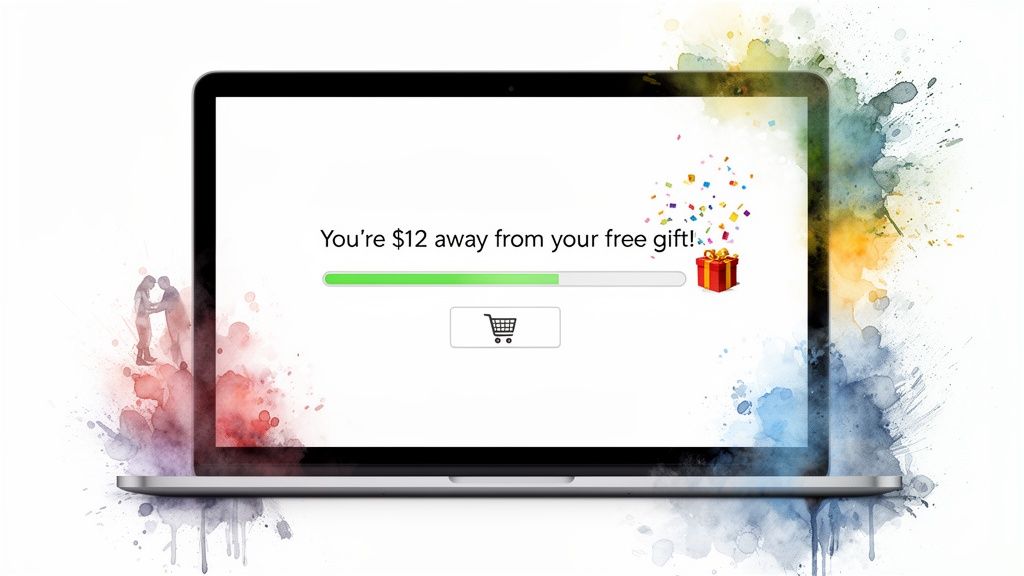
That powerful combo of a visual progress bar and sharp, motivating text keeps the shopper engaged and laser-focused on reaching that next tier.
The Financial Power of Thresholds
Setting strategic thresholds is a powerful psychological trigger, and when you get it right, the impact on AOV is massive. It's not just a hunch; the data is clear. Industry-wide, orders with some kind of promotional shipping already generate 15-20% higher order values. But get this—when merchants implement a smart free shipping threshold, they can see their AOV jump by as much as 30%.
By designing an in-cart offer that clearly communicates these thresholds, you're not just upselling; you're encouraging customers to spend more to get more. This boosts not only AOV but also long-term customer value. You're building a relationship based on reward, not just price.
Ultimately, the best in-cart offers feel less like a sales pitch and more like a helpful guide. An optimized tool like Monster Cart helps you present these offers seamlessly. If you're looking for more ways to optimize this critical touchpoint, you might want to explore our guide on the best upsell apps for Shopify. A well-designed system doesn't just sell more; it creates a more satisfying and memorable shopping experience that keeps your customers coming back for more.
Using Data to Optimize Your Reward Campaigns
A great reward campaign isn't something you just set and forget; it's a living part of your sales strategy. Launching your offer is only the beginning. The real magic happens when you use data to make your free shipping free gifts campaigns smarter, more relevant, and more profitable over time.
This is how you move from guesswork to a process of continuous, data-driven improvement that focuses on building real lifetime value instead of just chasing one-time sales with discounts.
The key is to pay close attention to how your shoppers actually interact with your offers. Analytics tools, like the dashboard inside Monster Cart, give you a clear, no-fluff view of what’s working and what isn’t. You can see essential metrics like AOV uplift, offer conversion rates, and precisely where customers are in their journey toward unlocking your rewards.
Interpreting Your Campaign Data
Data only becomes powerful when you know how to read the story it’s telling you.
For example, if you see a high number of abandoned carts that are just a few dollars short of a reward threshold, that's a massive red flag. It’s a clear signal that your target is set just a little too high, creating frustration instead of motivation. Dropping it by just $5 or $10 could unlock a significant boost in conversions.
Your analytics tell a story about customer behavior. A high cart abandonment rate near a threshold isn't a failure—it's actionable feedback telling you exactly where to adjust your strategy for a quick win.
By regularly checking these numbers, you can fine-tune your thresholds to hit that sweet spot. For a deeper dive into the foundational metric behind these decisions, check out our guide on how to calculate your Average Order Value. Understanding your baseline AOV is the absolute first step to setting profitable and achievable reward goals.
To really get a handle on performance, you need to know which numbers matter most. Here’s a quick breakdown of what to track inside Monster Cart.
| Key Metrics for Reward Campaign Analysis |
| :--- | :--- | :--- |
| Metric | What It Measures | Optimization Action | | AOV Uplift | The percentage increase in average order value during the campaign compared to a baseline period. | If the uplift is low, your threshold might be too high or the reward isn't compelling enough. Consider A/B testing different thresholds or gifts. | | Offer Conversion Rate | The percentage of carts that successfully unlock a reward tier. | A low rate signals the offer isn't motivating enough. Try improving the UI copy or increasing the perceived value of the gift. | | Cart Abandonment Rate (Near Threshold) | The percentage of shoppers who abandon their cart when they are close (e.g., within $10) to a reward. | A high rate here means your threshold is likely too high. Lower it slightly to make it feel more achievable. | | Gift Redemption Rate | The percentage of eligible orders that include the free gift. | If this is lower than your Offer Conversion Rate, there might be a technical issue or confusion in the checkout flow. Ensure the gift is added automatically and clearly visible. |
Tracking these metrics moves you from "I think this is working" to "I know this is working and here's why." It’s the key to turning good campaigns into great ones.
Using Segmentation for Smarter Rewards
Not all customers are the same, so why would you show them all the same offer? This is where segmentation comes in.
Instead of a one-size-fits-all approach, you can create targeted free shipping free gifts campaigns for specific customer groups. This makes your rewards feel far more personal and impactful.
Here are a few powerful segmentation strategies to try:
VIP Customers: Reward your most loyal shoppers with exclusive, high-value gifts or a lower free shipping threshold. This makes them feel genuinely appreciated and strengthens their long-term connection to your brand.
First-Time Buyers: Use an attractive free gift to convert hesitant new visitors into customers. A fantastic first experience is often the start of a valuable, long-term relationship.
Geographic Segments: Tailor your free shipping offers based on location. This lets you manage your shipping costs more effectively while still providing a compelling incentive for shoppers in different regions.
By pairing insightful data analysis with smart segmentation, you transform your reward campaigns from a simple promotion into a dynamic engine for growth. This is how you stop just giving away margin and start building sustainable profitability and fierce customer loyalty.
Advanced Tactics to Really Boost Your AOV
Once your foundational "free shipping + free gifts" campaign is humming along nicely, it's time to get a little more sophisticated. Think of it as layering in a few extra tricks to maximize every single order. We're going to do this by presenting smart, relevant offers directly inside the cart, right when a customer's excitement is at its peak.
This isn't about being pushy. It’s about helping customers discover more value after they've already committed to hitting a reward tier. This is how you stop chasing AOV as a standalone metric and start thinking about the lifetime value of every shopper you bring in.
Seamlessly Stacking Offers in the Cart
A really well-designed cart experience lets you stack additional offers without making things cluttered or distracting from the main goal: checking out. This is where a tool like Monster Cart shines, turning a simple rewards app into a full-blown in-cart revenue engine.
Here are a few high-impact tactics you can roll out:
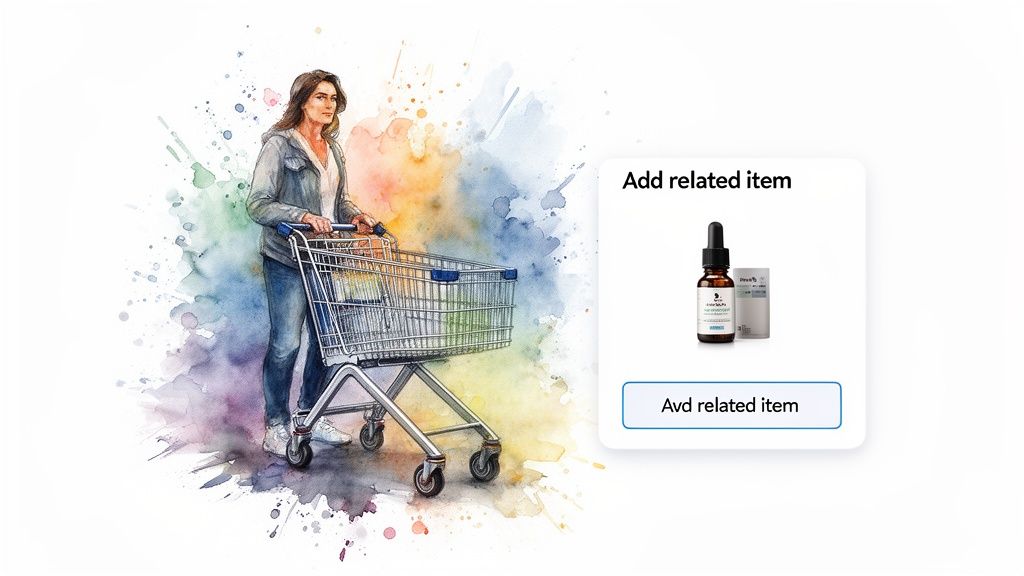
One-Click Upsells: Suggest a perfectly complementary product that just makes sense with what’s already in the cart. Think of it as the digital version of the candy rack at the grocery store checkout.
Product Cross-Sells: Use those classic "Customers also bought..." recommendations to show off other popular items they might have missed. This is a brilliant way to showcase best-sellers or related accessories.
Valuable Add-Ons: Let customers add services like shipping protection, gift wrapping, or priority processing with a single click. These are small, high-margin additions that really add up over hundreds of orders.
The smartest merchants I know understand that the cart isn't just an order summary—it's the final, most powerful chance you have to increase its value. By weaving these upsells into the flow of a rewards campaign, the offers feel genuinely helpful, not aggressive.
Think about how brands handle major sales events like Black Friday. They often stack multiple incentives to create an offer that feels too good to pass up. A customer might get a free gift for spending $100, unlock free shipping at $125, and then see an exclusive one-click offer for a related accessory, all right there in the cart. This multi-layered approach compounds the value for both you and the customer.
This kind of thoughtful strategy moves the customer relationship beyond being purely transactional. You're not just trying to close a sale; you're actively making their shopping journey better. By moving beyond simple discounts and embracing a multi-faceted rewards and upsell system with Monster Cart, you build a more profitable, sustainable business focused on delivering maximum value.
Common Questions About Free Shipping and Gift Rewards
When you're diving into a combined free shipping and free gift strategy, a few questions are bound to pop up. That's a good thing. Getting the details right is what separates a campaign that just gives away margin from one that genuinely boosts your average order value (AOV) and customer lifetime value.
Instead of just throwing discounts at people, you're building a smarter system that rewards customers for spending more. Let's walk through some of the most common questions I hear from merchants.
What Makes a Good Free Gift?
The perfect free gift is something your customer sees as a high-value bonus, but that has a low cost for you. It needs to feel like a genuine reward, not a cheap throwaway.
Complementary Products: Think about items that make the main purchase even better. If you sell coffee, a branded mug or a stylish scoop is a perfect fit. It just makes sense.
Slow-Moving Inventory: We all have it. A gift-with-purchase offer is a brilliant way to clear out that excess stock without running a deep discount sale that cheapens your brand.
Product Samples: This is my favorite. Use a gift to introduce customers to another product line. A sample of a new skincare serum with their moisturizer purchase is a fantastic way to plant the seed for their next order.
The goal is always to provide real value that feels like a natural extension of your brand. That's what encourages people to come back.
How Do I Calculate the Profitability of My Offer?
You have to run the numbers. It’s not optional. To make sure your campaign is actually making you money, the increase in AOV has to more than cover the cost of the gift and the shipping.
First, figure out your baseline AOV. Then, set your gift and shipping thresholds just a bit higher. For example, if your store’s AOV is sitting around $60, a free gift at $75 and free shipping at $100 is a great place to start.
Next, add up the total cost of goods sold (COGS) for that free gift plus your average shipping cost. The lift you get in AOV absolutely must be greater than those combined costs. If it isn't, the campaign isn't profitable.
A successful rewards campaign should not only cover its own costs but also lead to a higher net profit per order. The focus is on increasing the overall transaction value, which boosts lifetime value far more effectively than a simple discount.
This approach stops your marketing from being a cost center and turns it into a direct driver of profitable growth. You're not just giving away margin; you're investing in a bigger, more valuable customer order.
Ready to turn your cart into a powerful revenue engine? Monster Cart makes it easy to build and manage sophisticated in-cart reward campaigns, from free shipping bars to tiered gifts and one-click upsells.
Join 7000+ brands using our apps